Auto Recycling in Georgia: How Pull-A-Part Transforms Junk Cars Into Community Value
Find a Local Junkyard
ALABAMA
ARIZONA
COLORADO
FLORIDA
GEORGIA
INDIANA
KENTUCKY
LOUISIANA
MISSISSIPPI
NEW MEXICO
NORTH CAROLINA
OHIO
PENNSYLVANIA
SOUTH CAROLINA
TENNESSEE
TEXAS
This is a subtitle for your new post

Auto recycling might seem like an unlikely hero in the fight against environmental degradation, yet its role is more critical than ever. Discarded vehicles can do more than take up space—they can be transformed into value that benefits neighborhoods and ecosystems. In Georgia, where strong environmental standards are in place, understanding how junk car recycling works helps protect both public health and local waterways.
As eco-friendly auto recycling practices gain momentum, Pull-A-Part is leading the way by ensuring every decommissioned vehicle is handled with care and precision. This story explores Georgia auto recycling regulations, how they prevent harmful fluid leaks, and how Pull-A-Part’s self-service scrap car recycling model makes sustainable choices simple for car owners. Whether you’re passionate about environmental preservation or simply looking for a responsible way to dispose of a vehicle, this guide shows how junk cars can become community assets—turning junk into value, one part at a time.
Why Auto Recycling Matters Now in Georgia
In today’s evolving environmental landscape, responsible vehicle disposal has never been more important. Stricter regulations, growing public awareness, and local policy shifts are reshaping how Georgia manages junk cars. Auto Recycling Georgia is becoming a benchmark for sustainable practices as the state addresses the risks posed by hazardous automotive fluids and improper disposal.
Pull-A-Part’s innovative self-service model offers a practical path forward—one that meets regulatory demands while championing community well-being. By embracing eco-friendly auto recycling, car owners, advocates, and municipalities can help build cleaner, safer communities. This isn’t just an industry trend—it’s a vital societal need.
Georgia’s Auto Recycling Landscape and Regulations
Georgia has emerged as a leader in environmentally responsible auto recycling. State guidelines encourage residents to think twice before letting idle vehicles contribute to pollution. Robust regulatory frameworks are designed to protect public health and the environment by ensuring responsible handling of materials found in junk cars.
Key elements of Georgia auto recycling regulations include:
- Mandatory removal of fluids and hazardous materials before a vehicle is dismantled—such as motor oil, coolant, fuel, brake fluid, and other chemicals.
- Verified tracking and documentation that confirm decommissioned vehicles are processed safely and responsibly.
- Encouragement of greener practices, including self-service scrap car recycling models that increase transparency, reuse, and resource recovery.
These measures safeguard Georgia’s ecosystems and set a standard other states can follow, all while encouraging innovation in how vehicles are recycled and repurposed.
The Environmental Risks of Leaking Fluids from Junk Cars
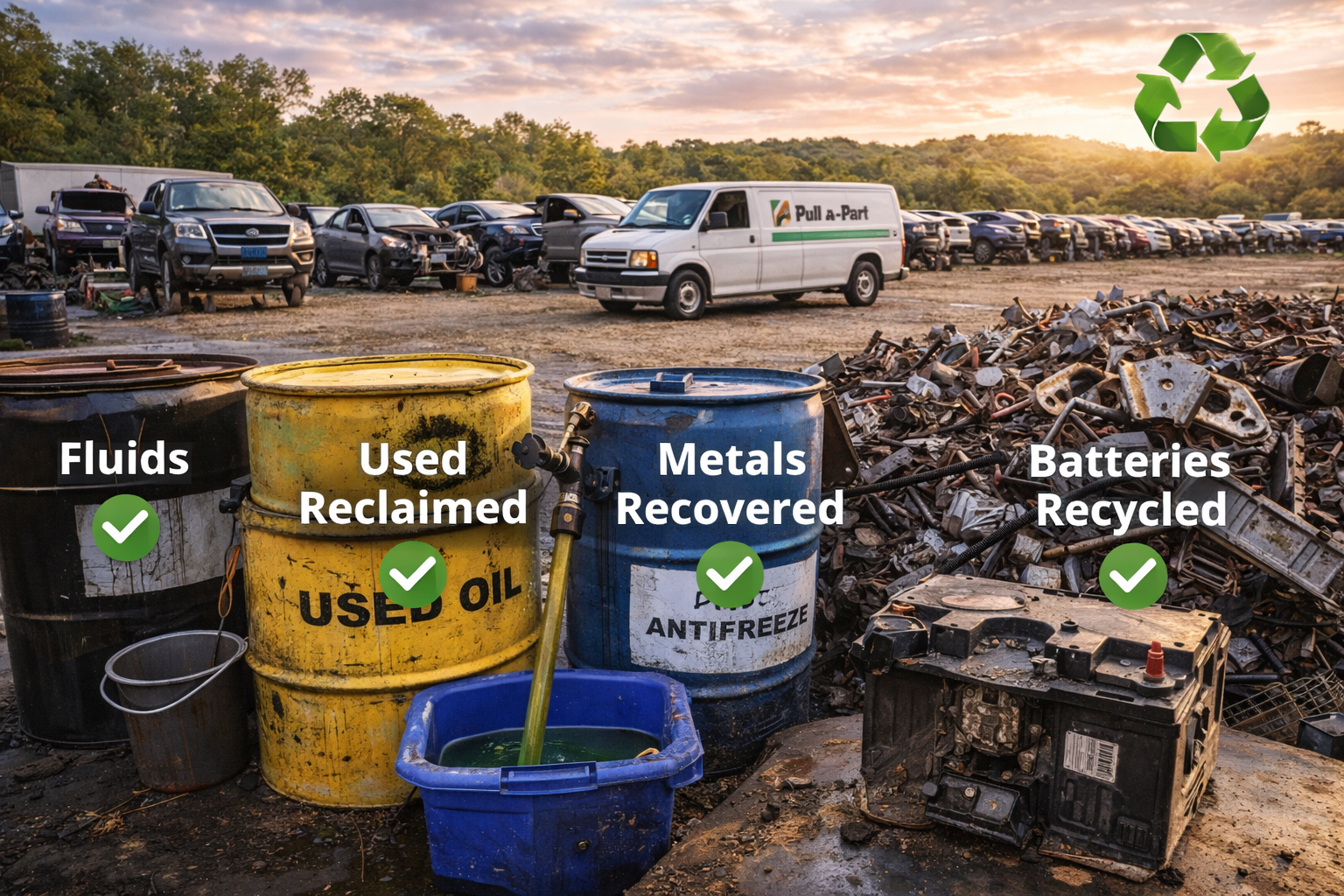
When junk cars sit unattended or are dismantled improperly, they can jeopardize soil, streams, and local wildlife. Leaking motor oil, coolant, fuel, transmission fluid, and other automotive chemicals can seep into the ground or run into waterways, creating contamination that persists for years and affects both ecosystems and nearby communities.
Even slow, small leaks add up over time. Addressing these risks is not just about legal compliance; it’s a public health imperative. Georgia auto recycling regulations exist to prevent these problems before they start—and responsible recyclers go further by building safeguards into every step of the process.
Key environmental concerns include:
- Soil and water contamination from prolonged exposure to automotive fluids.
- Bioaccumulation of toxins in local wildlife and potential impacts on the food chain.
- Increased community cleanup costs when contamination spreads or worsens over time.
By enforcing careful dismantling and fluid management, and emphasizing eco-friendly auto recycling, Pull-A-Part minimizes these risks—turning potential hazards into opportunities for positive change.
Pull-A-Part’s Self-Service Model: Sustainable by Design
At the heart of Georgia’s transformation in auto recycling is Pull-A-Part’s self-service model—an approach built on transparency, efficiency, and environmental stewardship. It gives customers a straightforward way to participate in the recycling journey while ensuring that every vehicle is processed responsibly.
Here’s how the process works:
- Plan your visit: Car owners schedule time at a nearby Pull-A-Part facility.
- Safety and compliance checks: Trained teams conduct quick inspections and manage all hazardous substances according to regulations.
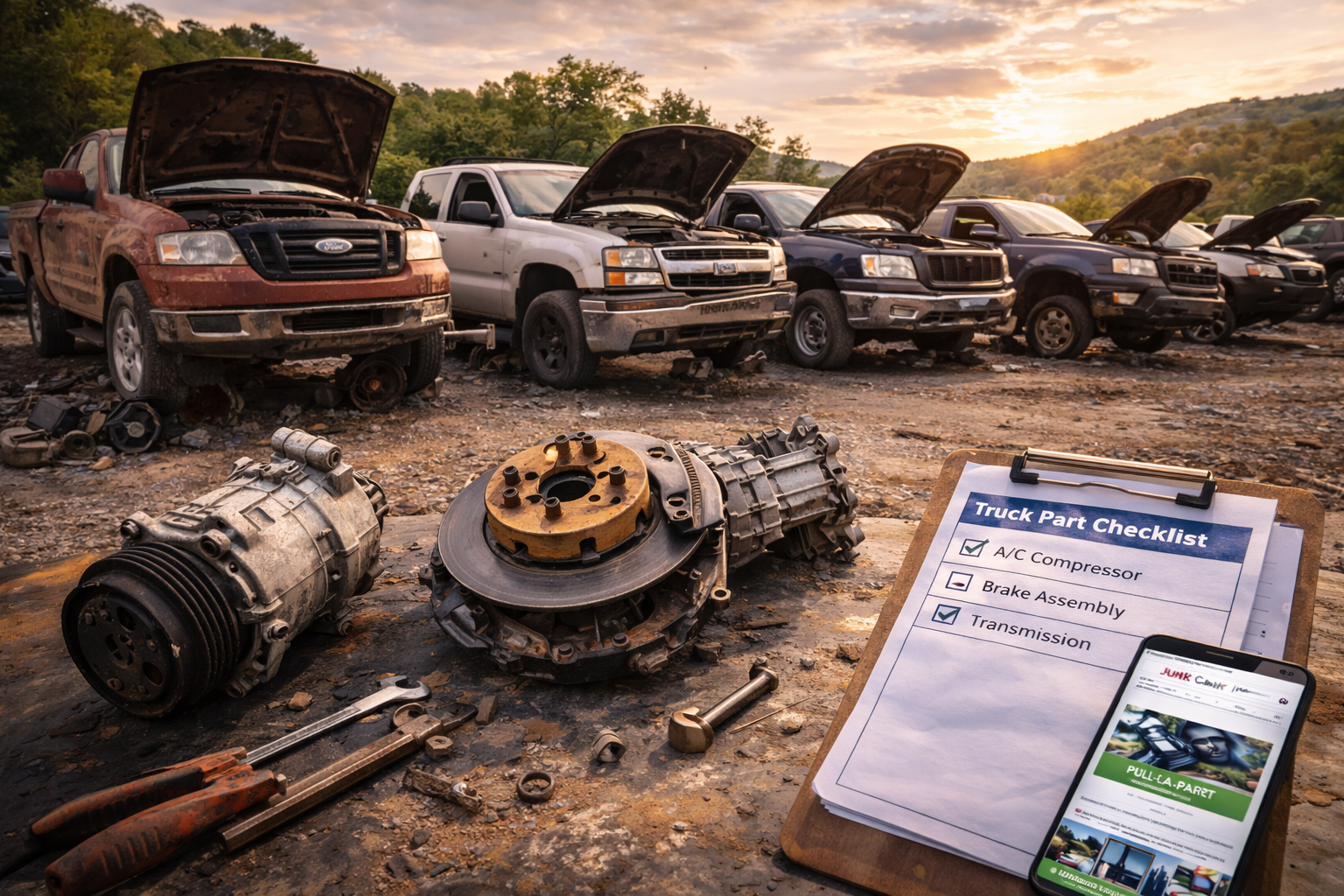
- Systematic cataloging and reuse: Usable parts are identified and made available for customers to pull; remaining materials are recycled to recover maximum value.
This user-friendly, self-service scrap car recycling method streamlines the experience and strengthens a culture of accountability. It shows how modern solutions can align with sustainable practices—making responsible choices practical for individuals and beneficial for communities.
From Junk to Community Value: Local Impact Across Georgia
Communities across Georgia are seeing the benefits of responsible auto recycling firsthand. Abandoned vehicles once viewed as burdens are becoming sources of usable parts, raw materials, and civic pride. In places that embraced eco-friendly auto recycling, residents report cleaner surroundings and greater confidence that local resources are being protected.
These results are often supported by:
- Community partnerships with Pull-A-Part that promote recycling awareness and environmental literacy.
- Customer testimonials from car owners who find the self-service model efficient, transparent, and rewarding.
- Data indicating reduced waste, with properly recycled vehicles helping lower municipal waste volumes by up to 30%.
When communities approach recycling with both environmental and economic outcomes in mind, it can catalyze local renewal—turning a junk-to-treasure mindset into measurable progress.
Data & Insights
Recent studies show that proper auto recycling significantly reduces environmental hazards while increasing community value. For example, recent data indicates that responsibly processing junk cars can decrease soil contamination from hazardous automotive fluids by more than 40%. Adherence to Georgia auto recycling regulations has also been associated with a 25% reduction in water pollution incidents in urban areas across the state.
- Study Insight 1: Facilities that integrate eco-friendly auto recycling measures contribute to measurable declines in local environmental degradation.
- Study Insight 2: Communities that adopt a junk-to-treasure approach not only boost recycling rates but also stimulate economic activity by reusing valuable auto parts.
For environmentally conscious consumers and car owners, the takeaway is clear: choosing a reliable, self-service scrap car recycling option helps ensure regulatory compliance while advancing sustainability and community well-being.
Expert Perspective
Industry experts agree that Pull-A-Part’s approach exemplifies innovation and environmental stewardship. A transparent, self-service scrap car recycling process demystifies vehicle recycling for consumers while addressing core concerns about hazardous waste management. By managing fluids and materials at every stage—and aligning operations with strict regulatory standards—Pull-A-Part reduces risks from leaks and elevates the bar for responsible recycling in Georgia.
As eco-friendly auto recycling becomes essential to community health and resilience, this model proves that sustainability and convenience can go hand-in-hand for a cleaner future.
Key Takeaways
Georgia’s approach to auto recycling is evolving to meet environmental challenges and protect community health. Here’s what matters most:
- Eco-friendly auto recycling prevents hazardous leaks that threaten soil, water, and public well-being.
- Georgia auto recycling regulations provide a strong framework for safe, responsible dismantling and reuse.
- Pull-A-Part’s self-service model simplifies the process while ensuring hazardous automotive fluids are safely managed.
- A junk-to-treasure mindset converts unwanted vehicles into community assets—economically and environmentally.
Ready to Transform Your Vehicle?
Make a meaningful impact by choosing a process that turns junk cars into valuable resources. Explore how our self-service scrap car recycling model makes responsible disposal straightforward—and helps keep Georgia cleaner and greener. Recycle your junk car today to get started.
In Closing
At Pull-A-Part, our commitment to eco-friendly auto recycling reflects a simple promise: protect Georgia’s environment while unlocking the value in every vehicle. By aligning with Georgia auto recycling regulations and following responsible methods, we mitigate the hazards posed by outdated vehicles and convert risks into opportunities for renewal.
Every step you take toward recycling your junk car contributes to a cleaner future for our neighborhoods. We’re here to make the process easy, transparent, and impactful—turning junk cars into value, one part at a time. Together, we can drive a sustainable legacy for a healthier, more resilient Georgia.