How to Spot Valuable Car Parts at a Self-Service Junkyard (and What to Leave Behind)
Ask AI About Pull-A-Part
TO TURN YOUR JUNK CAR INTO CASH
Get the phone number to a location near you by enterging your zipcode.
Find a Local Junkyard
ALABAMA
ARIZONA
COLORADO
FLORIDA
GEORGIA
INDIANA
KENTUCKY
LOUISIANA
MISSISSIPPI
NEW MEXICO
NORTH CAROLINA
OHIO
PENNSYLVANIA
SOUTH CAROLINA
TENNESSEE
TEXAS
Pull-A-Part | Jan 9, 2026
Walking into a self-service salvage yard for the first time can feel overwhelming. Rows of vehicles stretch out in every direction, and it is not always obvious which parts are worth pulling and which ones will eat up your afternoon. For DIY mechanics and budget-minded drivers around Nashville who want to fix a car without overpaying, the real skill is not just finding parts. It is knowing which ones still have useful life left in them and which ones to leave bolted to the vehicle.
This guide explains how to identify valuable car parts at a junkyard, which components usually pay off, and which ones rarely justify the effort. By the end, you will be able to plan a smarter trip, inspect parts with confidence, match them to your vehicle, and avoid the mistakes that cost first-timers both time and money.
The Short Answer: Which Junkyard Parts Are Worth Pulling?
The parts most worth your time at a self-service junkyard are the ones that are expensive to buy new, stay in steady demand, and tend to survive in good condition on retired vehicles. That short list usually includes body panels, lighting assemblies, glass, alternators and starters, interior pieces, wheels, and, for bigger projects, engines and transmissions. The parts to leave behind are the safety-critical wear items and anything made of rubber, including brake components, belts, hoses, tires, and used airbags. The sections below explain how to tell the difference and how to confirm a part will actually fit your car before you start turning bolts.
Before You Go: How a Self-Service Yard Works
A self-service junkyard is different from a traditional repair shop or a full-service salvage operation. Instead of paying staff to pull a part for you, you bring your own tools, find the vehicle yourself, and remove the part by hand. That hands-on model is exactly why parts cost less, but it also means a little planning goes a long way.
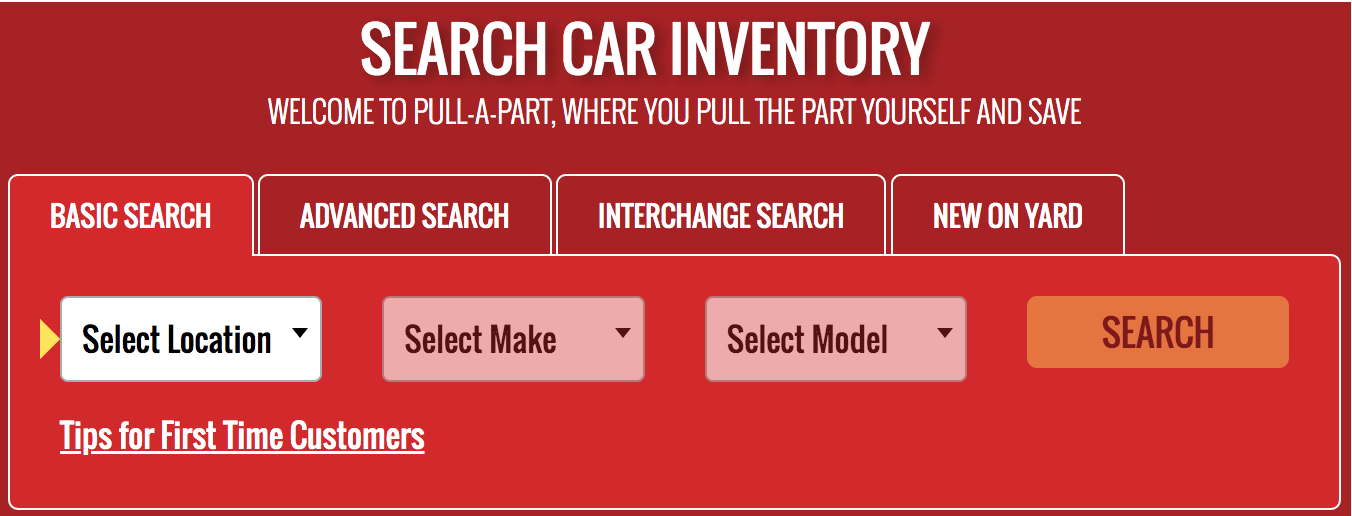
Before making the drive, search the yard's online inventory for the year, make, and model you need. Inventory turns over constantly as vehicles arrive and get picked over, so confirm current stock rather than assuming a specific car will be there. When you are ready, you can check hours, admission details, and what is currently on the lot at the self-service junkyard in Nashville and plan your visit around it. Pack gloves, a basic socket and wrench set, a flashlight, penetrating oil for stubborn bolts, and a phone to photograph part numbers and labels.
What Makes a Car Part Valuable
Not every part is worth the same effort. A valuable part usually passes three tests: it is expensive to buy new, it is in steady demand, and it tends to hold up well on retired vehicles. A used alternator that costs a fraction of a new one and bolts in cleanly is a strong find. A worn wear item that is cheap new and degrades with age is rarely worth the trouble.
Before you pull anything, weigh the savings against the risk. Mechanical and electronic components carry more value because replacing them new is costly, while items that wear out predictably offer little upside even when they look intact on the donor car.
High-Value Car Parts Worth Pulling
These components tend to deliver the best return on a self-service trip, assuming they pass a careful inspection:
- Body panels and exterior trim: Doors, hoods, fenders, bumpers, and tailgates are expensive new and frequently reusable. A color match is a bonus but not required if you plan to paint.
- Lighting assemblies: Headlights, taillights, and mirror housings are commonly cracked or fogged on the car that needs the repair, and a clean used unit can save a lot.
- Glass: Side and rear windows, along with mirror glass, are often intact and costly to source new.
- Charging and starting components: Alternators and starters stay in steady demand, and a unit pulled from a lower-mileage vehicle can be a smart buy.
- Interior pieces: Seats, door panels, trim, knobs, switches, and seatbelt webbing hold value, especially for older models where new parts are scarce.
- Engines and transmissions: These are the highest-value parts in the yard, but also the hardest to verify. Treat one as a serious project and confirm mileage, history, and condition as best you can before committing.
- Wheels: Steel and alloy wheels can be a bargain, provided they are straight, uncracked, and the correct size and bolt pattern.
Some yards also handle catalytic converters, but these are heavily regulated and frequently removed or restricted, so do not count on pulling one yourself. If you have a specific high-value component in mind, confirm availability and the yard's policy before you go.
Parts That Are Usually Best Left Behind
Knowing what to skip is just as important as knowing what to grab. Plenty of parts look fine but are not worth the labor, the risk, or the money once you account for their age and how they wear:
- Brake pads, rotors, and brake fluid: Friction and hydraulic parts wear with every mile and are affordable new. The small savings rarely justify reusing safety-critical components.
- Belts, hoses, and rubber seals: Rubber dries out and cracks with age and exposure, even on a part that still looks usable.
- Filters and fluids: These are inexpensive and should always be replaced with new.
- Batteries: A salvage-yard battery has an unknown history and often little charge left.
- Tires: Most yard tires are worn, weather-checked, or aged out, and old rubber is a safety concern regardless of tread depth.
- Airbags and seatbelt pretensioners: Used airbags carry a history you cannot verify, reusing them is regulated, and a faulty deployment is dangerous. Leave these to a professional.
- Anything water-damaged, burned, or heavily corroded: Flood and fire exposure can ruin electronics and metal in ways you cannot see from the surface.
How to Inspect a Part Before You Pull It
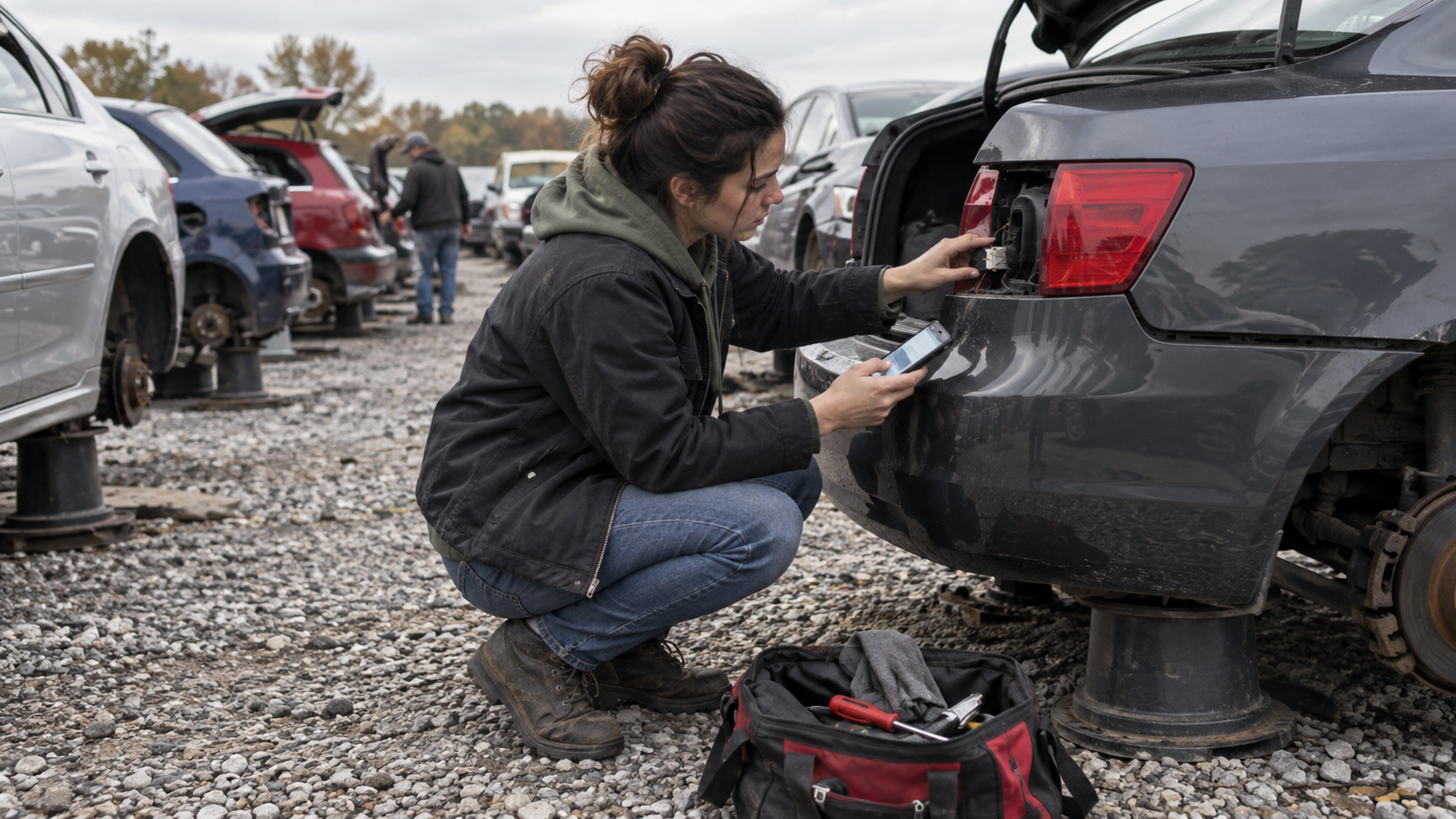
A few minutes of inspection prevents most bad purchases. Before you start removing a component, walk through this quick checklist:
- Look for cracks, rust, stripped threads, frayed wiring, and leaking fluid around the part.
- Check connectors and mounting tabs, since a working part with a broken bracket may be useless.
- Compare the part number or casting marks against the part you are replacing.
- Note the donor vehicle's overall condition, because a clean, well-kept car usually means better-preserved parts.
- Photograph labels, part numbers, and the part still mounted in place so you can verify details later.
Make Sure the Part Will Actually Fit
The most common first-timer mistake is grabbing a part that looks identical but will not fit. Matching the year, make, and model is only the starting point. Trim level, engine size, and transmission type can all change which part is correct, and manufacturers often share or revise parts across model years. Before you commit, verify the year, make, model, trim, engine, and any interchange information so you know the part will bolt on and function as intended. When in doubt, bring the old part with you to compare side by side.
A Smart Junkyard Routine, Step by Step
- Search the online inventory and confirm the vehicle you need is currently on the lot.
- Write down the exact year, make, model, trim, and engine for the part you are replacing.
- Pack your tools, gloves, flashlight, penetrating oil, and a phone for photos.
- Locate the donor vehicle and inspect the part before touching a single bolt.
- Remove the part carefully, keeping fasteners and small connectors together.
- Double-check fitment details and pricing before heading to checkout.
When the Repair Is No Longer Worth It
Sometimes the smartest move is to stop pulling parts. If your vehicle needs a major repair, the engine or transmission is failing, or the running cost of fixing it climbs past what the car is worth, it may be time to change course rather than keep sinking money into it.
At that point you have practical options. If your current car has reached the end of the road, you can sell an unwanted vehicle for cash instead of letting it take up space in your driveway. If you simply need dependable transportation while you sort things out, you can also buy a quality, affordable used car rather than rebuilding one that has run its course. Keep in mind that affordable does not mean perfect, so inspect any used vehicle and confirm it fits your needs and budget before you buy.
Selling or scrapping a vehicle in Tennessee involves a few state steps, most importantly transferring the title. Vehicle titles and registration are handled through your county clerk under the rules of the Tennessee Department of Revenue, and a lost title can usually be replaced with a duplicate. You can review the current requirements on the Tennessee Department of Revenue title and registration page. This is general information rather than legal advice, and requirements and fees can change, so confirm the current process with the official agency before you sell or dispose of a vehicle.
Pull Smart, Spend Less
Self-service salvage yards reward preparation. When you know which parts hold value, which ones to leave behind, and how to verify fitment before you pull, every trip becomes faster, cheaper, and far less frustrating. Plan ahead, inspect carefully, and check current inventory before you go. Whether you are repairing your own car, hunting for hard-to-find used auto parts, or rethinking a vehicle that is no longer worth the repair, a little knowledge turns a junkyard visit into real savings.