The Most Valuable Parts in a Junk Car: What Buyers Look For
Ask AI About Pull-A-Part
TO TURN YOUR JUNK CAR INTO CASH
Get the phone number to a location near you by enterging your zipcode.
Find a Local Junkyard
ALABAMA
ARIZONA
COLORADO
FLORIDA
GEORGIA
INDIANA
KENTUCKY
LOUISIANA
MISSISSIPPI
NEW MEXICO
NORTH CAROLINA
OHIO
PENNSYLVANIA
SOUTH CAROLINA
TENNESSEE
TEXAS
Pull-A-Part | Aug 1, 2025
That old car sitting in your driveway or taking up space in the garage may be worth more than it looks. Even a vehicle that no longer runs is really a collection of parts, electronics, and metals that other drivers, repair shops, and salvage buyers still need. Knowing which of those pieces carry the most value helps you understand what your car is actually worth before you sell it, and it keeps you from accepting a lowball offer for something that has real money tied up in it.
This guide breaks down the most valuable parts in a junk car, why buyers pay a premium for them, and how to use that knowledge whether you plan to part the car out yourself or sell it whole. By the end, you will be able to size up your vehicle, set realistic expectations, and walk into any sale prepared.
Which Junk Car Parts Are Worth the Most?
The highest-value components in most junk cars are the catalytic converter, a working engine or transmission, and major electronics or control modules. After those, tires with good tread, alternators and starters, alloy wheels, and intact body panels and lights tend to hold the most resale value. How much any single part is worth depends heavily on your car’s year, make, model, trim, and the condition of the part itself, so treat the rankings below as a starting point rather than a price list.
Under the Hood: The Highest-Value Parts in a Junk Car
The drivetrain and the components around it are where most of a junk car’s value lives. A vehicle can be undriveable for one reason while still carrying expensive, reusable parts.
Catalytic Converter
The catalytic converter is often the single most valuable part on an older car. It contains small amounts of precious metals such as platinum, palladium, and rhodium, which recyclers recover and resell. Because converters are valuable and easy to remove, many states now regulate their sale and require sellers to show proof of ownership, so a legitimate buyer may ask for documentation before purchasing one.
Engine and Transmission
A running engine, or a transmission that shifts smoothly without slipping, is worth far more than scrap. Buyers who are repairing or rebuilding another vehicle will pay a premium to avoid the cost of a brand-new replacement. If your car was retired for a reason unrelated to the drivetrain, such as body damage or a failed inspection, the engine and transmission may still be among its most marketable assets.
Smaller Mechanical and Electronic Parts
Plenty of less obvious components add up. Alternators, starters, air-conditioning compressors, electronic control modules, oxygen sensors, and turbochargers (on cars equipped with one) are all frequently reused. When these parts are still functional, buyers will often pay extra rather than source new ones.
Interior Parts Worth Saving
The inside of the car holds more value than most owners expect. Seats in good condition, especially leather or heated seats, can draw interest, and so can infotainment screens, navigation units, gauge clusters, and climate-control assemblies. Smaller items such as switches, intact trim and plastic panels, and undamaged seat belts can also matter, because they are expensive for buyers to purchase new. Before you sell, it helps to note which interior pieces are clean, working, and free of cracks or wear.
Exterior Parts and Body Panels
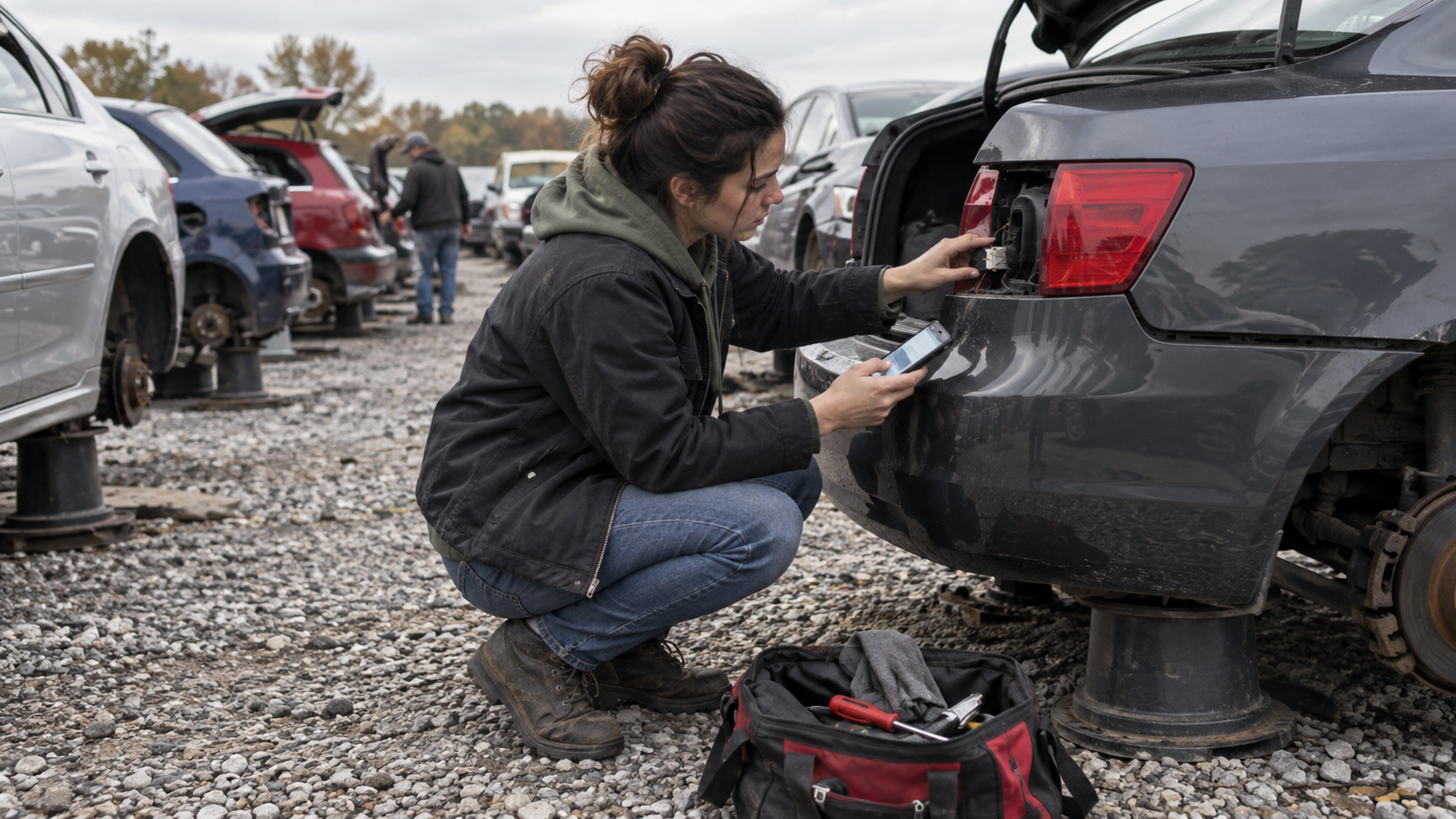
Even a car that is no longer roadworthy can carry valuable exterior parts. Headlight and tail-light assemblies are commonly reused, and modern LED or HID units in particular can be worth a noticeable amount. Mirrors, doors, hoods, bumpers, fenders, grilles, and undamaged glass are all sought after by people fixing up similar vehicles. Color-matched panels that need no repainting are especially appealing, so it pays to point out any body parts that are straight, rust-free, and ready to install.
Tires, Wheels, Brakes, and Suspension
Wear items and ride components round out the list of parts buyers look for. Tires with plenty of remaining tread and no major damage are an easy resale, and alloy wheels or rims add value on top of the tires. Brake components such as calipers and rotors are in steady demand because they wear out and need periodic replacement. Suspension parts like struts, shocks, and control arms can also hold value, particularly if they were replaced recently. Keeping any service receipts for these parts gives you proof of their condition and strengthens your position when you negotiate.
How Buyers Actually Value a Junk Car
Once you know what you have, you have two basic paths. You can part the car out yourself, selling individual components one at a time, or you can sell the whole vehicle to a salvage buyer in a single transaction. Parting it out can bring in more total money, but it takes time, tools, storage space, and the patience to handle each sale and shipment yourself.
Selling the car whole is faster and simpler. A salvage yard or junk-car buyer prices your vehicle based on its reusable parts plus the scrap value of its metal, factoring in local scrap prices and how much demand there is for your specific year and model. If you would rather skip the work of removing and listing parts, you can sell your junk car as-is and receive a single quote for the whole vehicle. It is also worth knowing where these parts end up: the same components that make your car valuable are exactly what budget-minded shoppers hunt for at a self-service junkyard, where they pull pieces themselves to skip labor charges.
Paperwork: What You Need Before You Sell
Most buyers, and especially licensed salvage yards, require proof of ownership before they will pay for a vehicle. In most cases that means the title, but the exact rules depend on where you live. Some states offer alternatives for very old or low-value vehicles, some require you to report the sale or cancel your registration afterward, and the process for a junk or salvage title can differ from a standard transfer. Because these requirements vary, confirm what applies to you through your state’s motor vehicle agency, which may be called the DMV, BMV, MVD, Department of Revenue, or Secretary of State depending on your state. This is general information rather than legal advice, so it is always smart to verify current rules before you finalize a sale.
How to Get the Best Price for Your Junk Car
A strong sale comes down to preparation. Walking through a short checklist before you talk to any buyer helps you avoid surprises and spot a lowball offer.
- Inventory the high-value parts, such as the catalytic converter, drivetrain, electronics, and tires, and note their condition honestly.
- Gather service records and receipts for any recent repairs or replacements.
- Check current scrap prices and local listings to set a realistic baseline for what your car should bring.
- Get more than one quote so you can compare offers rather than accepting the first one.
- Be upfront about the car’s condition, since honest details build trust and prevent a buyer from lowering the price later.
- Have your title or other required paperwork ready before the sale.
- Remove personal belongings and any aftermarket extras you want to keep.
The Bottom Line
Even a car that will not start holds real value in its parts and metals. The catalytic converter, engine and transmission, electronics, tires, and clean body panels are usually where that value is concentrated, and knowing what you have puts you in control of the sale. Whether you decide to part the car out or sell it whole, going in informed is the difference between a fair offer and a missed opportunity. Many owners take the cash from a retired vehicle and put it toward a quality, affordable used car, turning something that was just taking up space into the first step toward their next ride.