Common Vehicles in Pull-A-Part Salvage Yards Across Georgia
Ask AI About Pull-A-Part
TO TURN YOUR JUNK CAR INTO CASH
Get the phone number to a location near you by enterging your zipcode.
Find a Local Junkyard
ALABAMA
ARIZONA
COLORADO
FLORIDA
GEORGIA
INDIANA
KENTUCKY
LOUISIANA
MISSISSIPPI
NEW MEXICO
NORTH CAROLINA
OHIO
PENNSYLVANIA
SOUTH CAROLINA
TENNESSEE
TEXAS
Pull-A-Part | Mar 11, 2026
If you have spent any time hunting for an affordable repair part, you have probably noticed the same makes and models turning up again and again at the yard. That pattern is not a coincidence, and understanding it can save you real money. When you know which vehicles are most common at Georgia salvage yards, you can plan smarter trips, focus on the parts most likely to be in good shape, and stretch a tight repair budget much further.
This guide explains which vehicles show up most often at Pull-A-Part locations in Georgia, why those vehicles dominate the used-parts supply, and how to use a self-service yard to find what you need. Whether you are keeping a daily driver on the road, reviving a project car, or simply trying to avoid the price of a brand-new component, you will come away with a practical approach to sourcing reliable used auto parts in Georgia.
Here is the short answer: the vehicles you will see most are high-volume sedans and compact cars, popular pickup trucks, and the SUVs and crossovers that have dominated sales for the past two decades. They are common because they were sold in huge numbers, stayed in production for years, and share many parts across model years and trims. Inventory changes constantly, though, so always check current stock before you make the drive.
Why certain vehicles dominate Georgia salvage yards
Three factors explain why the same vehicles fill the rows. The first is sheer volume: best-selling cars and trucks were produced in large numbers, so more of them eventually reach the end of their road life and arrive at the yard. The second is design longevity. When an automaker keeps a platform in production for many model years, a single part often fits a wide range of vehicles, which keeps both demand and supply high. The third is parts interchange, where related models built on the same platform share components, so one donor vehicle can supply parts for several others.
Climate plays a supporting role, too. Compared with northern states that salt their roads heavily through long winters, Georgia's milder conditions tend to be easier on metal components. That does not mean every part is pristine, because age, mileage, leaks, and prior accidents still matter. It does mean many salvage parts here have seen less of the corrosion that wears down vehicles in heavy road-salt regions.
The most common vehicles you will find, and the parts worth checking
Across Georgia yards, the inventory tends to follow what people actually bought and drove. Below are the categories you are most likely to encounter, along with the components that are usually in the highest demand. Treat these as starting points rather than guarantees, since what sits on the yard today may be gone tomorrow.
Sedans and compact cars
These have been some of the best-selling vehicles for years, which is exactly why they are well represented in salvage yards. Their long production runs and shared components across trims make them a dependable source for everyday repair parts.
- Alternators, starters, and radiators
- Air-conditioning compressors and cooling-system parts
- Door glass, side mirrors, and exterior body panels
- Seats, gauge clusters, and interior trim pieces
Pickup trucks
Trucks are built to work, so they often arrive with worn bodies but mechanically sound systems. Strong, ongoing demand for truck parts keeps this category moving, especially for owners maintaining an older work truck.
- Suspension and steering components
- Bed and tailgate assemblies
- Drivetrain parts and cooling-system components
- Towing-related hardware
SUVs and crossovers
As SUVs and crossovers took over driveways over the last twenty years, they became a yard mainstay. They are especially useful when you need modern interior, comfort, or electronic components.
- Seats and interior panels
- Heating and air-conditioning components
- Liftgate parts, lighting assemblies, and sensors
- Door hardware and handles
No matter which category you are shopping, confirm fitment before you commit. Match the year, make, model, trim, and engine, and use interchange information to see which related vehicles carry a compatible part. A part that looks identical can still differ in mounting points, connectors, or calibration.
How to check inventory and verify fitment before you go
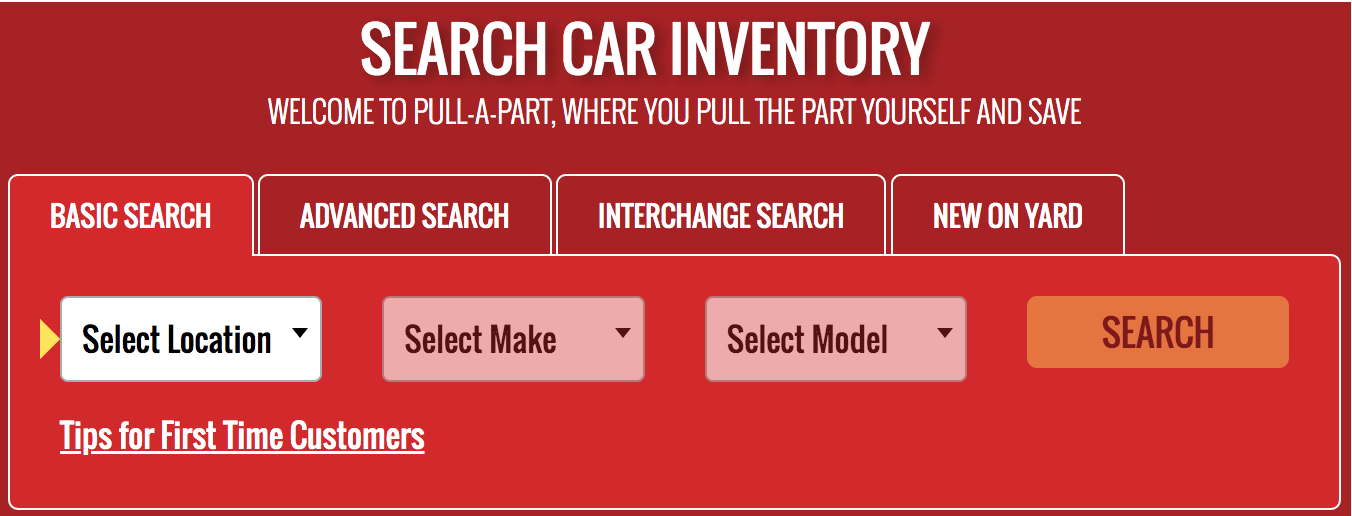
The single biggest mistake at a self-service yard is driving out before confirming the part is actually there and actually fits. Yard inventory turns over quickly, so start your search online. Browse the current stock at your nearest Pull-A-Part salvage yard, note whether your target vehicle is in stock, and write down its section and row so you are not wandering the lot.
Before you leave, gather your vehicle details and use the interchange tool to widen your options. Many parts are shared across several models, so a donor vehicle you would not have guessed may carry exactly what you need. Most yards also charge a small admission fee and set a minimum age to enter, and these policies vary by location, so review your local yard's hours and rules ahead of time.
A quick checklist for a successful yard visit
Run through this before you head out. A little preparation turns a self-service trip into real savings instead of a wasted afternoon.
- Check current inventory online and note the section and row.
- Write down the year, make, model, trim, and engine, plus the VIN if you have it.
- Use the parts-interchange tool to identify compatible donor vehicles.
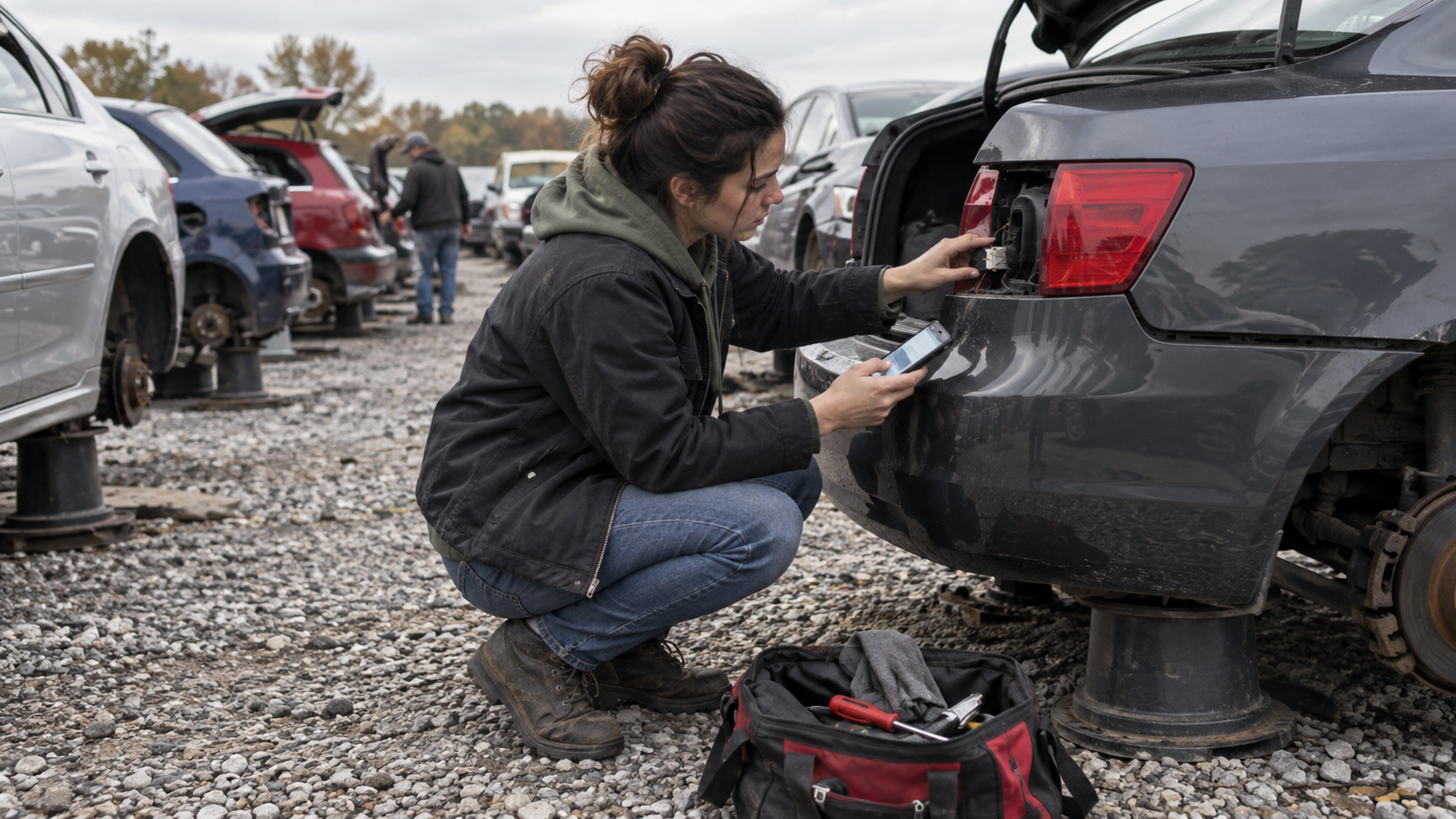
- Pack basic tools: a socket set, ratchet and breaker bar, screwdrivers, pliers, and penetrating oil.
- Bring safety gear such as work gloves and eye protection; a multimeter helps test electrical parts.
- Inspect each part for wear, cracks, corrosion, and matching connectors before you pull it.
- Keep your receipt in case you need to confirm fitment or return later.
When buying a part is not the smartest move
Used parts can rescue a lot of repairs, but not every vehicle is worth fixing. If a car needs repairs that cost more than the vehicle is worth, or it keeps breaking down in new ways, it may be time to move on. Two options can make that transition easier.
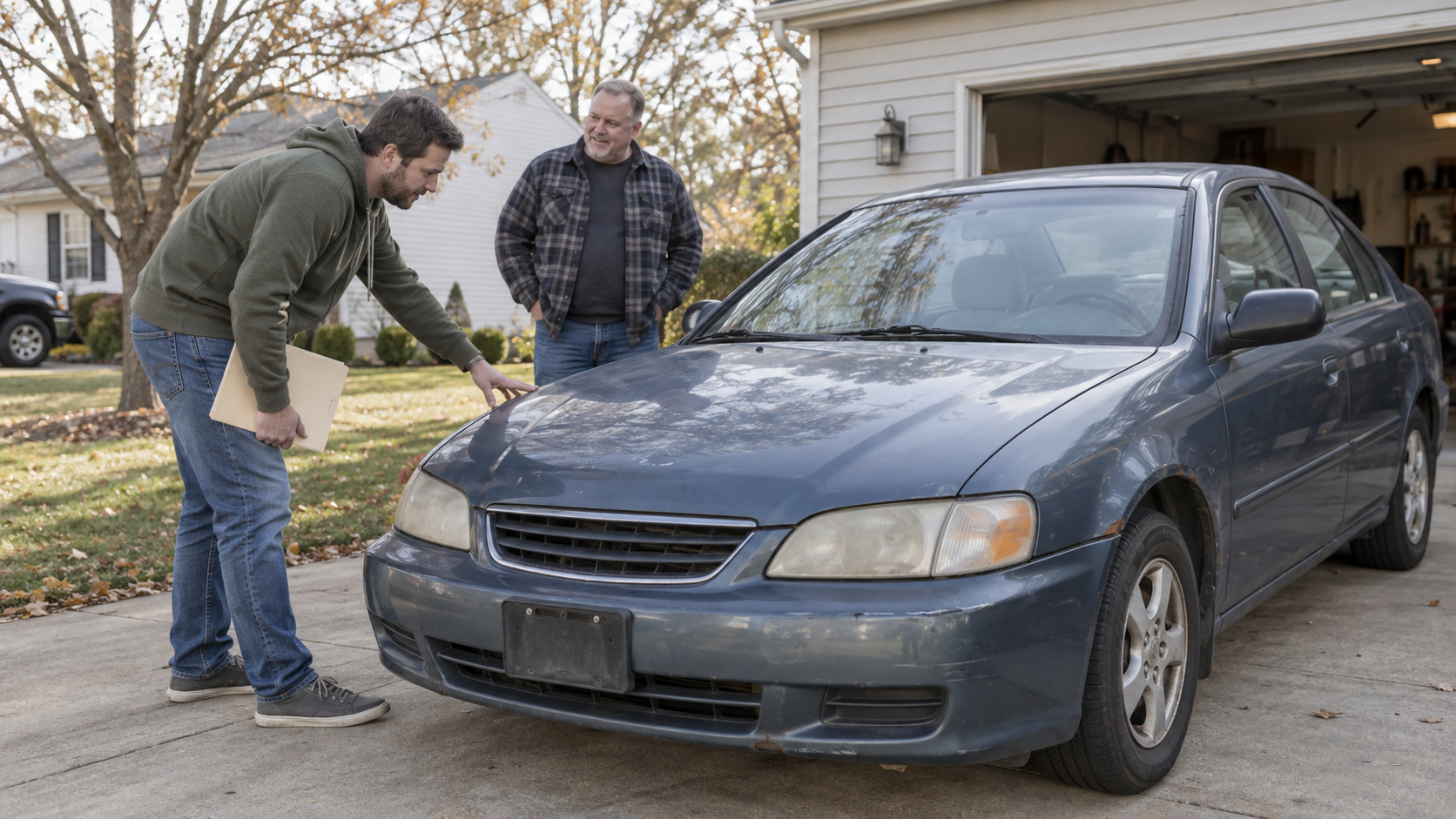
If the vehicle has reached the end of its useful life, you can sell an unwanted vehicle for cash instead of letting it sit and lose value. Before you hand over the keys, make sure the title is in your name and properly signed, because Georgia generally requires the registered owner to transfer the title when ownership changes, and you may also need to cancel the registration once it is gone. You can review the current steps for releasing ownership on the Georgia Department of Revenue's guide to transferring ownership of a vehicle. Requirements can change, so confirm the latest paperwork with the state before you sell.
If repairs simply no longer add up, replacing the car may be the better path. You can shop for a quality, affordable used car at a Georgia location such as Atlanta East. Keep in mind that an inexpensive vehicle still deserves the same inspection and test drive you would give any used purchase, since affordable does not automatically mean trouble-free.
Why used parts are a smart, sustainable choice
Choosing a quality used part over a new one usually costs less and keeps a serviceable component out of the scrap pile. Reusing parts conserves the materials and energy that go into manufacturing, which is part of why salvage yards play a real role in the circular economy. The savings vary by part and vehicle, so judge each component on its own condition rather than assuming a fixed discount, but for many common repairs the value is clear.
Making the most of Georgia's used-parts supply
The vehicles that show up most often in Georgia yards are popular for a reason, and that popularity works in your favor. Knowing which cars, trucks, and SUVs are common, which parts they reliably provide, and how to verify fitment before you go is the difference between a quick win and a frustrating trip. Check current inventory, bring the right details and tools, and inspect every part with your own eyes. When a repair makes sense, Pull-A-Part's self-service model puts you in control of finding it affordably, and when it does not, you have clear options for moving on.