How to Use a Self-Service Junkyard: A First-Timer's Guide to Pulling Your Own Parts
Ask AI About Pull-A-Part
TO TURN YOUR JUNK CAR INTO CASH
Get the phone number to a location near you by enterging your zipcode.
Find a Local Junkyard
ALABAMA
ARIZONA
COLORADO
FLORIDA
GEORGIA
INDIANA
KENTUCKY
LOUISIANA
MISSISSIPPI
NEW MEXICO
NORTH CAROLINA
OHIO
PENNSYLVANIA
SOUTH CAROLINA
TENNESSEE
TEXAS
Pull-A-Part | Nov 1, 2025
If you have never set foot in a self-service junkyard, the idea can feel a little intimidating. Rows of cars stretch across the lot, there is no counter clerk handing you a finished part, and you are expected to bring your own tools. But for budget-minded drivers, a self-service yard is one of the most affordable ways to get a working used auto part, and once you understand how the process works, it is surprisingly simple.
This guide is written for first-timers. By the end, you will know what to bring, how a self-service junkyard is different from a regular salvage yard, how to find and remove the part you need, how to check that the part is worth pulling, and a few ways to save money along the way. The goal is to help you walk in prepared and leave with the right part instead of wasting a trip.
What a Self-Service Junkyard Actually Is
A self-service junkyard, sometimes called a "pick-and-pull" or "u-pull-it" yard, is exactly what it sounds like: you walk the lot, find a vehicle that matches yours, and remove the part yourself using your own tools. This is different from a full-service salvage yard, where staff locate and pull the part for you and charge more for the labor. It is also not a repair shop. No one at a self-service yard installs the part or works on your car; the savings come from the work you do yourself.
Pull-A-Part operates this kind of yard. Vehicles are organized across the lot, you remove what you need, and you pay for the part when you leave. Because you are supplying the labor, prices stay low, which is a big part of why drivers fixing older or higher-mileage cars turn to used auto parts in the first place.
Before You Go: A First-Timer's Checklist
A little preparation is the difference between a quick, productive visit and a frustrating one. Most self-service yards expect you to arrive with everything you need to remove a part on your own, so pack accordingly. Many yards, including Pull-A-Part, also require visitors to be at least 16 years old and charge a small admission fee to enter the lot, so it is worth confirming the current age policy, hours, and admission cost for your local yard before you go.
- A basic toolkit: a socket set and ratchet, wrenches, screwdrivers, pliers, and a breaker bar for stubborn bolts.
- Work gloves and eye protection to guard against sharp metal and grime.
- Closed-toe, sturdy footwear. Skip the sandals; you will be walking on uneven, gritty ground.
- A valid photo ID for check-in.
- Cash or a card for the admission fee and your parts.
- A bin, bag, or small cart to carry parts back to the counter.
- The exact year, make, model, trim, and engine size of your vehicle, written down.
Look Up the Car Before You Drive Over
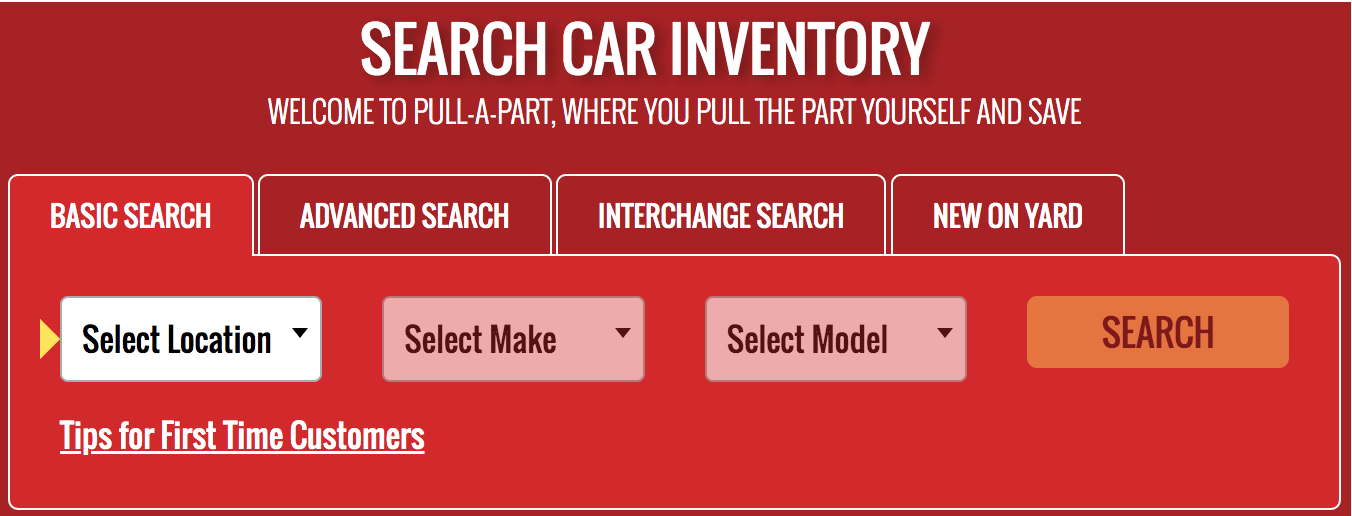
Do not show up hoping the right vehicle is on the lot. Self-service inventory changes constantly as cars arrive and get picked clean, so the smartest first step is to search the yard's online inventory by year, make, and model. On the Pull-A-Part site, a red dot indicates a vehicle that is currently in stock, and you can set up notifications to be alerted when a car you need shows up. You can browse current inventory and yard details for the self-service junkyard in Birmingham before you make the trip, which saves you from a wasted drive.
One thing beginners often miss: a part does not always have to come from your exact vehicle. Through what is called parts interchange, components from other model years or trims may fit your car. Always verify the interchange information for the specific part so you know which donor vehicles will work, and remember that availability changes daily, so check current inventory the day you plan to visit.
What to Expect at the Yard, Step by Step
Once you arrive, the routine is straightforward. Knowing the order of operations ahead of time keeps a first visit from feeling overwhelming.
- Check in at the front counter or kiosk, pay the admission fee, and show your ID.
- Grab a yard map and find the section where your vehicle's make is located.
- Walk to the matching car and confirm the year, make, model, and engine match the part you need.
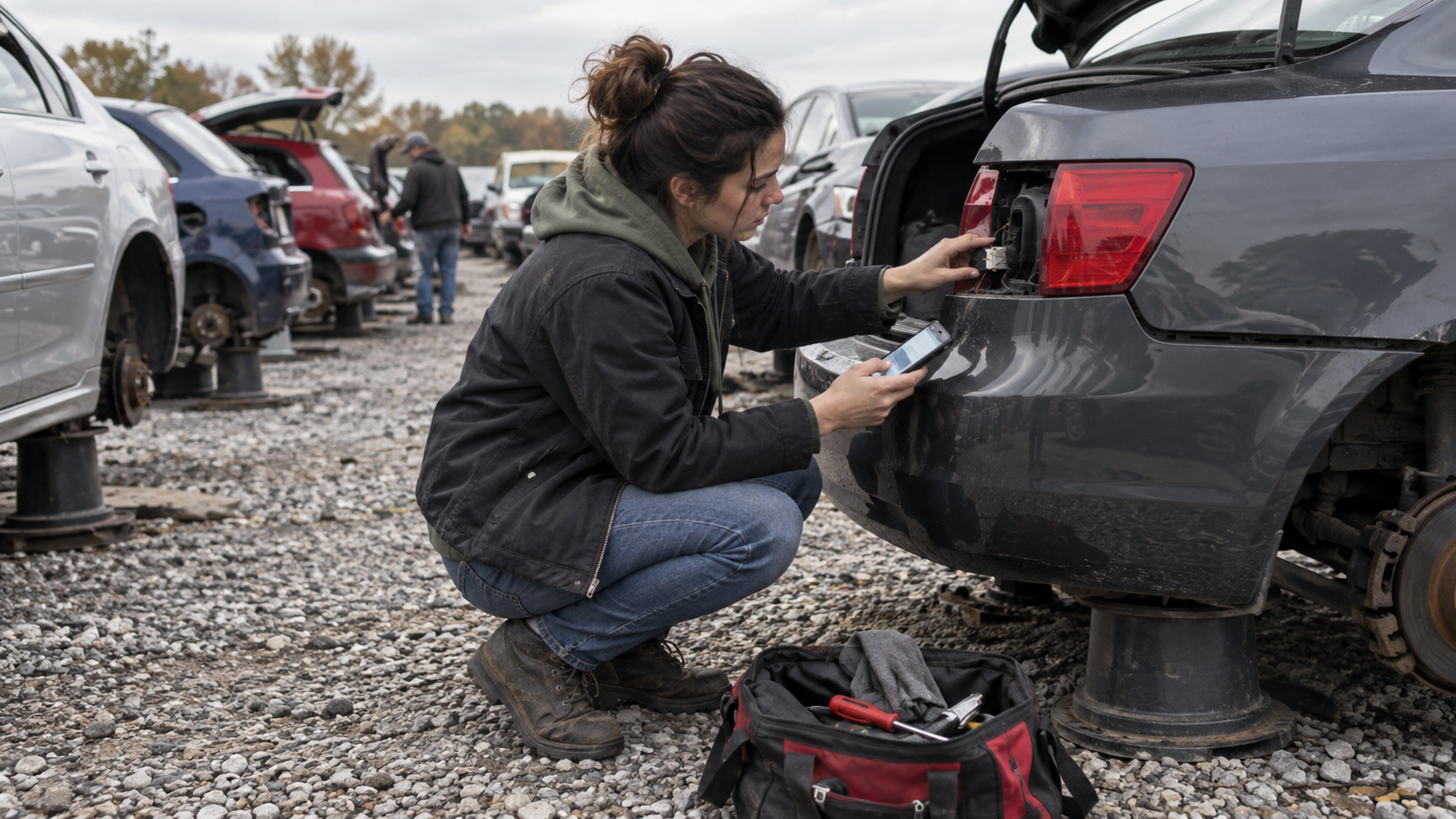
- Remove the part yourself with your tools, working carefully and pulling any related bolts, brackets, or connectors you will need.
- Bring the part to the counter to be priced, then pay on your way out.
How to Pull a Part Without Hurting Yourself or the Part
Self-service yards are working environments with sharp edges, leftover fluids, and heavy components, so take your time. Support any raised hood or trunk lid before you reach underneath it, and never crawl under a vehicle that is not safely supported. Watch for rusty metal, broken glass, and spilled fluids underfoot. When you remove a part, loosen fasteners slowly to avoid stripping them, and keep track of small clips and connectors so you do not snap anything you actually need. Patience protects both you and the part you came for.
How to Inspect a Used Part Before You Pull It
A used part is only a bargain if it works, so inspect carefully before you spend the effort removing it. Bringing your old part along makes it easy to compare size, shape, and mounting points side by side.
- Look for cracks, heavy corrosion, leaks, or obvious wear.
- Check that electrical connectors and pins are intact and not melted or broken.
- Compare part numbers and casting marks where they are visible.
- Confirm the part matches your year, make, model, trim, and engine, plus any interchange listing.
No one can guarantee that a used part will fit every situation, so verifying compatibility before you pull it is the single best way to avoid a return trip.
How Pricing Works and How to Save
At most self-service yards, parts are priced by category rather than by the specific vehicle they came from, so a starter or alternator generally costs the same regardless of which car you pulled it from. Your biggest savings come from supplying the labor yourself instead of paying a shop to source and install the component. Some yards also offer loyalty programs, such as Pull-A-Part's VIP Club, that can lower admission or add perks. Policies on warranties, core charges, and returns vary by location, so review the store policy before you buy if those details matter for your purchase.
When a Junkyard Part Isn't the Right Move
Sometimes a trip to the yard confirms what you suspected: the repair would cost more than the car is worth, or the part you need is simply not on the lot. That is a normal part of budget-conscious ownership, and you have other options. If the vehicle you were trying to fix has reached the end of its useful life, you can sell an unwanted vehicle for cash instead of pouring money into it. And if you would rather skip the repair altogether, it may make more sense to buy a quality, affordable used car. Keep in mind that "affordable" does not mean flawless, so inspect and test drive any used vehicle and have it checked over before you commit.
Make Your First Visit Count
A first trip to a self-service junkyard does not have to be a gamble. Look up the car online before you drive over, bring your ID and the right tools, inspect the part before you pull it, and work safely while you remove it. Do those things and you will leave with a working used auto part for a fraction of what a new one would cost. Pull-A-Part's self-service model is built around exactly this kind of hands-on, money-saving visit, and once you have done it once, the next treasure hunt feels a lot more like routine.