How to Pull Quality Used Auto Parts from a Junkyard
Ask AI About Pull-A-Part
TO TURN YOUR JUNK CAR INTO CASH
Get the phone number to a location near you by enterging your zipcode.
Find a Local Junkyard
ALABAMA
ARIZONA
COLORADO
FLORIDA
GEORGIA
INDIANA
KENTUCKY
LOUISIANA
MISSISSIPPI
NEW MEXICO
NORTH CAROLINA
OHIO
PENNSYLVANIA
SOUTH CAROLINA
TENNESSEE
TEXAS
Pull-A-Part | Sep 19, 2025
When a repair calls for a part that costs a small fortune new, a self-service junkyard is one of the smartest places to look. The parts are real, the prices are a fraction of retail, and you do the removal yourself, so you skip the markup that comes with buying from a parts counter or paying shop labor. The catch is that a salvage yard rewards preparation. Walk in without a plan and you can lose an afternoon; walk in knowing exactly what you need and how to pull it, and you can leave with a solid part and real savings.
This guide walks through the whole process: how to confirm the right part before you go, what to bring, how to size up a donor vehicle, how to spot a part that is worth pulling, and how to remove it cleanly. By the end you will be able to plan a productive trip, avoid the most common mistakes, and judge whether pulling a used part is even the right move for your repair.
Short answer: To pull quality used auto parts from a junkyard, confirm the exact year, make, model, trim, and engine your part fits; check the yard's online inventory before you drive out; bring your own hand tools and safety gear; inspect the donor vehicle and the part for wear or damage; and remove the part slowly so you do not break it or the surrounding pieces.
Before You Go: Research the Part and Check Inventory
Most wasted junkyard trips trace back to one of two problems: not knowing exactly what part is needed, or assuming a matching vehicle is on the lot when it is not. Both are easy to avoid with a little homework.
Confirm exactly what fits your vehicle
Start by pinning down the year, make, model, trim, and engine of your own vehicle, then figure out which other vehicles share the same component. Many parts carry over across several model years or even across different models built on the same platform, which is often called parts interchange. You can usually verify interchange information through your vehicle's service documentation, owner forums, parts-lookup tools, or a parts professional. Confirming this up front keeps you from pulling a part that looks identical but will not bolt up, seal, or connect the way yours did.
Check current inventory before you drive out
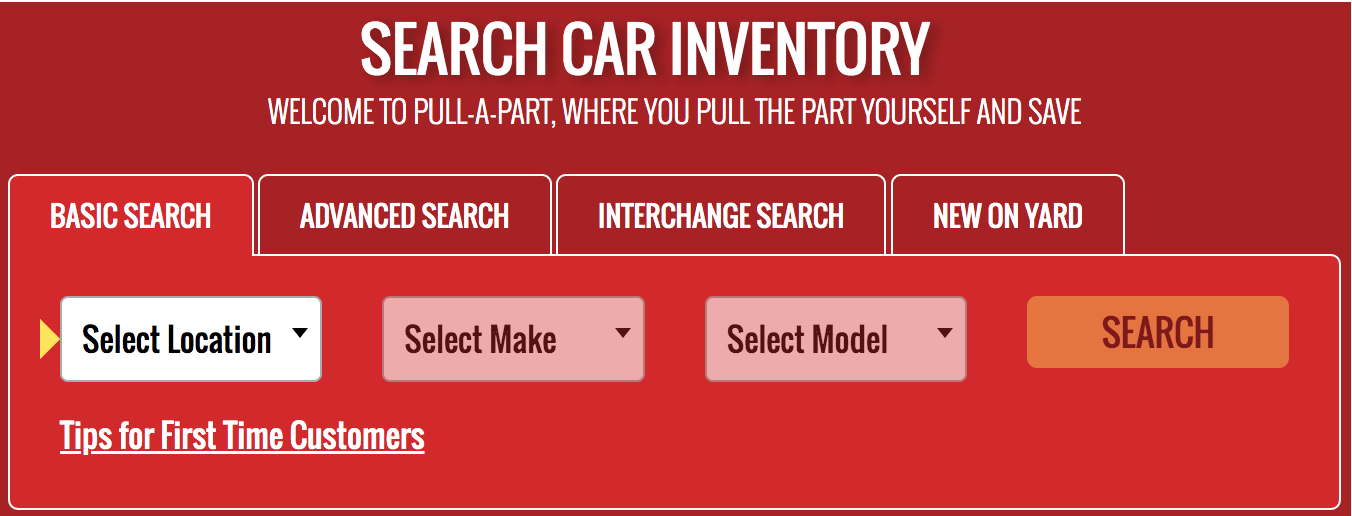
Salvage inventory changes constantly as vehicles arrive and get picked over, so a part that was on the lot last week may be gone today. Before making the trip, search the yard's online inventory, which Pull-A-Part updates daily from each location's own database. If the vehicle you need is not listed, many yards let you sign up to be notified when a matching car arrives. When you are ready to find a self-service junkyard near you, you can check which location is closest and confirm what is currently on its lot. Treat any online listing as a snapshot rather than a guarantee, and recheck shortly before you go.
What to Bring: Tools and Safety Gear
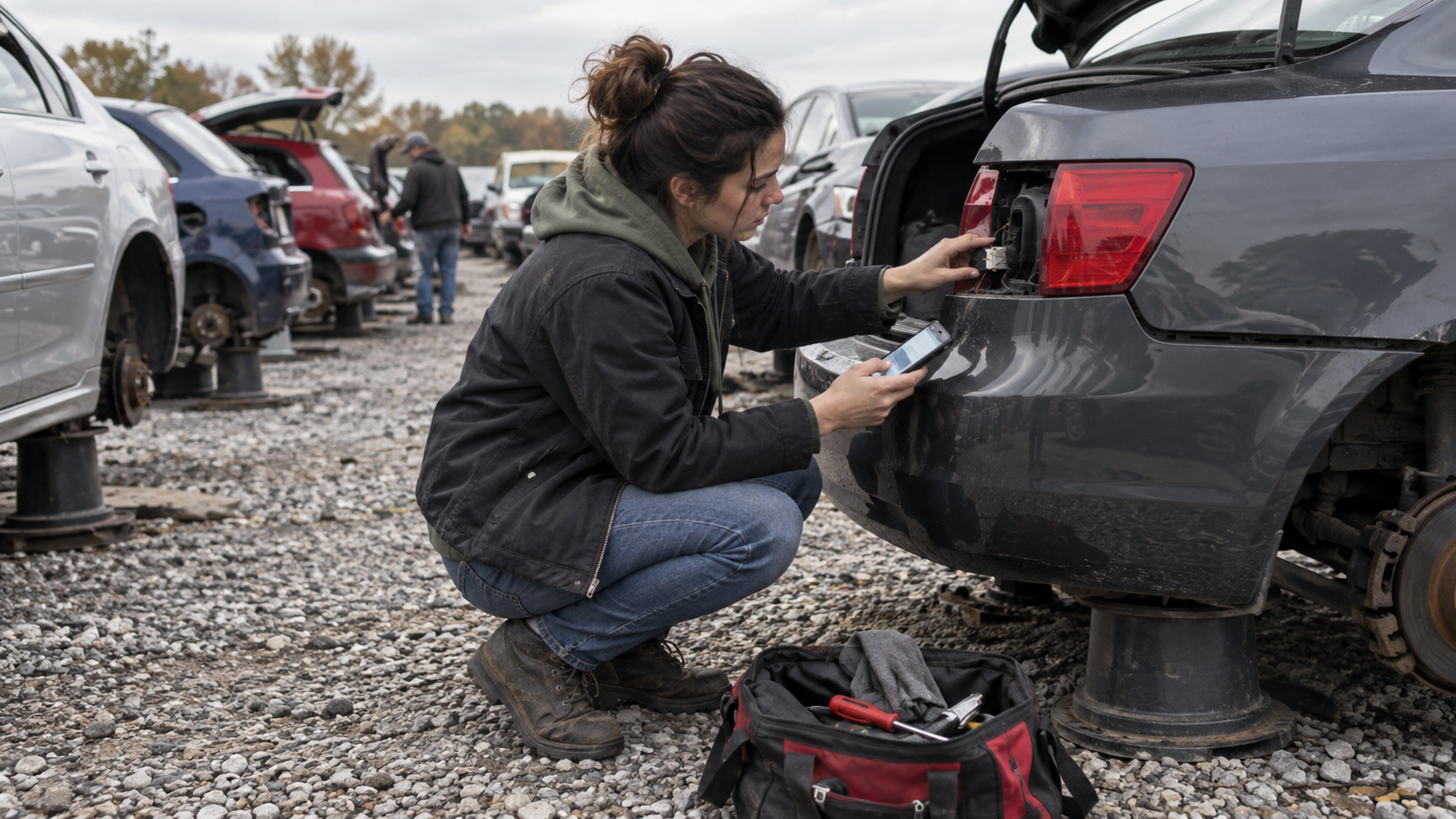
At a self-service yard, you supply the tools and do the work, so a well-packed bag makes the difference between a quick pull and a frustrating one. Build your kit around the specific job, but most outings call for the same core items.
Useful tools to pack:
- Socket and ratchet set with both standard and metric sizes
- Screwdrivers, pliers, and adjustable wrenches
- A breaker bar for stubborn, rusted bolts
- A pry bar and a few trim-removal tools for panels and clips
- A floor jack and jack stands if you need to get under a vehicle
- Penetrating oil to loosen corroded fasteners
- A flashlight or headlamp for dark engine bays and interiors
Safety gear to wear:
- Sturdy work gloves to protect against sharp metal and broken glass
- Eye protection for debris, rust flakes, and fluids
- Closed-toe, durable footwear, ideally with reinforced toes
- A dust mask if you will be working around mold, dust, or insulation
Dress in clothes you do not mind ruining and layer for the weather, since you will be bending, reaching, and kneeling in tight spaces. It is also worth confirming the yard's hours, admission policy, and whether large items can be carried out, along with how you will move heavier parts to your vehicle and pay at the gate.
Finding the Right Donor Vehicle on the Lot
Self-service yards are usually organized by vehicle type or manufacturer, so scan any posted map or layout before you start walking. That alone saves a lot of aimless wandering. Once you reach the right section, look for cars that match the makes and models on your interchange list rather than judging by appearance, because a faded, dented car can still hold a perfectly good part.
When you find a candidate, do a quick walk-around. Heavy collision damage near the part you want, deep rust, or signs that the area has already been stripped are all reasons to keep moving. If you are after an engine or drivetrain component, open the hood and look at fluid condition, leaks, and the wear on belts and hoses for clues about how the vehicle was maintained. For interior or trim pieces, check that the part is intact, uncracked, and not water-damaged before you commit to removing it.
How to Tell Whether a Part Is Worth Pulling
Not every part on a donor car is a good buy. A few quick checks help you avoid dragging home something you will only have to replace again.
- Look for cracks, warping, or heat damage on plastic and rubber components
- Check electrical connectors and wiring for corrosion, melting, or chewed insulation
- Spin or wiggle moving parts to feel for grinding, play, or seized movement
- Inspect mounting points and bolt holes for stripped threads or prior repairs
- On body and trim pieces, confirm the color, finish, and shape match what you need
If a part shows clear wear that matters for how it functions, it may not save you anything in the long run. Trust what you see in person over what an online listing suggested.
Pulling the Part the Right Way
Careful removal protects both the part you want and the parts around it. Work in a deliberate order rather than rushing.
- Photograph the assembly before you touch it, capturing how brackets, clips, hoses, and wiring connect so reassembly at home is straightforward.
- Apply penetrating oil to rusted fasteners and give it a few minutes to work before applying force.
- Loosen bolts and clamps gradually and evenly instead of yanking, which reduces the chance of snapping a fastener or cracking a nearby part.
- Drop small hardware into labeled bags or containers so nothing disappears into the dirt or under a seat.
- Before lifting the part free, double-check for hidden connectors, harnesses, or hoses, then ease it out gently rather than prying hard.
If a fastener will not budge, step back and reassess instead of forcing it. A broken bolt can turn an easy pull into an impossible one, and a few extra minutes of patience usually pays off.
Getting the Most Value from Every Visit
Used parts are already a bargain compared with new, but a few habits stretch your savings further. Pull-A-Part uses a straightforward pricing model in which the same type of part carries the same price regardless of the vehicle's make, model, or year, which makes it easy to know roughly what you will pay before you go. Watch for posted specials, membership or rewards programs, and seasonal promotions, and ask staff whether anything you are buying qualifies.
Timing helps too. Yards add fresh vehicles regularly, so visiting soon after new arrivals can mean a wider selection and less-picked-over cars. Before you leave the gate, confirm the location's return or exchange policy, since a used part occasionally turns out to be the wrong one or hides a flaw you could not see on the lot. Keeping a running list of the parts you need also lets you grab a good deal opportunistically when you spot the right donor car.
When Pulling a Part Is Not the Right Move
Sometimes the smartest decision is to stop spending on a vehicle altogether. If your repair list keeps growing, or the cost of parts and your time starts to rival what the car is worth, it may be time to weigh repair against replacement. In that situation, shopping for a quality, affordable used car can be a more practical path than chasing one more fix.
And if the vehicle you have been keeping alive is finally beyond saving, it does not have to sit in the driveway. You may be able to sell an unwanted vehicle for cash and request a quote based on its condition, then put that money toward your next set of parts or a replacement car. Quotes and what a yard will buy can vary, so check the details for your situation before counting on a specific outcome.
Final Thoughts
Pulling used auto parts from a junkyard is one of the most reliable ways to cut repair costs, and it gets easier every time you do it. The fundamentals stay the same: confirm exactly what fits, verify the part is on the lot before you drive out, bring the right tools and safety gear, inspect carefully, and remove the part with patience. Do those things and a self-service yard becomes a dependable, low-cost resource for keeping your vehicle on the road. When you are ready, look up your nearest Pull-A-Part, check current inventory, and plan your visit around the part you actually came for.