Auto Recycling in Louisiana: What Happens to End-of-Life Cars
Ask AI About Pull-A-Part
TO TURN YOUR JUNK CAR INTO CASH
Get the phone number to a location near you by enterging your zipcode.
Find a Local Junkyard
ALABAMA
ARIZONA
COLORADO
FLORIDA
GEORGIA
INDIANA
KENTUCKY
LOUISIANA
MISSISSIPPI
NEW MEXICO
NORTH CAROLINA
OHIO
PENNSYLVANIA
SOUTH CAROLINA
TENNESSEE
TEXAS
Pull-A-Part | August 25, 2026
Auto Recycling in Louisiana: What Happens to End-of-Life Cars
When a vehicle reaches the end of its useful life in Louisiana, it almost never gets crushed the day it arrives somewhere. A licensed recycler drains the fluids, removes the hazardous components, sells or salvages whatever still works, and only then sends the leftover shell to a shredder, where it is separated back into steel, aluminum, copper and other raw materials. The process looks a lot more like careful disassembly than demolition.
Your role is smaller but just as important: signing over a clear title, taking the license plate off the car, canceling that plate before you cancel insurance, and letting the Office of Motor Vehicles know the vehicle is gone. This guide covers both halves — what physically happens to the car, and what a Louisiana owner is responsible for before and after handing over the keys.
When a Car Is Actually at the End of Its Life
End of life has little to do with age or odometer reading. Plenty of twenty-year-old vehicles are still worth fixing, and plenty of ten-year-old ones are not. What matters is the relationship between what the repair costs and what the car is worth running. Once a single repair approaches the vehicle's value, or once repairs start arriving in a steady line, the math stops working.
Common signs a vehicle has crossed that line:
- The estimate for one major repair — engine, transmission, or extensive rust and structural work — is close to or higher than what the car would sell for in good running condition.
- The frame or unibody was bent in a collision, which is expensive to straighten and hard to verify afterward.
- Water reached the interior or the electrical system. Flood damage tends to keep producing new problems long after the car dries out.
- Safety items you can't skip — brakes, steering, suspension, tires — all need attention at the same time.
- You've stopped trusting the car for the trips you actually need to make.
A car in that condition still has value. The value has simply moved from transportation to materials and reusable components, which is exactly what the recycling process is built to recover.
How Auto Recycling Works in Louisiana, Step by Step
1. Intake and Evaluation
The first decision is which path the vehicle takes. A few cars that arrive at a salvage yard still run and need only modest work; those may be cleaned up and resold as inexpensive transportation. Most are worth more disassembled — a car with a failed engine can still have a good transmission, doors, glass, seats, wheels and hundreds of smaller parts that are costly to buy new. Vehicles that are badly burned, stripped, or already well represented on the yard tend to move toward scrap sooner.
2. Fluids and Hazardous Materials Come Out First
Nothing gets dismantled or crushed until the vehicle is drained. Gasoline or diesel, engine oil, coolant, transmission and differential fluid, brake fluid, power steering fluid and washer fluid are all pulled and stored separately for recycling or disposal. The lead-acid battery comes out for recycling, since batteries are one of the most consistently recovered items in the entire process. Air-conditioning refrigerant has to be captured with certified recovery equipment rather than released, because federal clean-air rules prohibit venting it. Tires come off, undeployed airbag modules are handled as the pyrotechnic devices they are, and older vehicles may still contain mercury switches that are removed before shredding.
3. Reusable Parts Get a Second Life
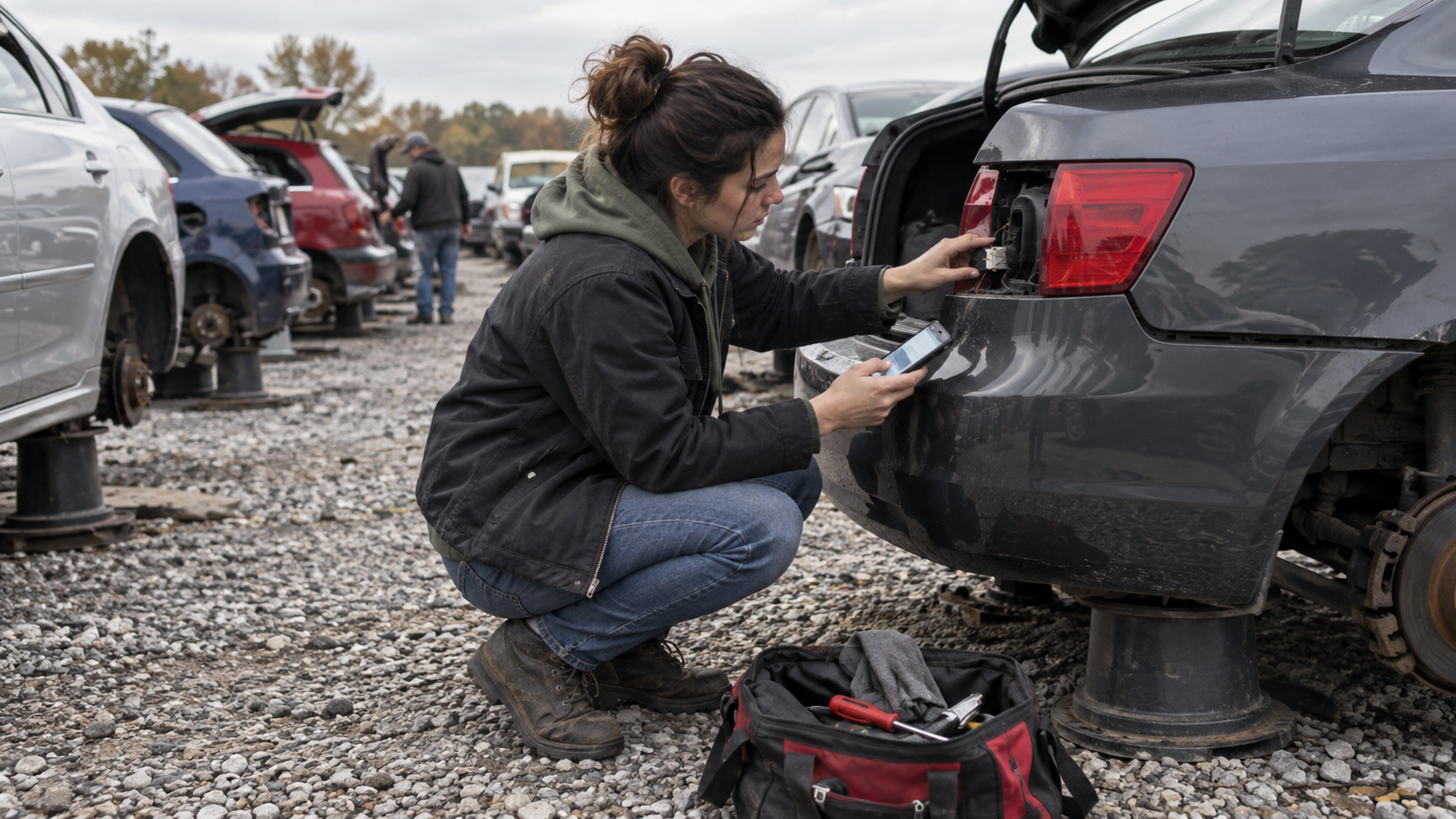
Reuse sits above recycling in the value chain, because a working alternator that goes back on the road never has to be melted down and manufactured again. This is the stage most drivers actually interact with. At a self-service operation, the vehicle is set out on the yard on stands and customers bring their own tools to remove what they need, which is why prices stay well below new-part retail. Pull-A-Part's Louisiana self-service yards in Baton Rouge, Lafayette and New Orleans West work this way, with an online inventory that shows which vehicles are currently on the ground.
4. Time on the Yard
Vehicles don't stay out indefinitely. Yards rotate inventory so there's room for newer arrivals, which means a car you saw listed last month may already be gone. If you're hunting a specific part, check current inventory before you drive out, and call if the part is unusual. No yard can promise a particular vehicle or component will be there when you arrive.
5. Crushing, Shredding and Metal Separation
Once a vehicle has given up everything worth reselling, the remaining shell — the hulk — is flattened and hauled to a shredder. Shredders reduce a car body to fist-sized pieces in seconds. Magnets pull out the ferrous steel and iron, which is the largest share of the car by weight. Eddy-current separators and density-based sorting then recover aluminum, copper and brass. Steel heads to mills and foundries, and the nonferrous metals go to their own smelters.
6. What's Left Over
The material that isn't metal — plastics, foam, carpet, fabric, glass and rubber — is known as shredder residue, and it's the genuinely difficult part of the equation. Some of it can be processed further, but this is where most of the landfill volume from a scrapped car comes from. It's also the practical reason recyclers work so hard at the reuse stage: every part sold off the yard is material that never has to be sorted out of a shredded mix.
The Louisiana Paperwork Side of Auto Recycling
Your Title, and What to Do If You Can't Find It
Louisiana buyers generally need the title before they can take a vehicle, and that includes Pull-A-Part, which requires a title in Louisiana and does not purchase vehicles that still carry an unpaid loan or lien. If the title is lost, you can apply to the Office of Motor Vehicles for a duplicate using the state's vehicle application, available on the OMV's vehicle title and registration forms page along with the salvage, dismantling and bill-of-sale forms the state uses. Louisiana handles many vehicle documents through a notary, and fees change over time, so confirm the current requirements and cost with OMV or a public tag agent before you make the trip. If there's still a lienholder on the record, that has to be cleared first — no legitimate buyer can work around it.
Your Plate and Your Insurance, in That Order
The plate should come off before the car leaves your property. Louisiana lets you turn a plate in at an OMV field office or by mail, or cancel it through the state's online service; a plate canceled online doesn't have to be mailed back, but it does have to be removed from the vehicle and destroyed. The sequence matters here. Because Louisiana requires every vehicle registered in the state to carry liability insurance, OMV instructs owners to cancel the plate before canceling liability coverage. Doing it in the opposite order is how people end up dealing with an insurance lapse on a car they no longer own.
Telling OMV the Vehicle Is Gone
Louisiana offers an online Notice of Vehicle Transfer that flags your OMV record as soon as you report a vehicle sold, donated or traded. You'll need the plate number and its expiration date, the VIN, your driver's license number or company EIN, the buyer's name and address, the date of the transaction and the selling price. Filing the notice doesn't complete the transfer by itself — ownership legally changes when the new owner applies for title — but it creates a dated record that the vehicle left your hands, which is worth having.
What Happens to the VIN
There's a paperwork ending to the story as well. Licensed dismantlers and secondary metal processors in Louisiana must report vehicles bought as scrap to OMV through the Salvage Yard Auto Hulk database immediately after purchase. Once a VIN is entered, it is no longer valid and cannot be titled or registered in any jurisdiction. That step is what keeps a scrapped identity from resurfacing on a different car later.
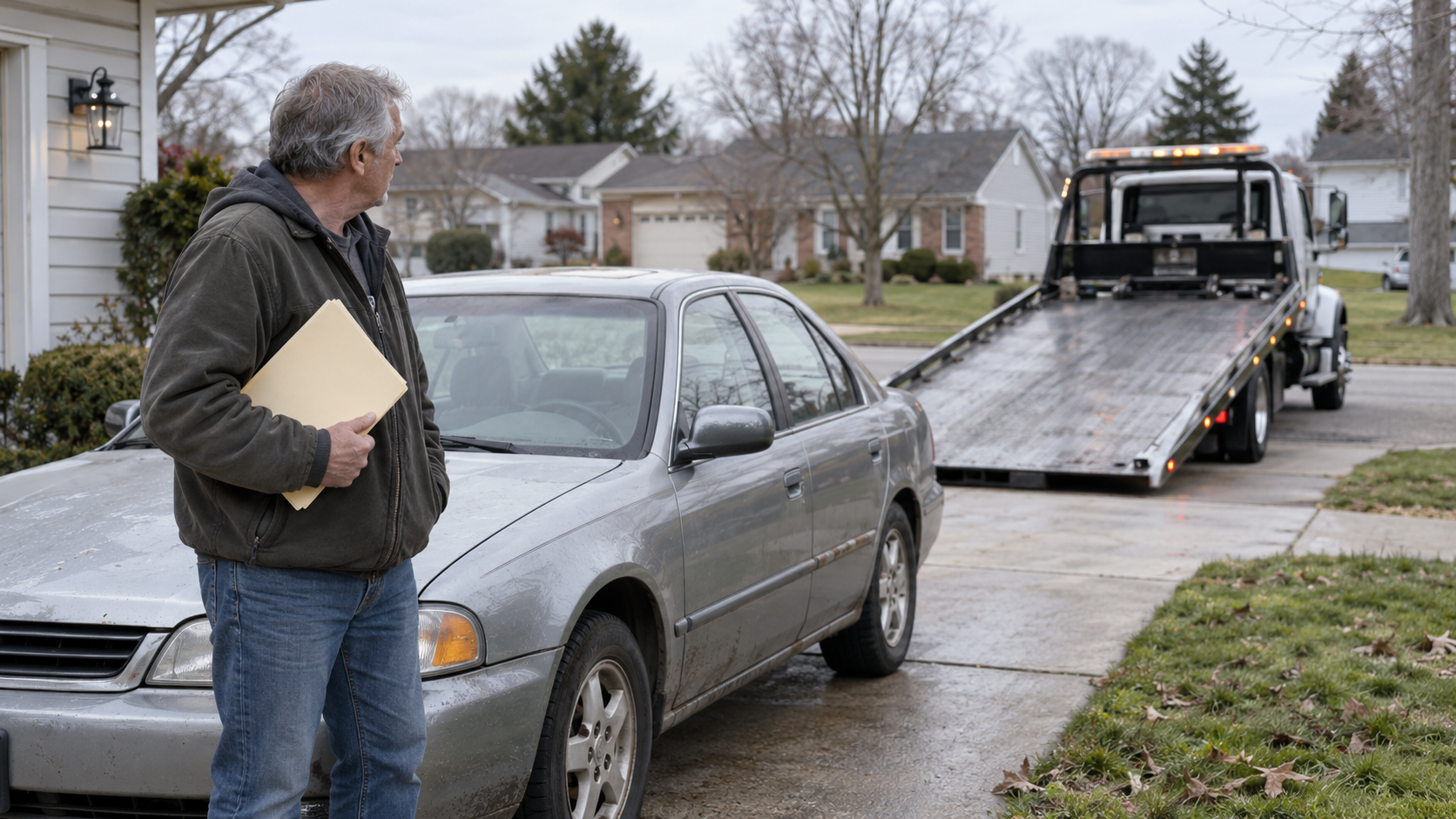
What to Do Before the Tow Truck Arrives
A few minutes of preparation prevents most of the headaches people run into after the car is already gone:
- Empty the vehicle completely — glovebox, center console, trunk, spare tire well, under the seats, door pockets and behind the visors.
- Remove the license plate, then cancel it through OMV.
- Take off the toll transponder, parking decals and any garage or gate remotes.
- Pull the registration, insurance card and anything else with personal information on it.
- Have the title and your photo ID ready, and check that the name on the title matches your ID.
- Tell the buyer up front what's already missing or removed, since offers are based on what's actually on the car.
- Photograph the vehicle, the VIN plate and the signed title for your own records.
- Note anything that affects pickup — a blocked driveway, flat tires, no keys — so the tow crew arrives prepared.
Getting Fair Value for a Car You're Finished With
Offers on an end-of-life vehicle depend on year, make, model, condition and completeness, plus current scrap and used-parts demand. A car with its engine, transmission, catalytic converter, wheels and battery intact is worth more than the same car picked over. Quotes are frequently good only for the day they're issued, because the underlying metal markets move, so it's reasonable to gather offers within the same short window rather than over several weeks. When you're ready to sell an unwanted vehicle, ask three questions before you agree: what documents you need to have in hand, whether removal is included at your address, and when and how you'll be paid. Pull-A-Part buys vehicles in any condition in the markets it serves and tows at no charge within its service areas, but service areas and requirements do vary, so confirm what applies to your location.
The Other Side of Recycling: Cheaper Repairs and Cheaper Cars
Everything described above is also why used auto parts are affordable in the first place. If you're keeping an older car on the road, a yard-pulled part is often the difference between a repair that makes sense and one that doesn't. Before you go, write down the year, make, model, trim, engine and — where it matters — the drivetrain of your vehicle. For electrical components, control modules and anything with a stamped identifier, match the part number and check interchange listings, since parts that look identical across model years frequently are not. Bring your own tools, and expect inventory to look different from one week to the next.
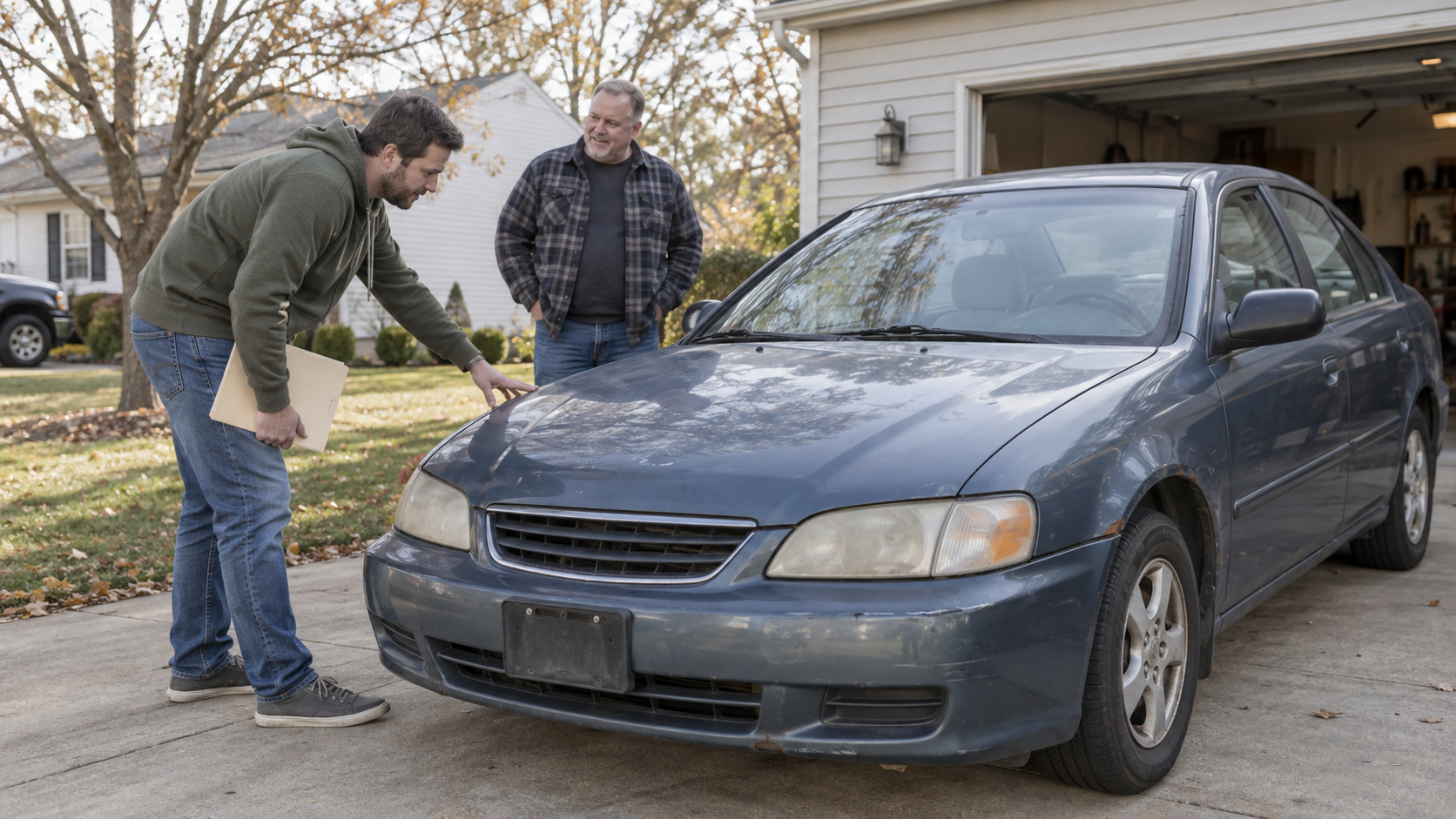
Some vehicles that come through never make it to the dismantling stage at all. A car that runs well and needs only modest work is worth more as transportation than as parts, which is how salvage operations end up with used cars for sale. If that's the direction you're headed, you can find a budget-friendly used car this way, but treat affordability and condition as separate questions. Inspect it, drive it, look carefully for signs of past water intrusion, and budget for maintenance the way you would with any older vehicle.
The Short Version for Louisiana Drivers
An end-of-life car in Louisiana gets drained, stripped of what still works, and reduced to sorted metal — with the reusable parts stage doing most of the environmental and financial work along the way. Your responsibilities are straightforward once you know the order: clear the title, remove and cancel the plate, cancel insurance afterward, and file the Notice of Vehicle Transfer so your record reflects that the car is gone. Handle those four things, choose a licensed buyer who reports the vehicle properly, and the car that stopped being worth fixing goes on to keep other people's vehicles running.