What's Your Junk Car Worth in Baton Rouge, Lafayette, and New Orleans?
Ask AI About Pull-A-Part
TO TURN YOUR JUNK CAR INTO CASH
Get the phone number to a location near you by enterging your zipcode.
Find a Local Junkyard
ALABAMA
ARIZONA
COLORADO
FLORIDA
GEORGIA
INDIANA
KENTUCKY
LOUISIANA
MISSISSIPPI
NEW MEXICO
NORTH CAROLINA
OHIO
PENNSYLVANIA
SOUTH CAROLINA
TENNESSEE
TEXAS
Pull-A-Part | Jul 20, 2026
What's Your Junk Car Worth in Louisiana? A Pricing Guide for Baton Rouge, Lafayette, and New Orleans
There is no published price list for junk cars, and any number you see before a buyer knows what you're driving is a guess. What a junk car is worth in Louisiana is built from a short list of measurable things: how much the vehicle weighs, how much of it is still bolted on, whether it runs and rolls, where it's parked, whether its parts are worth stocking, and what scrap metal is trading for that week.
That same list explains why two buyers can look at the identical sedan on the identical afternoon and come back with different offers. Once you understand the inputs, you can tell a reasonable offer from a lowball one, and you'll know which details to have ready so the number you're quoted is the number you're actually handed at pickup.
The only way to land on a real figure is to have your specific vehicle priced, so when you're ready you can get a current quote on your car. What follows is what goes into that number, why quotes differ between buyers and between markets, and the Louisiana paperwork that can either speed up a sale or stop it cold.
What a Junk Car Is Worth in Louisiana Comes Down to Six Things
Every offer starts from two competing numbers. The first is what the vehicle is worth as scrap metal, which is essentially a floor set by weight. The second is what it's worth as a parts car, which can land higher if there's real demand for the pieces still on it. A buyer works out which of those two numbers applies, then subtracts what it costs to go collect the vehicle. The six factors below move those numbers up or down.
1. Weight and Body Style
Scrap value tracks weight, so a full-size pickup or a body-on-frame SUV starts from a higher floor than a compact car simply because there's more steel in it. That's why a heavy, stripped, non-running truck sometimes prices out better than a lighter car that still looks presentable in the driveway. Vehicles built with a lot of aluminum or plastic body panels don't always follow the pattern their size suggests, which is one reason offers are quoted by year, make, and model rather than by rough category.
2. How Much of the Car Is Still There
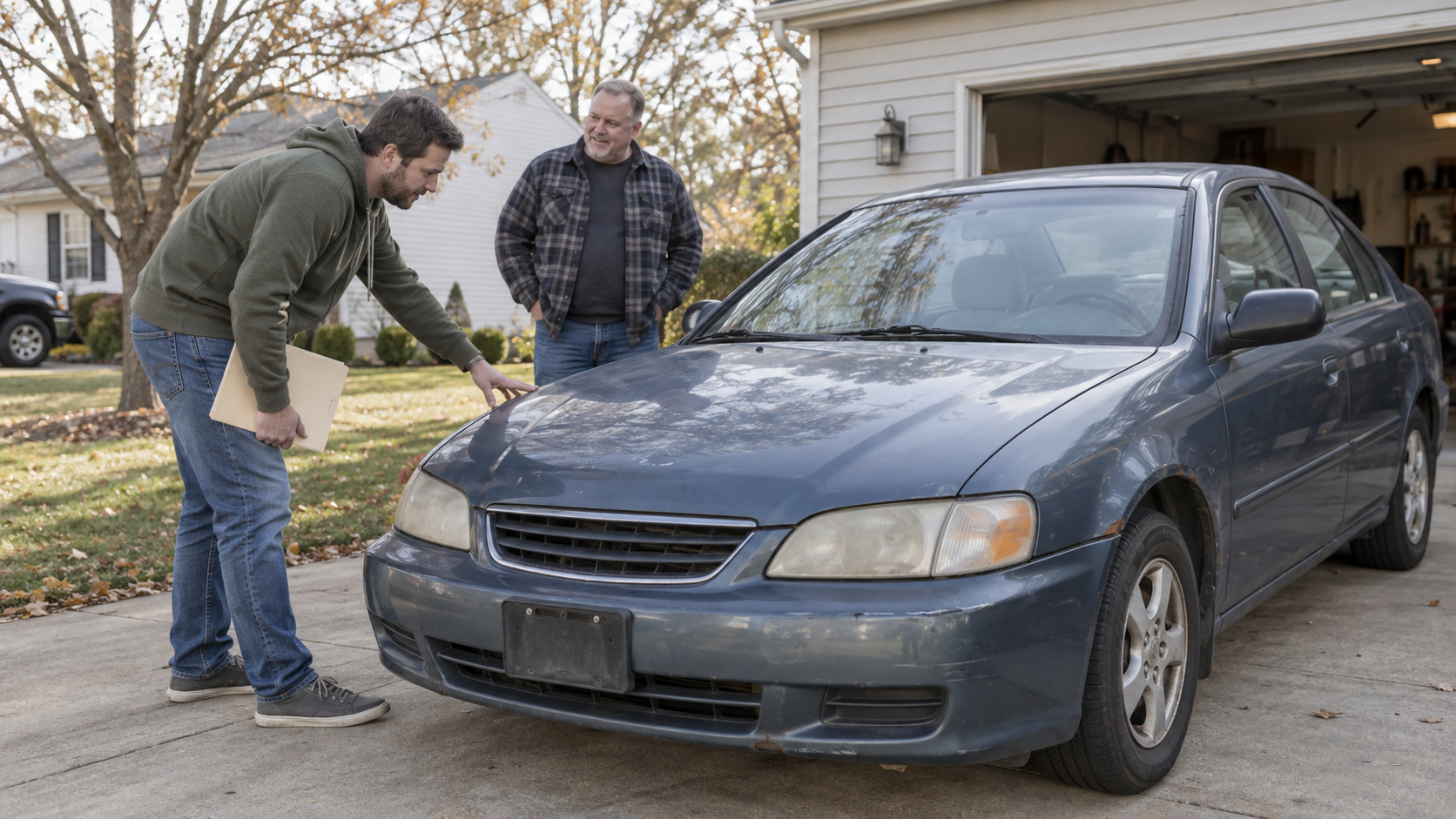
Completeness moves an offer more than most sellers expect, and it's the factor they most often affect without realizing it. When Pull-A-Part prices a vehicle, the questions are specific: is the engine, transmission, and catalytic converter still in the car; are all the wheels on it; are the major body parts, including the doors, hood, and trunk, still attached? A car that's already been picked over is worth measurably less, and the catalytic converter in particular is a high-value component. If you've pulled parts off to sell separately, say so at the quote stage rather than letting the driver discover it at pickup, because the offer will be adjusted either way.
3. Whether It Runs, Steers, and Rolls
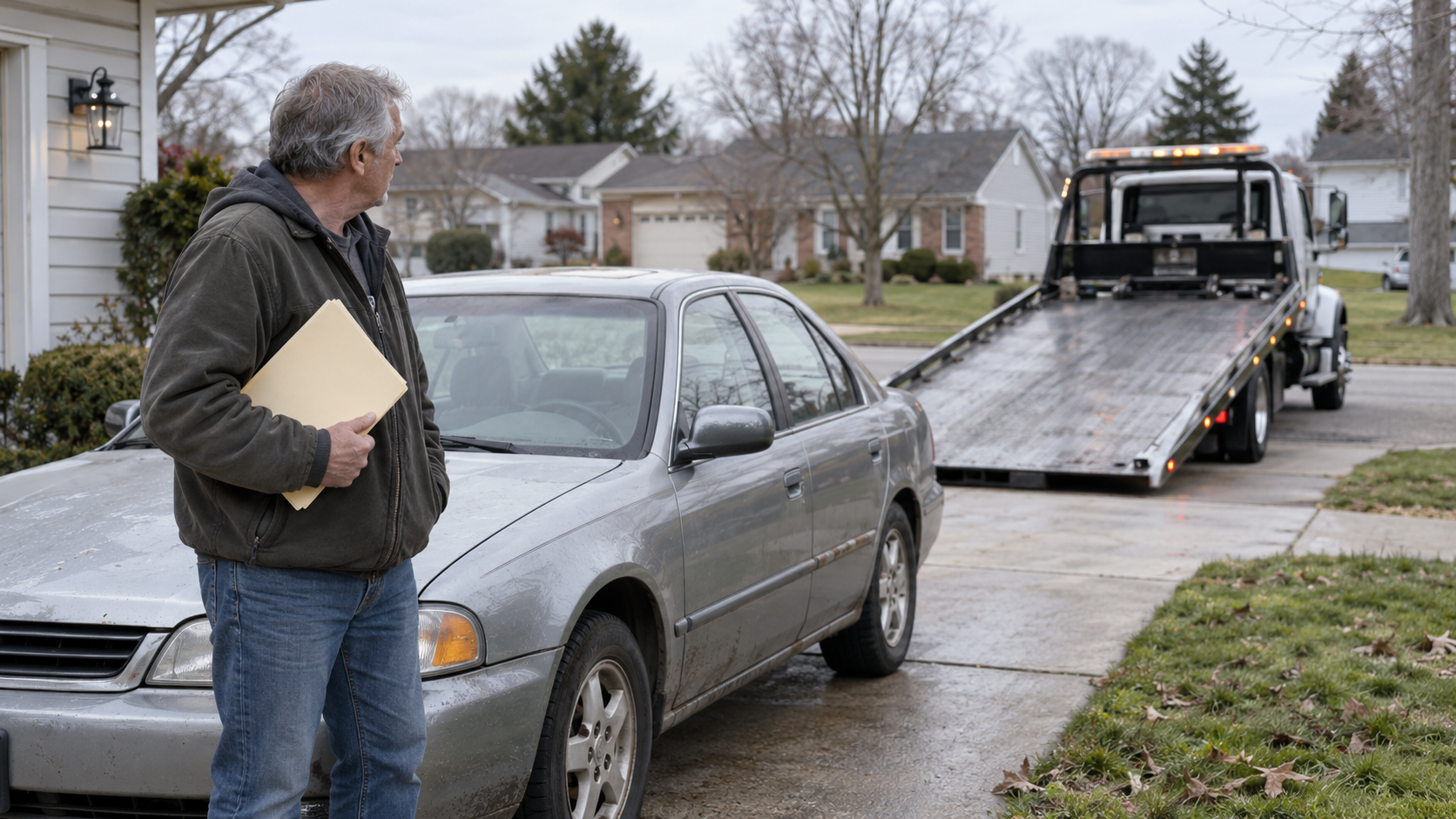
A vehicle that starts and drives is worth more than an otherwise identical one that doesn't, partly because it may still have life as a repairable car and partly because it's far easier to load. A car that rolls and steers can be winched onto a flatbed in minutes. One with seized brakes, missing wheels, a locked steering column, or a bent frame takes more equipment, more time, and sometimes a different truck. "Doesn't run" and "won't move at all" are two different situations, and they can produce two different numbers.
4. Where the Car Is Sitting
Collection is a real cost, and it comes out of the offer. A vehicle ten minutes from the yard is cheaper to pick up than one an hour out, and access matters as much as distance. A car at the curb or in an open driveway is straightforward. One behind a locked gate, boxed in by other vehicles, sunk into soft ground, tucked under low branches, or parked at the back of a narrow lot may take a second trip or a second person. Giving a buyer the exact address and an honest description of the approach is the difference between a quote that holds and one that gets revised on the spot.
5. Parts Demand for Your Year, Make, and Model
Self-service yards earn their money by putting vehicles on the ground for customers to pull from. A car is worth more than its scrap weight when a yard expects steady demand for what's on it: common models with plenty still on the road, engines and transmissions shared across multiple model years, or body styles that move quickly. A rare or heavily damaged vehicle whose parts almost nobody asks for tends to price closer to the scrap floor. Demand is also relative to what a yard already has. If several examples of your car are already sitting in the rows, the next one is worth less than the first one was.
6. Where the Scrap Market Is That Week
Scrap steel is a traded commodity, and mills and shredders adjust what they'll pay as demand shifts. Those swings work their way down to what any buyer can offer for an end-of-life vehicle. It's why junk car quotes are time-sensitive rather than open-ended, and why an offer is generally good for the day it's issued. Sit on a quote for a few weeks and call back, and you might get the same number, a better one, or a worse one, depending on which way the market moved in the meantime.
Why Two Quotes on the Same Car Come Back Different
Getting a second opinion is smart, but comparing quotes is only useful if you know what's creating the gap. Most differences trace back to one of these:
- The buyers have different plans for the vehicle. A yard that wants your car as inventory is bidding against parts demand. A buyer who only intends to crush it is bidding against weight. Those are two different math problems.
- The quotes were taken on different days. Scrap pricing moves, and a quote from two weeks ago isn't a live comparison.
- The car was described differently."Needs a little work" and "hasn't started in three years, no catalytic converter" produce very different numbers, and the second description is the one that survives pickup.
- One number includes the tow and the other doesn't. A higher headline offer minus a towing charge can end up below a lower offer with pickup covered.
- One buyer is a middleman. Some quotes come from brokers who then subcontract the pickup and take a cut. The offer can look competitive until it's revised by whoever actually shows up.
When you compare, ask three questions of each buyer: what's included in the number, how and when you'll be paid, and whether the price is contingent on the vehicle matching your description when the truck arrives. That last one almost always applies.
Baton Rouge, Lafayette, and New Orleans: What Changes and What Doesn't
The way a vehicle is valued doesn't change from one Louisiana market to the next. The same six factors apply in all three. What differs is the practical side of the sale: how far a truck has to travel to reach you, and what's already sitting in that particular yard when your car comes up for pricing.
Baton Rouge and the Surrounding Parishes
The Baton Rouge yard buys across the metro area and out to neighboring communities including Zachary, Livingston, and St. Francisville. That's a broad footprint, and vehicles near its outer edge carry more travel time, so give a street address rather than just naming a town when you ask for a price. If you're weighing an expensive repair against what the car is actually worth, running the numbers first is worth the five minutes it takes to sell an old car for cash in the Baton Rouge area or at least see where the offer lands.
Lafayette and the Surrounding Acadiana Communities
The Lafayette yard's buying area reaches across a wide stretch of Acadiana, including Abbeville, Crowley, Eunice, New Iberia, and Opelousas. Sellers on the far side of that area get the most accurate quotes by being specific about where the vehicle sits and whether a wrecker can reach it without trouble. Owners in those communities can get cash for a junk car in Lafayette once they've settled the condition details.
New Orleans, Metairie, and Nearby Parishes
Pull-A-Part's New Orleans West yard on Peters Road buys from New Orleans along with Metairie, Kenner, LaPlace, Delacroix, and Eden Isle. Pickups on the far side of the river or the lake take noticeably longer than ones a few minutes from the yard, and that travel time is part of what any buyer is weighing. Owners of a wrecked or long-dead vehicle in that area can sell a damaged or non-running car near New Orleans and have it hauled off rather than continuing to work around it.
The Louisiana Paperwork That Can Make or Break the Sale
In Louisiana, expect to need the title. This is the factor that can take an otherwise valuable vehicle off the table entirely, so sort it out before you start collecting quotes.
Louisiana also handles transfers differently from many states. The seller's assignment of the title is generally signed in front of a notary, and a notarized bill of sale or invoice can form part of an acceptable file. If your title is lost, the Office of Motor Vehicles issues duplicates through the vehicle application form (DPSMV 1799). Start that process before you schedule a pickup, not after the truck is on its way.
An outstanding loan or lien is a hard stop. Pull-A-Part does not buy vehicles with a lien still recorded against them, so if you financed the car and never confirmed the lien was released, clear that up first.
Branded titles are their own category. Louisiana's vehicle application includes a disclosure for salvage, reconstructed, water-damaged, and hail-damaged vehicles, and the brand follows the car. For a junk sale it's rarely a dealbreaker, since the vehicle is being bought for parts or metal either way, but flood exposure genuinely affects what can be reused from a car, because soaked wiring, control modules, and interiors have little resale life. Be upfront about it.
Two steps after the sale protect you. First, you can file a Notice of Vehicle Transfer with the Louisiana Office of Motor Vehicles, which flags your record with the vehicle's disposition. Keep in mind that ownership isn't legally transferred until the new owner applies for title. Second, remove the plate before the car leaves and cancel your license plate through OMV. Order matters here: because Louisiana requires registered vehicles to carry liability insurance, the plate has to be canceled before you cancel the policy on that car. Requirements and fees change over time, so confirm the current steps with OMV for your own situation.
How to Get a Quote That Holds Up
Most revised offers come from incomplete information at the quote stage, not from anyone changing their mind. Five minutes of preparation usually prevents it.
- Have the vehicle details in front of you. Year, make, model, and trim, plus the VIN if you can reach the windshield or door jamb. Trim and engine can matter to parts demand.
- Take an honest inventory of what's missing. Engine, transmission, catalytic converter, wheels, doors, hood, trunk lid, and anything else that's already been pulled.
- Describe the condition plainly. Runs and drives, starts but won't move, doesn't start, won't roll, wrecked, flooded. Pick the one that's true.
- Know exactly where it is and how a truck would reach it. Full street address, whether it's in a driveway, garage, or backyard, and anything in the way such as gates, fences, soft ground, or other vehicles.
- Confirm the title and lien situation before you call. Find the title, check that your name is on it, and verify there's no lien still recorded.
- Ask what the number includes and how long it's good for. Whether pickup is covered, how and when you're paid, and what happens if the vehicle differs from your description.
In these Louisiana markets, Pull-A-Part covers the tow once you accept an offer, and pickups are typically scheduled within about one to three days. Payment method can vary depending on whether the vehicle is picked up or brought to the yard, so confirm that detail when you accept rather than assuming.
Is It Worth More If You Part It Out First?
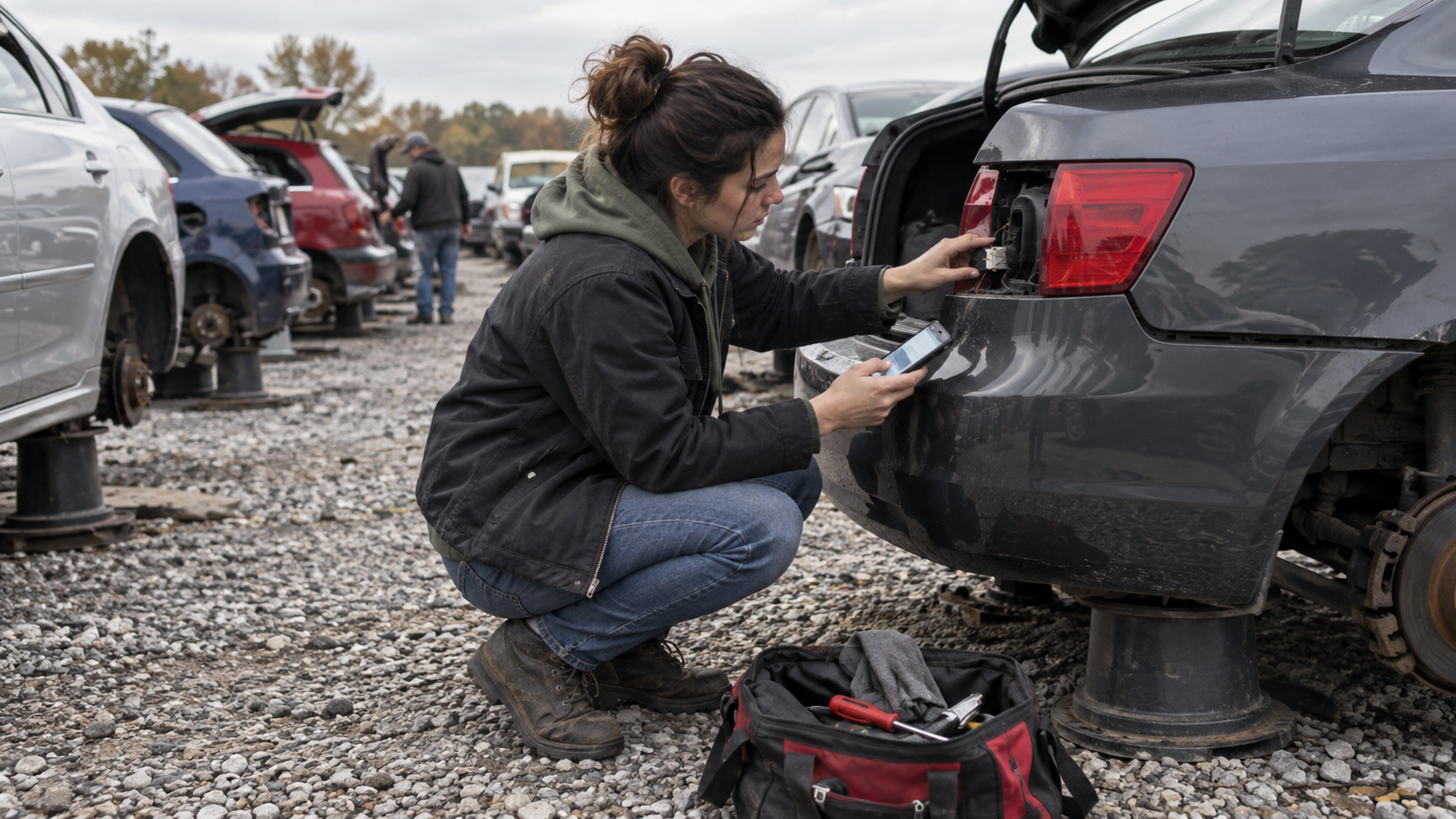
On paper, selling components individually often beats a whole-car offer. In practice the math tends to erode. Removing valuable parts takes tools, space, and time, listings sit unsold, buyers cancel, and you're storing a stripped shell in the meantime. Every part you pull also lowers the whole-car offer, so you're not adding to the total, you're trading against it.
Parting out makes sense in a narrow case: one obviously valuable component, easy to remove, with a buyer already lined up. Beyond that, selling the vehicle intact is usually simpler and closer in total value than most people expect, and it ends the problem in a single afternoon instead of stretching it across a few months.
Getting a Real Number for Your Car
A junk car's value isn't mysterious, but it is specific. Weight sets the floor, completeness and parts demand set the ceiling, condition and location determine what gets subtracted, and the scrap market decides where all of that lands this particular week. No article can name your figure, and any site that names one without knowing your year, make, model, and condition isn't quoting, it's advertising.
Gather your details, find your title, be honest about what's missing, and get the vehicle priced by whoever would actually be hauling it away. Whether you're in Baton Rouge, Lafayette, or the New Orleans area, that quote is the only number that means anything, and it costs nothing to find out.