Selling a Junk Car in Louisiana With or Without a Title
Ask AI About Pull-A-Part
TO TURN YOUR JUNK CAR INTO CASH
Get the phone number to a location near you by enterging your zipcode.
Find a Local Junkyard
ALABAMA
ARIZONA
COLORADO
FLORIDA
GEORGIA
INDIANA
KENTUCKY
LOUISIANA
MISSISSIPPI
NEW MEXICO
NORTH CAROLINA
OHIO
PENNSYLVANIA
SOUTH CAROLINA
TENNESSEE
TEXAS
Pull-A-Part | Jun 28, 2026
Selling a Junk Car in Louisiana With or Without a Title
If you're trying to get rid of an old car in Louisiana and the title isn't where you swore you left it, start here: in almost every case, the fastest path forward is replacing the title rather than hunting for a way around it. The Louisiana Office of Motor Vehicles (OMV) can issue a duplicate certificate of title to the last registered owner, and having that document in hand opens up every legitimate selling option you have.
Of course, "just get a duplicate" isn't always simple. Sometimes a lender still holds the title. Sometimes the car belonged to a relative who has died. Sometimes a vehicle was bought years ago and the paperwork never got transferred. This guide covers the duplicate-title process first, then what actually happens when a title isn't available, what to expect if you're trying to sell a junk car in Louisiana without a title, and why documentation still matters even for a car headed straight to a dismantler.
Start With a Duplicate Title From the Louisiana OMV
A Louisiana certificate of title is the state's record of who owns a vehicle. It's the document a buyer needs in order to take ownership legally, and it's why most licensed salvage buyers ask about title status on the first phone call. Losing the paper doesn't mean you've lost ownership. It means you need a replacement copy.
Duplicate titles are issued to a limited group of people, generally the last registered owner, someone holding a valid power of attorney for that owner, a recorded lienholder, or a court-appointed representative. If your name is on the registration and there's no lien, you're almost certainly eligible.
What the request involves
The duplicate title request is handled on the OMV's Vehicle Application, Form DPSMV 1799, which contains a duplicate-title affidavit section. That affidavit generally has to be notarized or signed in front of OMV or Public Tag Agent staff, which is a step people often miss and have to redo. You'll also need valid photo identification, whatever proof of registration or ownership the OMV requests for your situation, and payment of the duplicate title fee plus any handling or notary charges. You can download the current form from the OMV's vehicle title and registration forms page, which also lists current fee and submission information.
Where to submit it
You can handle a duplicate title at an OMV field office, by mail, or through a licensed Public Tag Agent or title company. Public Tag Agents are private businesses authorized by the state to process many title and registration transactions, and they usually have a notary on site, which makes them a practical one-stop option when the affidavit needs notarizing. They typically charge their own service fee on top of the state's.
Request it before you start collecting offers
Junk car quotes are usually good only for the day they're issued, because scrap and parts values move. Requesting the duplicate first means you're not scrambling to line up paperwork after you've already accepted a price. It also gives you time to sort out any surprises, such as an old lien that was never formally released.
When You Can't Simply Request a Duplicate
A handful of situations complicate the picture. Each has a legitimate path, and none of them is a reason to hand the car to whoever shows up with a trailer.
A lender still holds the title
If you financed the vehicle, the lender may be listed as a lienholder, and in Louisiana many of those titles are held electronically rather than as paper. Until the loan is satisfied and the lien is released, you can't transfer the car cleanly. Contact the lender for a payoff amount or a lien release letter if the loan was already paid off but never cleared from the record. Note that Pull-A-Part's Louisiana locations do not purchase vehicles with an outstanding loan or lien, and most licensed buyers take the same position.
The registered owner has died
A vehicle that belonged to a parent or spouse can't be sold on the strength of a family relationship alone. Depending on the estate, the OMV may accept an Affidavit of Heirship, or the transfer may need to go through succession. Both routes are documented on the state's forms page, and a Public Tag Agent or attorney can tell you which one fits your circumstances.
You bought the car and never transferred the title
This is the hardest version of the problem. If the title was never assigned into your name, the state's records still point to the previous owner, and you generally cannot request a duplicate for a vehicle that isn't titled to you. The cleanest fix is tracking down the seller and completing a properly signed and notarized assignment, ideally with a bill of sale. If that person can't be found, a title company or attorney can advise on whether a court process applies. A handwritten receipt from years ago, on its own, usually isn't enough.
The vehicle already carries a salvage brand
If an insurer totaled the car, it may already be on a salvage title rather than a standard one. That's not a barrier to selling it to a dismantler. It just means the document you're producing looks different, and the buyer will want to see the salvage paperwork instead.
Can You Sell a Junk Car in Louisiana Without a Title?
Some states let owners sell an older vehicle using only a registration and a driver's license. Louisiana's process isn't built that way. The state's transfer procedures center on the certificate of title, and Pull-A-Part's Louisiana locations list a title as a requirement for buying a vehicle. There's no general age-based shortcut you can count on.
What is true is that requirements can vary with the specifics of your situation, and individual buyers set their own policies within state law. That's why the useful move is to describe your exact circumstances on the phone, rather than assuming either a yes or a no. Explain whose name is on the registration, whether there's a lien, and what documentation you do have. A reputable buyer will tell you plainly whether they can work with it. When you're ready to sell your junk car for cash, Pull-A-Part's Baton Rouge, Lafayette, and New Orleans pages each list a direct number for exactly that kind of question.
One caution worth taking seriously: if someone offers to haul the car away with no paperwork at all and no questions about who owns it, treat that as a warning sign rather than a convenience. You'd have no record that the vehicle ever left your hands.
Why the Paperwork Still Matters After the Tow Truck Leaves
It's tempting to think documentation stops mattering once a car is being scrapped. It doesn't, and the reasons are practical.
When a licensed dismantler or metal processor buys a vehicle as scrap, it reports that vehicle to the OMV's Auto Hulk database immediately after the purchase. Once the vehicle identification number is entered, it's retired: that VIN can no longer be titled or registered anywhere. That's the mechanism that permanently closes the book on the vehicle, and it depends on the buyer being able to document the purchase properly.
On your side, you can notify the OMV yourself when you sell, donate, or trade a vehicle by submitting a Notice of Vehicle Transfer. Your record gets flagged right away showing what happened to the car. It's worth doing, because ownership isn't legally transferred until the new owner applies for title, and the notice creates a dated record of the handoff. You'll need the plate number and expiration date, the VIN, your driver's license number, the buyer's name and address, the date of sale, and the sale price.
Finally, handle the plate and the insurance. If you're not moving the plate to another vehicle, the OMV has a process to cancel a license plate. Don't drop the insurance until the car is physically gone and you've confirmed the sale is complete. Keep a copy of everything you signed, including the bill of sale, for your own records.
What to Have Ready Before You Call a Buyer
Having these details in front of you turns a fifteen-minute phone call into a five-minute one, and it produces a more accurate quote.
- Title status: in hand, applied for, held by a lender, or not in your name
- Year, make, model, and the VIN
- Whether the engine, transmission, and catalytic converter are still on the vehicle
- Whether all four wheels are present
- Whether major body panels are intact, including doors, hood, and trunk
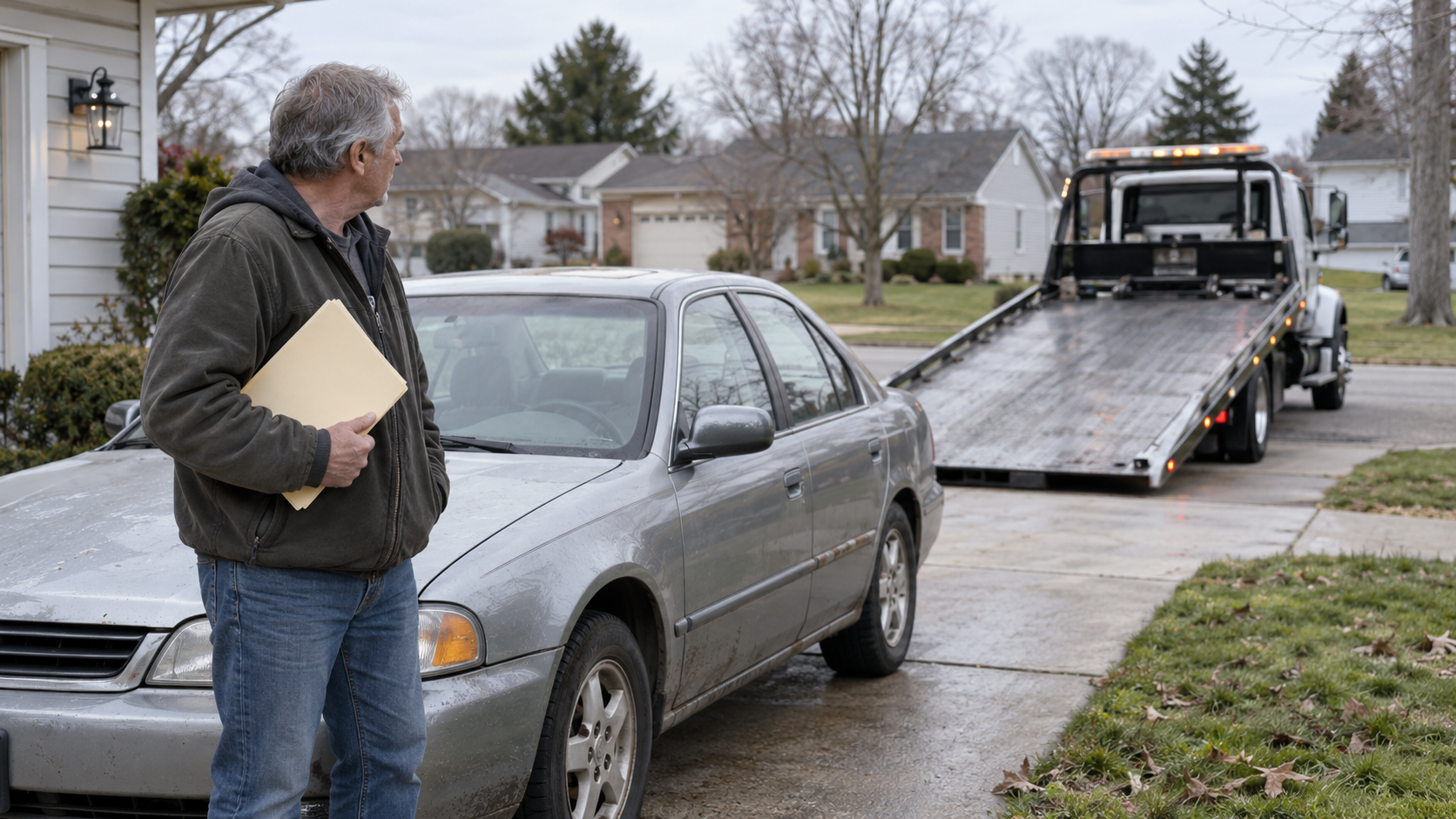
- Where the car sits and whether a tow truck can reach it without moving other vehicles
- Photo ID matching the name on the title
Once you have that list together, you can request a quote for your vehicle and get a real number instead of a rough guess.
How the Sale Usually Goes
The sequence is straightforward. You describe the vehicle and receive an offer, which is typically valid for the day it's issued. If you accept, Pull-A-Part schedules a free tow, generally within about 24 hours to three days depending on location and schedule. Payment happens when the vehicle is picked up, usually within about 20 minutes of the truck arriving. If you drive the car in yourself, payment terms may differ by location, so ask when you call.
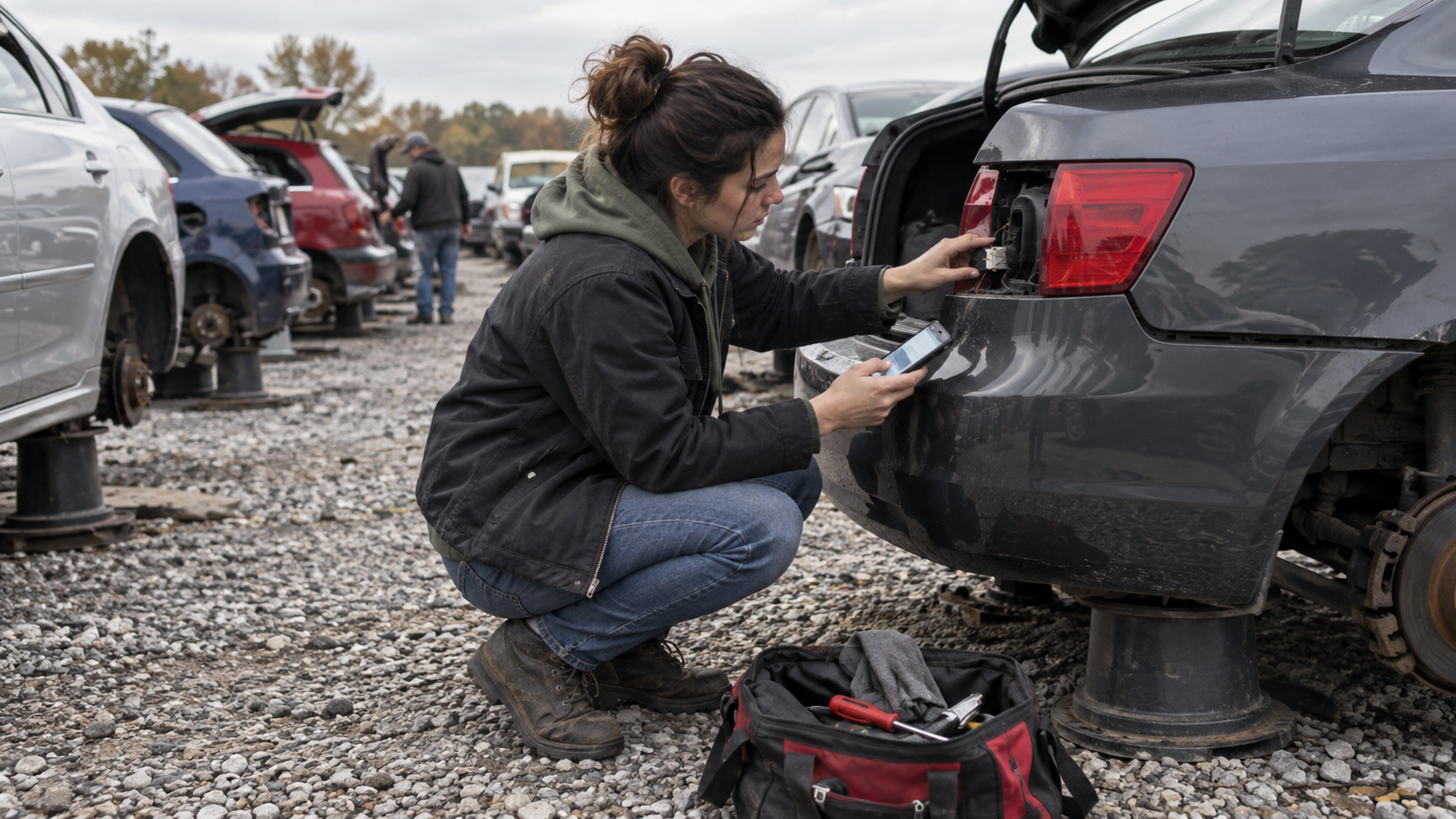
Most vehicles bought this way don't go straight to a crusher. Usable parts get pulled and shelved, which is what stocks the rows at self-service yards in Baton Rouge, Lafayette, and New Orleans West, where other drivers pull the parts themselves at a fraction of new-part prices. Whatever can't be reused is recycled.
The Bottom Line
In Louisiana, the title is the hinge everything else turns on. If you have it, you're ready to sell today. If you've lost it and the car is registered in your name, a duplicate through the OMV is usually a single trip and a modest fee. If the situation is more tangled, there's almost always a documented path forward, and it's worth taking the time to find it rather than accepting the first no-questions-asked offer. Rules and fees change, so confirm current requirements with the OMV or a Public Tag Agent before you go, and confirm what a specific buyer needs before you commit to a price.