Repair or Replace? What Common Breakdowns Cost in Louisiana
Ask AI About Pull-A-Part
TO TURN YOUR JUNK CAR INTO CASH
Get the phone number to a location near you by enterging your zipcode.
Find a Local Junkyard
ALABAMA
ARIZONA
COLORADO
FLORIDA
GEORGIA
INDIANA
KENTUCKY
LOUISIANA
MISSISSIPPI
NEW MEXICO
NORTH CAROLINA
OHIO
PENNSYLVANIA
SOUTH CAROLINA
TENNESSEE
TEXAS
Pull-A-Part | August 28, 2026
Repair or Replace? What Common Breakdowns Cost Louisiana Drivers
An estimate comes back higher than you expected, and the real question is not whether the shop is right. It is whether this car is still worth putting money into.
Here is the short version. Repairing usually makes sense when the bill is comfortably below what the car is worth, when it buys you a year or more of dependable driving, and when nothing else major is about to fail. Replacing usually makes sense when the repair approaches the value of the car, when two or three expensive systems are failing at once, or when the damage is the kind that follows a vehicle onto its title. Deciding whether to repair or replace a car in Louisiana also depends on a few things specific to this state, including a major change to the inspection sticker and emissions testing that still applies in five parishes.
Below is how to run the numbers on a real estimate, which breakdowns are usually worth fixing, which ones tend to end an older car's life, and what to do once you have made the call.
Start With Three Numbers, Not One
Most people compare the repair estimate to their gut feeling about the car. That is how good cars get scrapped and bad cars get money poured into them. Write down three numbers instead.
- The repair total, itemized. Ask the shop to separate parts from labor and to list the parts by name. That split matters more than the total, and it is the number you can actually change.
- What your car is worth today, in its current condition. Not what a clean one sells for. Yours, with the mileage it has, the dents it has, and the problem it currently has.
- What replacing it would really cost. Purchase price plus title and registration fees, parish sales tax, any change to your insurance premium, and whatever the replacement needs in its first few months.
Then convert the repair into a monthly cost. A repair that keeps a car on the road for two more years spreads across twenty-four months. The same repair on a car that will need a transmission by spring is a much worse deal, because you are paying for the fix and the transmission.
You will often see a guideline that says replace the car when the repair costs more than half its value. That is a reasonable starting point and nothing more. A brake and suspension job that costs 60 percent of a paid-off commuter's value can still be the cheapest transportation available. A repair worth 30 percent of the car's value is a bad deal if the engine is burning oil.
One more piece of context: repair prices have been climbing faster than most other driving costs. The U.S. Bureau of Transportation Statistics reported that motor vehicle maintenance and repair prices rose 4.9 percent between January 2025 and January 2026, outpacing the overall rise in consumer prices. The same job costs more than it did a few years ago, which pushes borderline cars toward replacement and makes it worth asking whether a cheaper part can bring the bill back down.
What Actually Drives the Size of a Repair Bill
Two repairs can carry the same total and be completely different decisions, because the money is going to different places.
Labor is priced by how long the job takes, which is mostly a function of how buried the part is. A part bolted to the front of the engine is cheap to reach. The same part behind a timing cover or under an intake manifold is not. Labor also covers diagnostic time, which is real work and worth paying for.
Parts are the portion you have some control over. New original-equipment parts, aftermarket parts, remanufactured units, and used parts pulled from a salvage vehicle can differ enormously in price for the same job. On a parts-heavy repair, sourcing the part differently can change the answer from replace to repair. On a labor-heavy repair, it barely moves the needle.
Breakdowns That Are Usually Worth Fixing
These tend to be isolated failures with accessible parts, and they generally do not signal that the rest of the car is finished.
- Alternators, starters, and batteries
- Radiators, cooling fans, hoses, and thermostats
- Air conditioning condensers, blower motors, and blend door actuators
- Brake components, wheel bearings, and common suspension parts
- Window regulators, door handles, mirrors, and headlight or taillight assemblies
- Sensors, ignition coils, and other engine management parts
- Bumpers, fenders, doors, and trim after a low-speed hit
Body and interior parts are where used parts save the most, because a new painted panel or a dealer-only trim piece can cost more than the rest of the repair.
Breakdowns That Usually End an Older Car's Life
These are expensive in both parts and labor, and they rarely show up alone.
- Automatic transmission replacement or a full rebuild
- Engine replacement after overheating, oil starvation, or a timing failure
- Head gasket work on a high-mileage engine that already burns oil or coolant
- Widespread rust or structural damage to the unibody or frame
- Water damage that has reached the wiring harness, control modules, or power train
- Collision damage where the estimate lands anywhere near the car's value
None of these are automatically fatal. A transmission in an otherwise sound truck with a clean body can be worth doing. The pattern to watch for is a big-ticket repair arriving on a car that also needs tires, brakes, and an air conditioning system.
Louisiana Rules That Change the Math
The Inspection Sticker Is Going Away, but Safe Condition Still Applies
Louisiana has changed how it handles vehicle inspections. Act 701 of the 2026 regular session, signed on June 2, 2026, ends the familiar inspection certificate for most personal vehicles and replaces it with a Louisiana Vehicle Identification Program sticker carrying the vehicle identification number and a barcode or QR code. The fee is capped at six dollars per year and may be collected on a two-year cycle. For most parishes the change takes effect January 1, 2027, and from June 30, 2026 to January 1, 2027 officers are not to issue citations for failing to produce or display a certificate of inspection. In the parishes covered by the federal Clean Air Act inspection and maintenance program, the change takes effect only if and when the U.S. Environmental Protection Agency approves the state's proposed plan amendments. The Office of Motor Vehicles is required to adopt implementing rules by the end of 2026, so details are still being finalized.
This matters for repair decisions more than it might seem. The old inspection was the deadline that forced a lot of owners to deal with bald tires, dead bulbs, worn wipers, and cracked windshields. Without it, nothing outside your own budget prompts that work. State law still requires vehicles to be in safe mechanical condition and still sets standards for windshield damage, and an officer with reason to believe a vehicle is unsafe can still stop it and require an inspection. Practically speaking, the safety items you used to fix in inspection week now belong on your own maintenance calendar. Requirements have historically been handled differently in New Orleans, so confirm what applies locally before assuming your car does or does not need anything.
Emissions Testing Still Applies in Five Parishes
Drivers in Ascension, East Baton Rouge, Iberville, Livingston, and West Baton Rouge parishes are in the state's vehicle inspection and maintenance program, run under the federal Clean Air Act. Gasoline vehicles rated at 10,000 pounds or less get an annual emissions check that includes a visual look at emissions equipment, a gas cap test, and an on-board diagnostics scan. Fail it and you receive a repair form and a retest, which is free at the original station within 30 days.
In those parishes, a check engine light is not a warning you can live with indefinitely. It is a failed test. If the light is on and you are weighing repair against replacement, have the code read before you decide, because the fix may be an inexpensive sensor or it may be a catalytic converter. That single piece of information often settles the question.
If an Insurer Is Involved, Know the 75 Percent Line
Louisiana law defines a total loss as a vehicle with damage equal to 75 percent or more of its market value, measured against the most current National Automobile Dealers Association handbook. On an older, lower-value car, that threshold is not a large number, which is why a moderate collision can total a vehicle that still starts and drives.
Once a vehicle crosses that line, the paperwork changes. Salvage titles, reconstructed titles, and the separate rules Louisiana applies to water-damaged vehicles all carry requirements and restrictions that affect whether a car can return to the road and what it is worth afterward. This is a summary rather than legal advice, and circumstances vary, so confirm the current requirements for your situation with the Louisiana Office of Motor Vehicles.
A Six-Step Way to Decide
- Get the estimate in writing and itemized. Parts, labor, and diagnostic time listed separately, with part names or numbers.
- Get a second opinion on anything major. Any estimate that includes the words engine or transmission replacement is worth confirming at a second shop.
- Value your car honestly. Current mileage, current condition, current problem.
- List what else is coming. Tires, brakes, timing belt, air conditioning, and any noise you have been ignoring. Add rough costs and put them on the same page.
- Reprice the parts. On a parts-heavy job, a used part can move the total enough to change the decision. Ask your shop whether it installs customer-supplied parts before you buy anything.
- Compare against replacing. Total cost of the replacement, not the sticker price, against the total cost of keeping this car running another year or two.
If the repair, plus everything due in the next twelve months, still costs less than getting into another vehicle, fixing it is usually the better financial move. If it does not, you have your answer.
When Used Parts Make the Repair Worth It
At a self-service yard, you pull the part off the donor vehicle yourself with your own tools. That is why prices run below new parts, and it is the main reason a parts-heavy repair can come back under budget. Pull-A-Part operates Louisiana yards in Baton Rouge, Lafayette, and at its New Orleans West location.
A few things make the trip go better:
- Check the online inventory the day you go. Yards take in and retire vehicles constantly, so what was listed last week may be gone. It helps to have a second donor vehicle in mind.
- Match more than the model name. Year, make, model, trim, engine, transmission, and drivetrain all change part numbers, and options like towing packages or different climate systems matter. Interchange listings can tell you which other years and models used the same part.
- Write down the part number from your old part when it is legible, and bring a photo of what you are replacing.
- Bring tools, gloves, and something to carry the part in. Yards charge a small admission fee and have age requirements for entering, so check the location page before you drive out.
Worth being clear about what this is: a parts yard is not a repair shop. You or your mechanic still does the installation, and no used part is guaranteed to fit a vehicle you have not verified it against. The upside is that on the right job, the savings on parts are large enough to keep a car you would otherwise be replacing.
When the Answer Is to Let the Car Go
Some signs are hard to argue with: the repair costs more than the car is worth, the same system has failed twice, the frame or floor is rusted through, or the car has been sitting because you cannot justify the next fix.
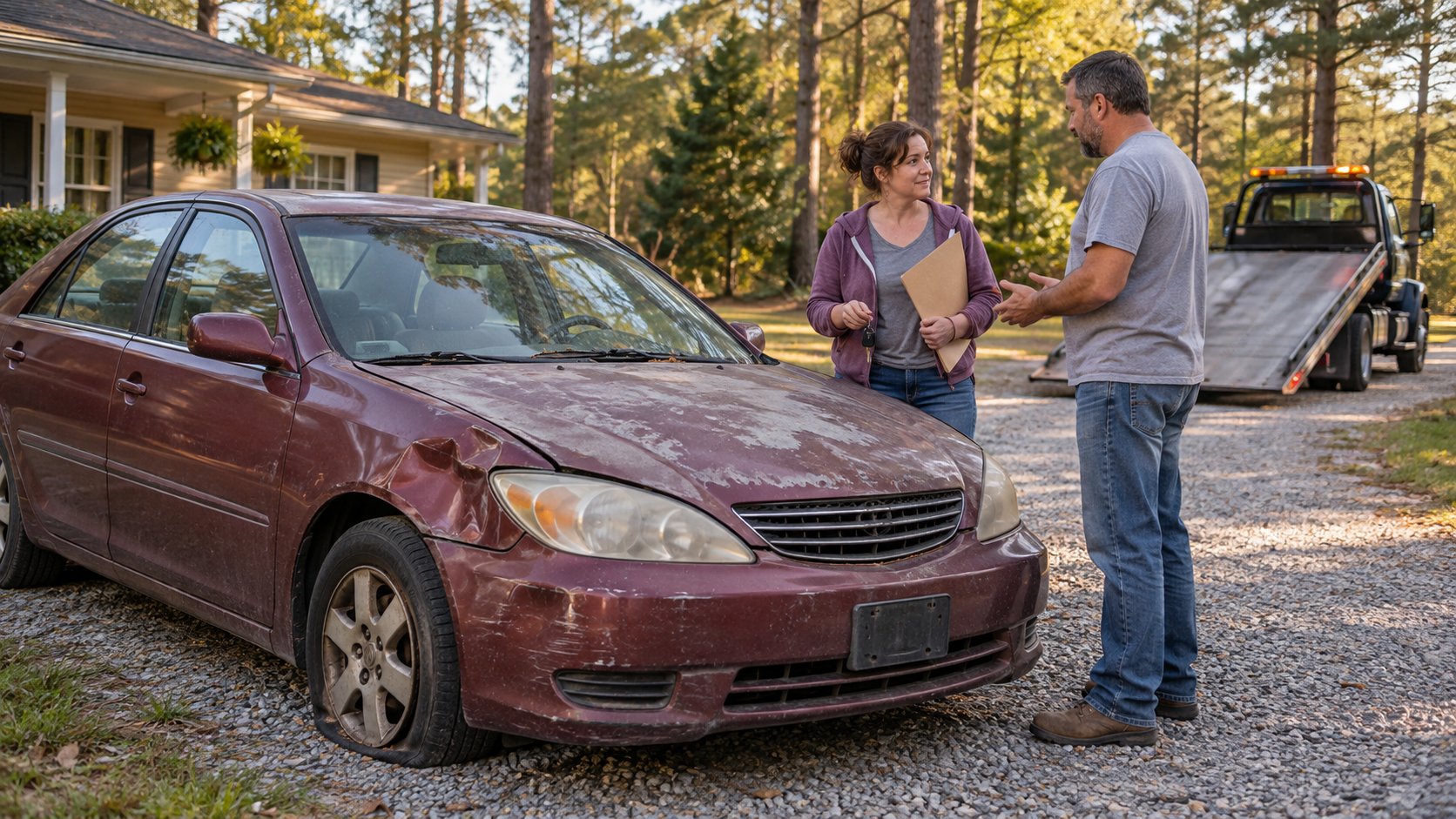
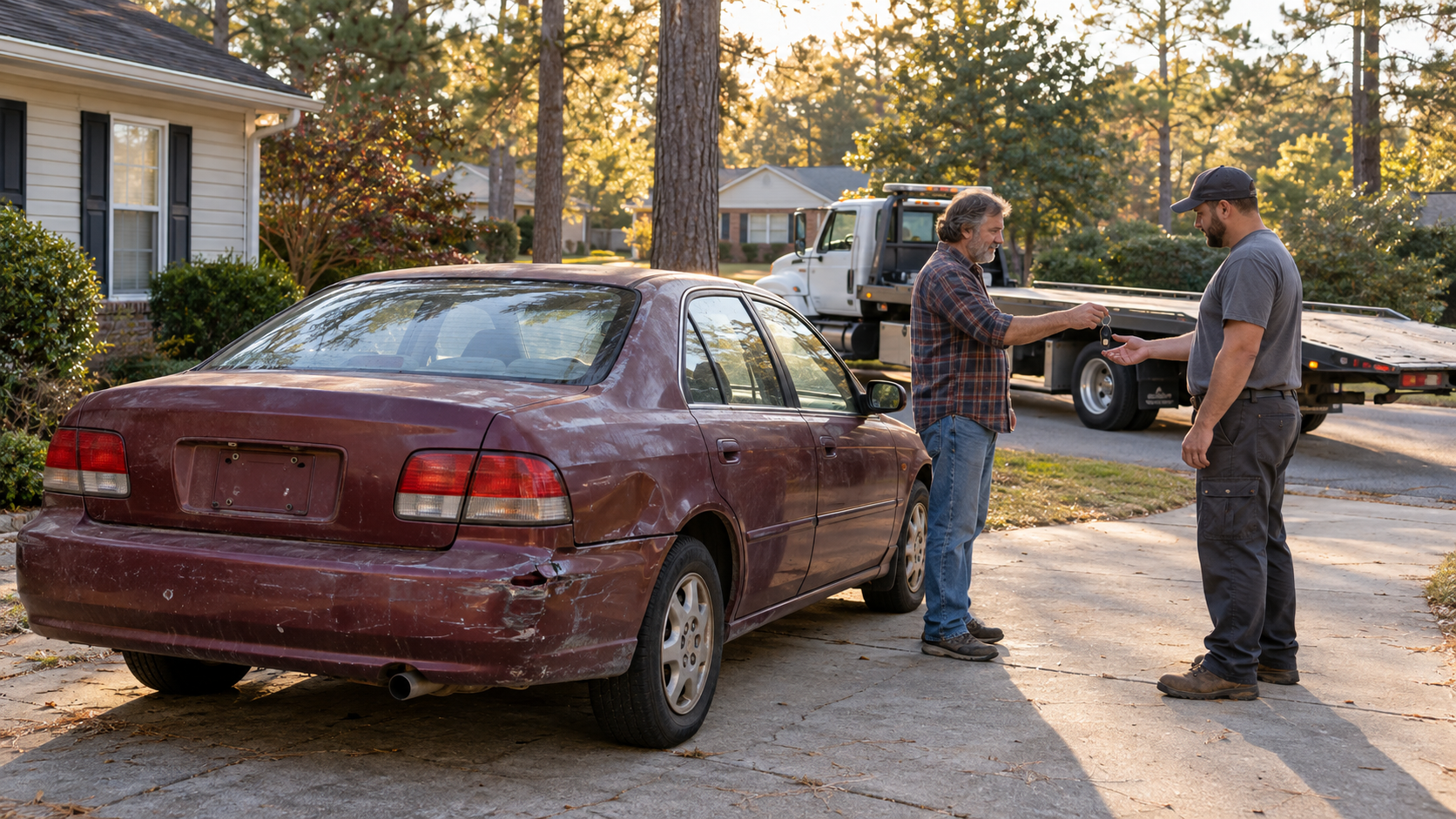
A car that is not worth repairing still has value. Usable parts and recyclable metal are worth something even when the vehicle will not move under its own power. Pull-A-Part buys vehicles in many conditions, including ones that do not run, at its Baton Rouge, Lafayette, and New Orleans area yards. You can start by getting a quote to sell an unwanted vehicle for cash, and towing is typically arranged at no cost to you once you accept an offer. A few practical notes: quotes are usually good only for the day they are given, Louisiana requires the title to sell, and vehicles with an outstanding loan or lien cannot be purchased. If your title is missing, the Office of Motor Vehicles handles duplicates.
After the car is gone, close the loop with the state. Louisiana lets you report a vehicle you have sold, donated, or traded through the OMV's Notice of Vehicle Transfer service, which flags your record with the vehicle's disposition. It takes a few minutes and saves arguments later.
If You Are Replacing the Car
Set your budget on total cost rather than purchase price, and buy on condition and maintenance history rather than model year. A well-kept older car with records usually beats a newer one that was neglected.
Before you buy, pay for a pre-purchase inspection from a mechanic who is not selling you the car, run the vehicle identification number to check for salvage, water damage, or hail branding, and budget for immediate maintenance. Almost every used vehicle needs fluids, filters, and often tires or brakes in its first months, and that spending belongs in the purchase decision.
Pull-A-Part's Louisiana yards also repair and sell some of the vehicles they take in, so on a tight budget it is worth checking the used cars for sale in Baton Rouge or the listings for the Lafayette and New Orleans West yards. Inventory turns over, prices and availability change, and an affordable car still needs the same inspection and test drive as any other used vehicle.
The Bottom Line
Most repair-or-replace decisions come down to arithmetic that takes twenty minutes to do properly. Get the estimate itemized, value the car as it sits, add up what is coming in the next year, and check whether a used part changes the parts side of the bill. With the state's inspection requirements changing and emissions testing still in place around Baton Rouge, it is also worth knowing which rules still apply to your vehicle before you commit money to it.
Cars that pass that test are usually worth keeping. Cars that fail it are usually worth more as parts than as a project, and either way you are deciding with numbers instead of a guess.