What's Your Junk Car Worth in Ohio? A Pricing Guide for Akron, Canton, and Cleveland
Ask AI About Pull-A-Part
TO TURN YOUR JUNK CAR INTO CASH
Get the phone number to a location near you by enterging your zipcode.
Find a Local Junkyard
ALABAMA
ARIZONA
COLORADO
FLORIDA
GEORGIA
INDIANA
KENTUCKY
LOUISIANA
MISSISSIPPI
NEW MEXICO
NORTH CAROLINA
OHIO
PENNSYLVANIA
SOUTH CAROLINA
TENNESSEE
TEXAS
Pull-A-Part | September 16, 2026
What's Your Junk Car Worth in Ohio? A Pricing Guide for Akron, Canton, and Cleveland
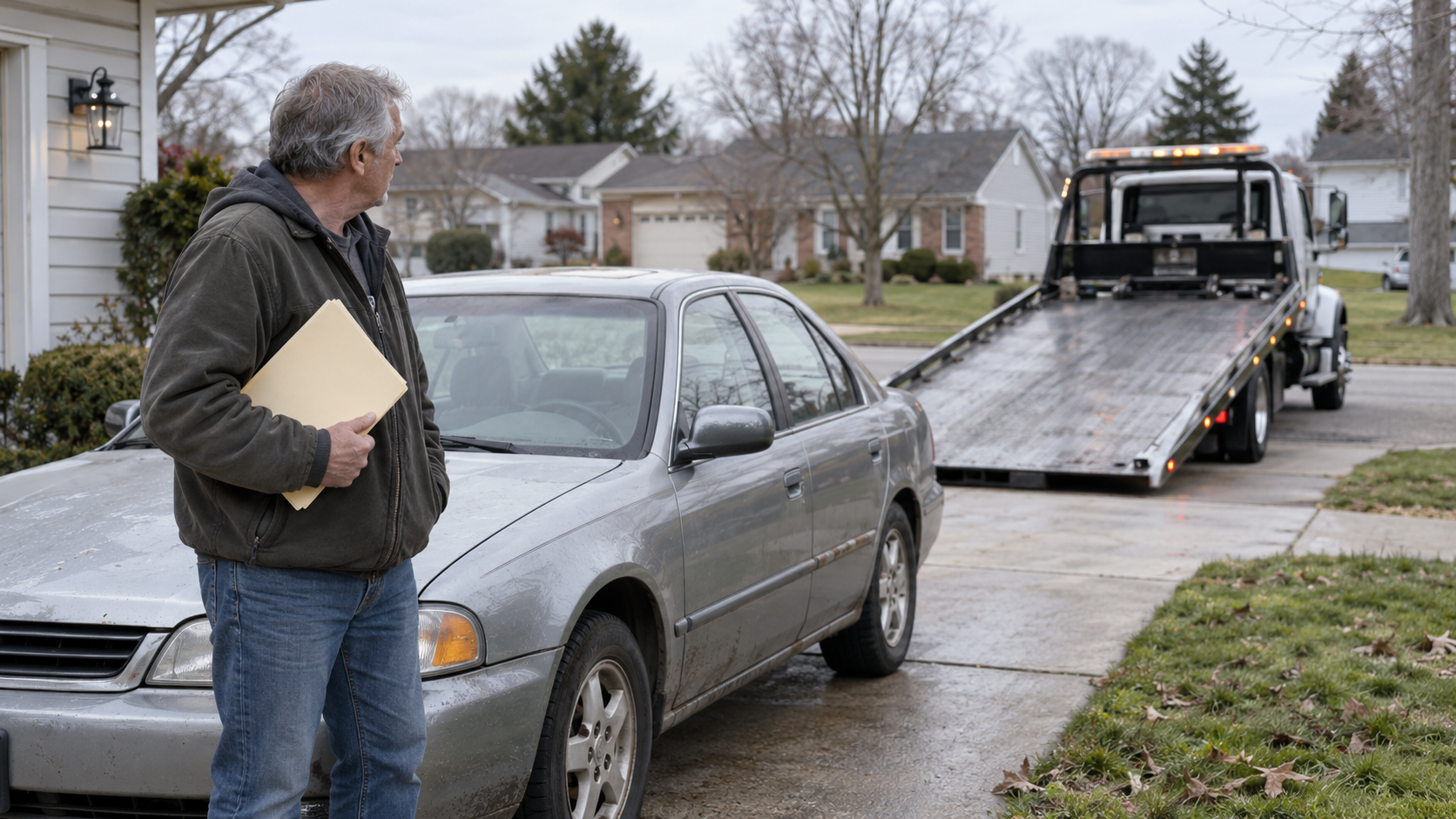
There is no flat rate for a junk car in Ohio. An offer on a worn-out vehicle is built from two things: the metal in it, which is paid for by weight, and the parts still bolted to it, which are paid for based on what other drivers need. Condition, completeness, paperwork, and the distance a tow truck has to travel move the number up or down from there.
That is why two buyers can quote different amounts on the same car sitting in the same driveway, and why a number you were given last spring may not be the number you get today. This guide covers what goes into an offer, which details about your car matter most, what Ohio requires on the paperwork side, and what actually changes between the Akron, Canton, and Cleveland West markets.
What a junk car offer is actually made of
Metal, paid by weight
Most of a vehicle is recyclable steel, and recyclers buy it by weight at prices that reset regularly with the scrap metal market. Two things follow from that. Heavier vehicles carry more recoverable metal, and the spread is wide, since a small sedan and a full-size pickup can be more than a ton apart in curb weight. The metal portion of your car's value also floats with the market, which is why buyers put an expiration on their numbers. Pull-A-Part quotes, for example, are good for the day they are issued.
Parts, paid by demand
A self-service salvage yard makes money differently from a shredder. Cars bought for the yard go out on the lot so customers can pull alternators, doors, mirrors, seats, transmissions, and engines off them. A vehicle that is common on Ohio roads, with its useful parts still attached, is worth more to that kind of buyer than the same weight of anonymous metal. This is the biggest single reason two cars with nearly identical curb weights receive different offers.
Condition, completeness, and access
Once the metal and the parts are accounted for, the offer gets adjusted for what is really there and how hard the car is to collect. A vehicle missing its engine, transmission, or catalytic converter is worth less than the same vehicle with those parts installed. So is one sitting on blocks without wheels, or one stripped of its doors, hood, and trunk lid. Pull-A-Part's online quote form asks about those exact items, which tells you how much weight they carry. Location matters too, because a tow from an hour out costs a buyer more than a pickup ten minutes from the yard.
Why two quotes on the same car come out different
- Different business models. A shredder is mostly buying weight. A self-service parts yard is buying inventory its customers will actually pull from. Someone looking for a repairable car may value a rough but running vehicle above either of them.
- Timing. Scrap markets move, so the same buyer can quote differently in different months.
- Distance. Pickup costs come out of the offer, whether they are itemized or not.
- What you told them. Quotes are built from the information you supply. Anything left out usually surfaces at pickup, and the number gets corrected downward.
- What is included. One offer might cover towing and the transfer paperwork while another deducts a haul charge at the curb. Ask what the number is after every deduction.
The details that move your number the most
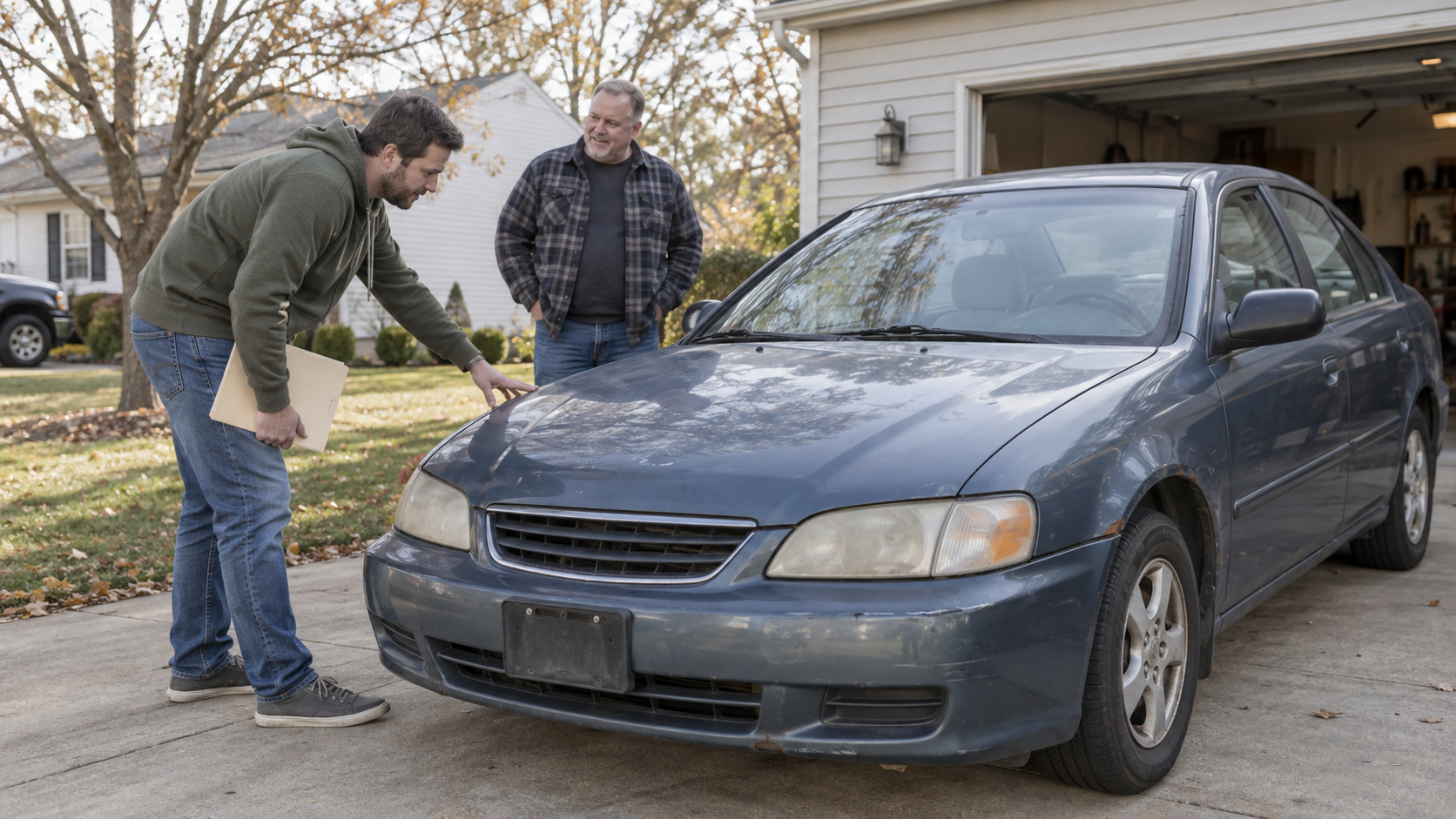
Before you call anyone, walk around the car with your phone or a notepad. A buyer is going to price these items:
- Year, make, model, trim, and engine, since two versions of the same model can carry very different parts value.
- Whether the engine, transmission, and catalytic converter are still on the vehicle. Converters contain small amounts of precious metals, so a missing one takes a real bite out of an offer.
- All four wheels and tires.
- Major body parts, including doors, hood, trunk lid or hatch, bumpers, and glass.
- Whether the car rolls and steers, which affects how quickly it can be loaded.
- Mileage and overall wear.
- Flood damage, fire damage, or heavy structural damage. Mention it up front, because it can change whether a buyer wants the vehicle at all.
- Where the car sits. Backyards, alleys, and vehicles boxed in behind other cars complicate the pickup.
Do not strip the car first
Owners sometimes pull the battery, the wheels, or the stereo before the tow truck arrives and are surprised when the payout drops. The quote reflects the car as it was described. If you plan to keep parts, say so while you are getting the quote so the number you hear is the number you collect.
Before you scrap it, check the repair math
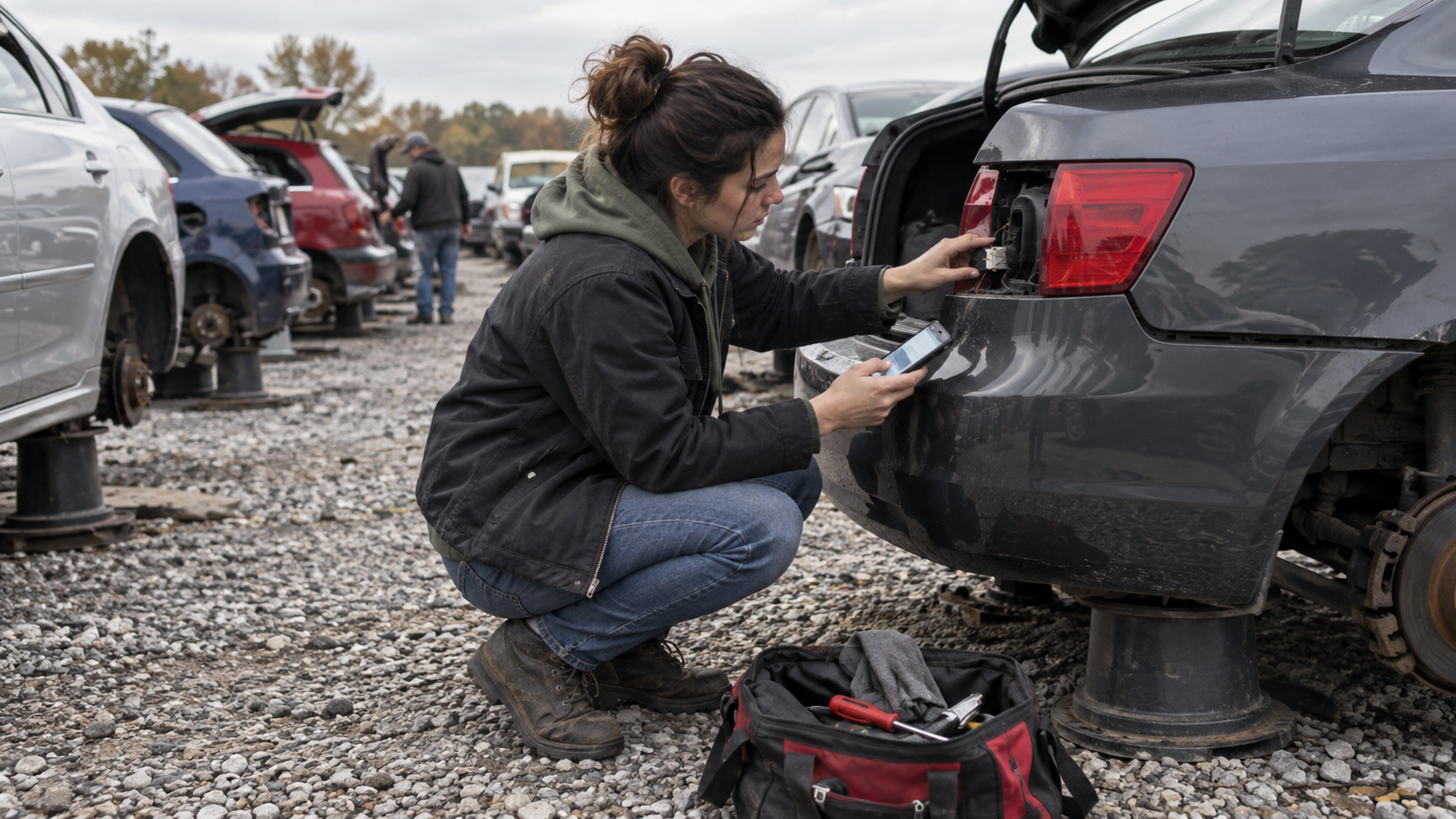
Plenty of cars headed for a salvage yard are one repairable failure away from another year of service. Compare the offer against the cost of the fix using a used part instead of a new one. Alternators, starters, radiators, mirrors, doors, and even complete engines cost a fraction of new parts when you pull them yourself at the Akron self-service yard or another Pull-A-Part location in Ohio. Inventory changes constantly, so search the current vehicle inventory for your year, make, and model before you make the trip, and confirm trim, engine, drivetrain, and part or interchange numbers so the piece actually fits your car.
If the repair honestly costs more than the vehicle is worth, selling it is the practical move. Money from an end-of-life car rarely covers a replacement on its own, though it can go toward one. Pull-A-Part also sells budget-friendly used cars in Canton and at its other Ohio locations. These are older, higher-mileage vehicles and the listings turn over, so check what is currently available and have any car you are serious about inspected before you commit.
Ohio title rules that decide whether you get paid
Ohio's paperwork rules determine whether a licensed buyer can legally take your car, and several of them catch sellers off guard.
- Titles come from the county, not the BMV. Ohio certificates of title are issued by county Clerk of Courts title offices. The BMV handles registration and plates but does not issue titles.
- Your signature has to be notarized. The seller completes the assignment of ownership on the back of the title and signs in front of a notary. Do not sign it in advance, because an unnotarized assignment can stop the sale on pickup day.
- A lost title is fixable. You can apply for a duplicate in person at any county title office with valid photo identification and payment, and it is printed while you wait. By mail, you send a notarized Application for Certificate of Title (form BMV 3774), payment, and a stamped return envelope. Current forms, fees, and instructions are on the Ohio BMV vehicle title page.
- Electronic titles need an extra step. If a loan was paid off and the record is held electronically, you may never have received a paper title. You can apply for a replacement title to get one printed, or ask the buyer whether they accept Ohio's casual-sale ownership assignment form instead.
- Liens must be released. A lender's lien on the record has to be cleared before ownership can transfer, and Ohio's online title inquiry shows whether a lien cancellation date is on file.
- Plates and insurance. Plates stay with you in Ohio, so pull them before the car leaves, and keep coverage in place until the vehicle is actually gone.
Requirements change and individual situations vary, especially when the registered owner has died, the title is in someone else's name, or the vehicle was titled in another state. Confirm what applies to you with a county title office before you schedule a pickup.
Akron, Canton, and Cleveland West: what changes by metro
The way an offer is calculated does not change from one Ohio city to the next. What changes is which yard is closest, what each location currently needs for its lot, and how far a truck has to drive. Pull-A-Part's Ohio buying pages describe free pickup within the areas each yard serves, and those areas overlap, so drivers around Massillon, Wooster, Medina, and Akron often sit within reach of more than one location. If you are between markets, get a quote from both and confirm that your address is covered.
Akron
The Akron yard is on Kelly Avenue on the south side of the city, and it draws sellers from across Summit County and the surrounding towns. You can start there if you want to get cash for a junk car in Akron and see what your vehicle prices out at before you commit to anything.
Canton
The Canton yard sits on Belden Avenue and reaches out toward Massillon, Alliance, and New Philadelphia. Stark County drivers have one fewer hurdle than their neighbors to the north, since the county is outside Ohio's emissions testing area. Quotes for cash for junk cars in Canton are handled by that location's car buyers.
Cleveland West
The Cleveland West yard is on West 130th Street, west of downtown, and its buying area runs south and west toward Strongsville, Medina, and Wooster. Drivers in Cuyahoga County and the western suburbs can sell an unwanted vehicle in the Cleveland area through that location.
Emissions testing changes the math in seven counties
Ohio's E-Check program applies in Cuyahoga, Geauga, Lake, Lorain, Medina, Portage, and Summit counties. Gasoline and diesel vehicles from roughly six through twenty-six model years old, at 10,000 pounds gross vehicle weight rating or less, are tested every other year, and hybrids start a year later. Akron sits in Summit County and Cleveland sits in Cuyahoga County, so both fall inside the program, while Canton in Stark County does not. If your car would need repairs before it could pass, that shrinks the pool of local buyers who want it as a daily driver and often pushes an aging vehicle into junk-car territory sooner than it would in a county without testing. The rules have been amended more than once in recent years, so check the Ohio EPA E-Check page for what currently applies.
How to get an accurate offer
- Collect the basics, including year, make, model, trim, engine, mileage, and the VIN.
- Walk the car and write down anything missing, badly damaged, or previously flooded or burned.
- Locate the title, or start the duplicate process, before you call anyone.
- Get quotes from more than one buyer on the same day, since scrap-driven offers shift over time.
- Compare the whole deal. Ask whether towing is included, when payment happens, whether it is cash or a check, and whether anything is deducted at pickup.
- Make sure a tow truck can physically reach the car, and find the keys if you still have them.
- Accept promptly when an offer works, because quotes are typically good only for the day they are given.
- Clear out personal belongings, check the glovebox and trunk, remove the plates, and cancel insurance after the car is gone.
Putting a realistic number on your car
What a junk car is worth in Ohio comes down to how much metal it carries, how much of it another driver can still use, how complete it is, and how easily a truck can reach it. You cannot control the scrap market, but you can control the three things that most often cost sellers money: a description that leaves out damage, a title problem discovered on pickup day, and a quote that goes stale before it is accepted. Get the details right, get the paperwork in order, and price your car with the yards closest to you before deciding what to do with it.