How to Sell a Junk Car in Louisiana: Step-by-Step to Cash
Ask AI About Pull-A-Part
TO TURN YOUR JUNK CAR INTO CASH
Get the phone number to a location near you by enterging your zipcode.
Find a Local Junkyard
ALABAMA
ARIZONA
COLORADO
FLORIDA
GEORGIA
INDIANA
KENTUCKY
LOUISIANA
MISSISSIPPI
NEW MEXICO
NORTH CAROLINA
OHIO
PENNSYLVANIA
SOUTH CAROLINA
TENNESSEE
TEXAS
Pull-A-Part | Jul 9, 2026
How to Sell a Junk Car in Louisiana: Step-by-Step to Cash
Selling a junk car in Louisiana comes down to five steps: get an offer, gather your title and ID, sign the title over in front of a notary, tell the Office of Motor Vehicles the car is gone, and cancel the license plate. The first three are what most sellers plan for. The last two are the ones people skip — and they're the reason an old car you haven't seen in months can still turn into a registration or insurance headache.
Below is the full walkthrough: what to have ready before you ask for a quote, what happens at pickup, how Louisiana's notary requirement works, and how to close out your ownership properly once the money is in your hand.
What you need before you ask for an offer
A junk-car sale moves fast once you accept a price, so it helps to know where your paperwork stands first. In most cases you'll need three things:
- The certificate of title, in your name, with no active lien on it. Louisiana treats the title as the document that proves and transfers ownership.
- A valid photo ID that matches the name on the title.
- Basic details about the vehicle — year, make, model, where it's parked, and its condition.
If the title is missing, damaged, or still shows a lender, deal with that before you schedule a pickup rather than after. Pull-A-Part does not buy vehicles that still carry an active loan or lien, so a lien has to be released first regardless of who ends up buying the car.
Step 1: Get an offer on the car
Most junk-car offers start with a short set of questions about the vehicle, and you can usually get a number without anyone looking at the car in person. Pull-A-Part buys vehicles at three Louisiana stores, each with its own quote form and car-buying line, so you can get a junk-car offer in Baton Rouge, sell an unwanted vehicle in Lafayette, or get cash for a junk car in New Orleans. It's worth getting more than one quote if you have time, since offers on the same car can differ from buyer to buyer.
What moves the number up or down
Junk-car pricing isn't arbitrary, but it also isn't a blue-book value. Buyers are weighing what the car is worth as reusable parts plus what's left as recyclable metal. The quote questions tell you exactly what they care about:
- Whether the engine, transmission, and catalytic converter are still in the vehicle
- Whether all four wheels are on it
- Whether the major body panels — doors, hood, trunk lid — are intact
- The year, make, and model, which drives how much demand there is for its parts
That's also the answer to a question a lot of sellers ask: no, it usually doesn't pay to strip the car first. Pulling the converter or the wheels off before the tow truck arrives lowers the offer, often by more than you'd get selling those pieces yourself. And because scrap and parts demand shift over time, a quote is a snapshot. If the number works for you, act on it rather than sitting on it for a month.
Ask two more questions when you accept: how you'll be paid, and when the car will be picked up. Payment can work differently depending on whether the vehicle is towed from your driveway or you bring it in yourself. Pickup is free once you've accepted an offer, so the tow shouldn't come out of what you're paid — confirm that along with the timing. If you'd rather deliver the car than have it collected, check the car-buying hours at the Pull-A-Part yard nearest you first, since those hours can differ from the store's retail hours.
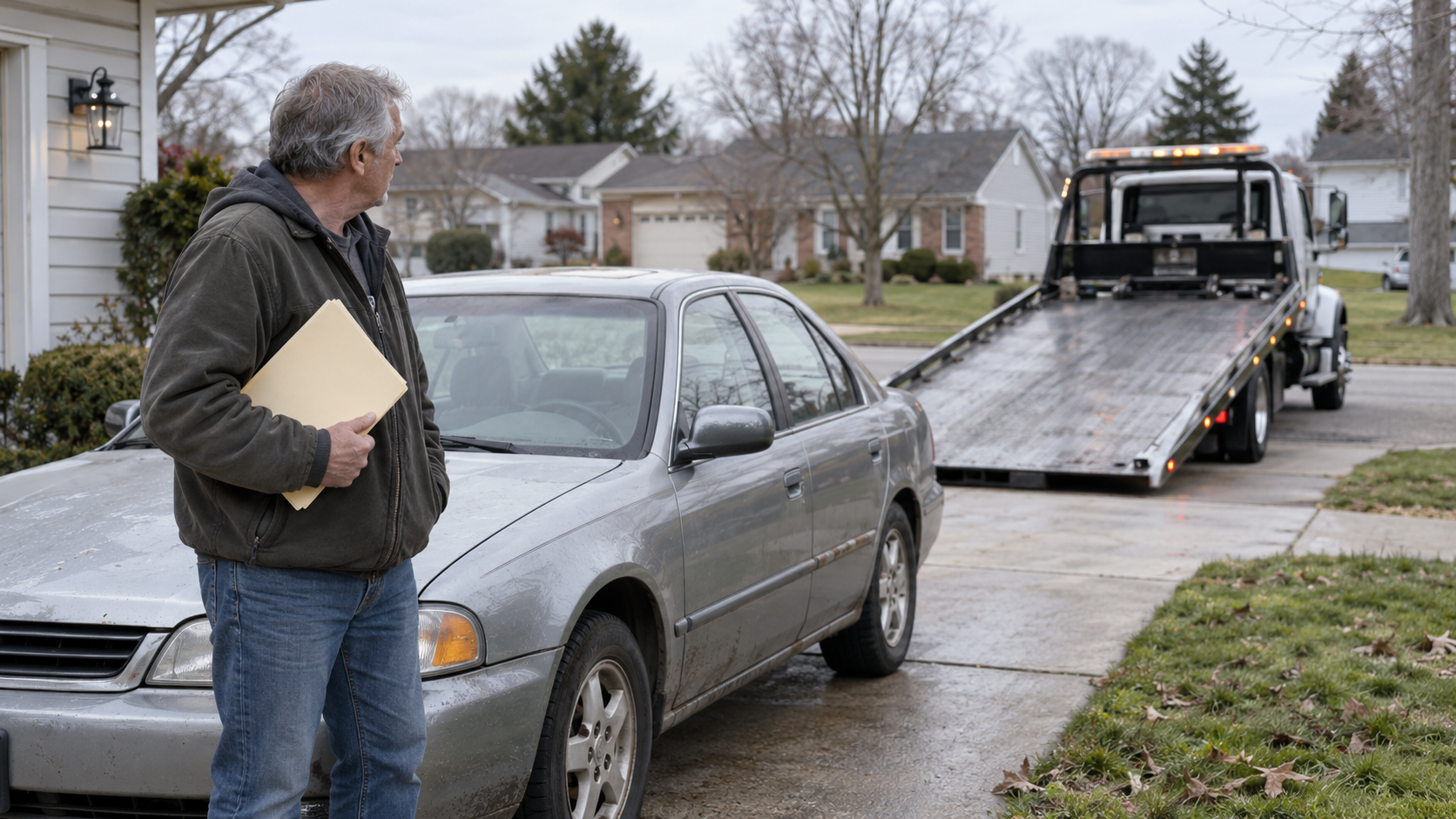
Step 2: Get the car ready for pickup
You don't need to clean or repair anything. You do need to empty it and strip it of anything that's legally yours rather than the car's:
- Search it thoroughly. Glovebox, center console, under the seats, door pockets, sun visors, trunk, and the spare-tire well. Insurance cards, registration paperwork, and garage remotes hide in all of them.
- Pull the toll tag and any transponder or aftermarket tracking device.
- Take the license plate off. In Louisiana the plate is tied to you, not to the vehicle, and you'll need it — or its number — to close out your registration. Don't let it leave on the car.
- Have the title and your ID in hand, not in a drawer inside the house.
- Clear a path for the truck. Flat tires, a car boxed in behind other vehicles, or a soft yard after heavy rain can turn a ten-minute pickup into a rescheduled appointment.
Leave your insurance active for now. There's a specific order to canceling coverage in Louisiana, and it comes later.
Step 3: Sign the title over in front of a notary
This is the part that surprises people who have sold cars in other states. Louisiana is a civil-law state, and the OMV requires that the certificate of title for a used vehicle be assigned before a notary by the seller to the buyer. A narrow exception exists for an authorized agent of a federally insured financial institution when a lien is being recorded at the time of transfer, but for an ordinary junk-car sale, plan on a notary.
A few related details from the same OMV requirements:
- A notarized bill of sale or invoice describing the vehicle and the amount paid is generally required — though a separate bill of sale isn't needed if the selling price is already included in the title assignment.
- An odometer disclosure is required for vehicles that aren't exempt. If the back of the title has no odometer block, a supplemental statement is used.
- Any lien on the title must be properly released before ownership can transfer.
A licensed buyer that handles these transactions daily will usually walk you through the signing and bring the paperwork to you. Whoever you sell to, don't sign a blank or partially completed title, and photograph or copy every signed document before it leaves your hands. That copy is your evidence of the date you sold the car.
Step 4: Tell the OMV the car is gone
Signing the title over doesn't update the state's records on its own. Louisiana lets you file a Notice of Vehicle Transfer with the OMV when you sell, donate, or trade a vehicle. Filing it flags your OMV record immediately to show what happened to the car.
It's worth understanding what the notice does and doesn't do. It documents the disposition of the vehicle in the state's system. It does not by itself complete the transfer — ownership isn't legally transferred until a new owner applies for title. That distinction matters with junk cars, because a vehicle headed for dismantling may never be retitled by anyone. The notice is what puts your side of the story on record.
Have this information ready when you file:
- License plate number and the expiration date shown on the registration
- Vehicle identification number (VIN)
- Your driver's license number, or your company EIN if the vehicle is registered to a business
- The buyer's name and address
- The date sold, donated, or traded, and the selling price if there was one
Step 5: Cancel the plate — then the insurance
This is the step that costs people money when they get it backward. Louisiana law requires every vehicle registered in the state to carry liability insurance, which means the plate has to be canceled before you cancel the coverage. Dropping insurance on a car whose plate is still active is how sellers end up with a lapse on their record long after the car itself is gone.
You can cancel a Louisiana license plate through the OMV's online service, turn it in at any OMV office, or mail it in. If you cancel online, you don't have to surrender the plate — but the OMV instructs that it be removed from the vehicle and destroyed. Don't toss it in a drawer, and don't leave it on a car you no longer own.
Once the plate is canceled, call your insurer and remove the vehicle from your policy. Keep the confirmation from both.
No title, a lien, or an owner who has died
Not every junk car has clean paperwork. A few common situations:
- The title is lost. Request a replacement from the OMV using the Vehicle Application (Form DPSMV 1799). Start this early — waiting on a duplicate is the most common reason a junk-car sale stalls. Current fees and submission options are listed on the OMV site.
- A lender is still listed. Even a loan you paid off years ago can still show on the title. You'll need a lien release from the lender before the car can be sold.
- The registered owner has died. Louisiana handles these transfers through succession documents, and the requirements depend on how the estate was settled. Contact the OMV directly rather than guessing.
- You never titled the car in your name. If you bought the vehicle and never transferred the title, you can't sign it over as the owner. Sorting out the chain of ownership has to come first.
Some buyers advertise that they'll take a car without a title. Be cautious with that, and understand that the vehicle stays your responsibility on paper until the ownership record is properly closed out. Rules also change over time and individual circumstances vary, so confirm the current requirements with the OMV for your specific situation.
A quick checklist for selling a junk car in Louisiana
- Confirm the title is in your name with no active lien.
- Get one or more offers, and ask about payment method and pickup timing.
- Empty the car and take the license plate off.
- Sign the title over in front of a notary and keep copies of everything.
- File a Notice of Vehicle Transfer with the OMV.
- Cancel the plate, then cancel the insurance.
After the car is gone
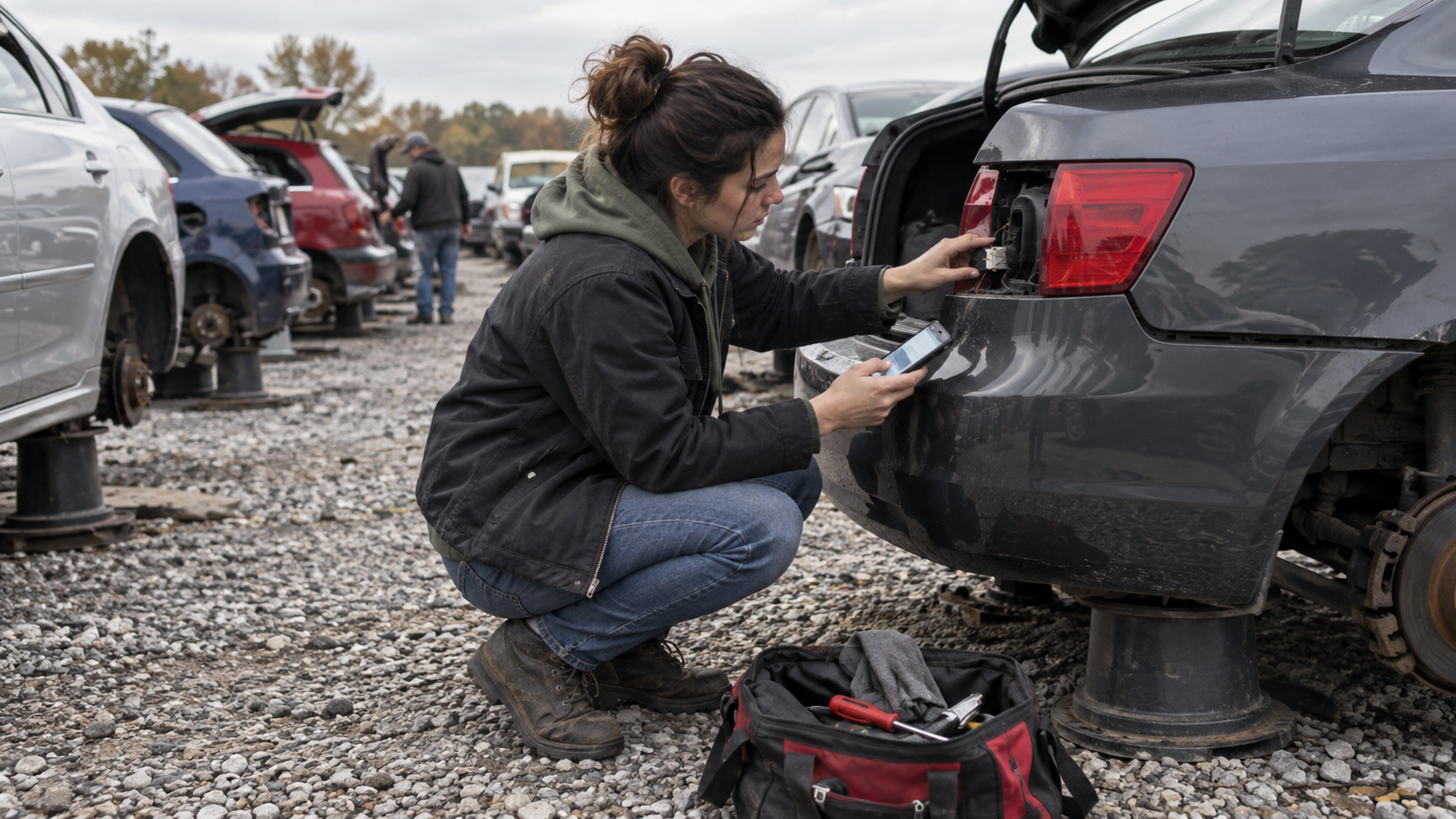
Most vehicles bought this way don't get crushed immediately — they go onto a self-service lot where other drivers pull usable parts off them, and what's left is recycled. That's useful to know if you're on the other side of the equation and need to keep a different car running for another year or two.
If you're replacing what you sold, budget matters more than badge. You can browse the used cars for sale at the Baton Rouge store to see what the low end of the market actually looks like, though stock turns over constantly and any specific vehicle may already be gone. Whatever you buy at that price point, have it inspected before you commit — an inexpensive car is still a used car, with whatever history came with it.
The paperwork side of a junk-car sale is short, but it's the part that follows you if you rush it. Sign the title in front of a notary, put the transfer on record with the OMV, and cancel the plate before the insurance. Do those three things and the car is genuinely off your hands, not just out of your driveway.