How to Pull Your Own Parts at a Cleveland West Self-Service Junkyard
Ask AI About Pull-A-Part
TO TURN YOUR JUNK CAR INTO CASH
Get the phone number to a location near you by enterging your zipcode.
Find a Local Junkyard
ALABAMA
ARIZONA
COLORADO
FLORIDA
GEORGIA
INDIANA
KENTUCKY
LOUISIANA
MISSISSIPPI
NEW MEXICO
NORTH CAROLINA
OHIO
PENNSYLVANIA
SOUTH CAROLINA
TENNESSEE
TEXAS
Pull-A-Part | September 17, 2026
How to Pull Your Own Parts at a Cleveland West Self-Service Junkyard
Pulling your own used parts is one of the most practical ways to lower the cost of a car repair. Your first trip to a Cleveland self-service junkyard can still feel intimidating. The basic process is simple: you bring your own tools, find a matching vehicle on the yard, remove the part yourself, and pay for it at the counter on your way out. A little preparation is what separates a productive visit from a wasted afternoon.
This guide covers a first trip to Pull-A-Part Cleveland West from start to finish. It explains how to confirm a donor vehicle before you leave home, which tools to pack and which to leave behind, how to remove a part safely, and how to inspect it so the part you take home is worth installing.
How a Self-Service Junkyard Works
At a self-service junkyard, sometimes called a pick-and-pull or U-pull yard, the yard sells parts from the vehicles on display and customers do the removal work. Skipping the labor is what keeps prices low. At Pull-A-Part, each part is priced by part type, not by vehicle, so a given part costs the same whether it comes from an older domestic sedan or a newer import. You can review the used auto parts price list before you go and estimate what your repair will cost.
First-time visitors should know these basics:
- Inventory is tracked by vehicle, not by part. Customers pull parts all day, so the store can't tell you whether a specific part is still on a specific car or what shape it's in. You find that out when you get to the vehicle.
- Vehicles are already raised. Cars sit on wheel stands, so you don't need a jack. Jacks aren't allowed on the yard.
- Some items are removed before vehicles reach the yard. These include batteries, airbags, fluids, and catalytic converters, which are removed for safety, environmental, or legal reasons. Pull-A-Part doesn't sell airbags, except seat airbags that come with certain seats. It also doesn't sell used catalytic converters. Batteries that test good are sold at the front counter.
- A/C systems are emptied and fuel tanks are punctured. Refrigerant is recovered before vehicles are set out. Fuel tanks are punctured to drain the gasoline, so a tank you buy would need to be patched before use.
- Keys usually aren't with the vehicles. Plan on removing parts without access to the ignition.
- The property is for pulling parts only. You can't repair or maintain your own vehicle anywhere at the store, and that includes the parking lot.
If you're short on time or not comfortable doing the removal yourself, Pull-A-Part also offers a limited part-pulling service for select parts for an additional fee. You still pay the regular price for the part itself.
Before You Go: Plan Your Trip to the Cleveland West Yard
Know Exactly What Your Vehicle Needs
Start with the details that decide whether a part will fit: year, make, model, trim level, engine size, transmission type, and drivetrain (front-wheel drive, rear-wheel drive, or all-wheel/four-wheel drive). Manufacturers sometimes change parts partway through a model generation or between trims, so two vehicles that look identical can use different components.
If you can, write down the part number printed or stamped on your old part. Take clear photos of the part from several angles, showing the electrical connectors, hose fittings, and mounting points. For body panels, also note your paint code. Its location varies by manufacturer, but it's often on a label in the driver's door jamb. Keep your VIN handy as a reference.
Search the Inventory and Check Interchange Options
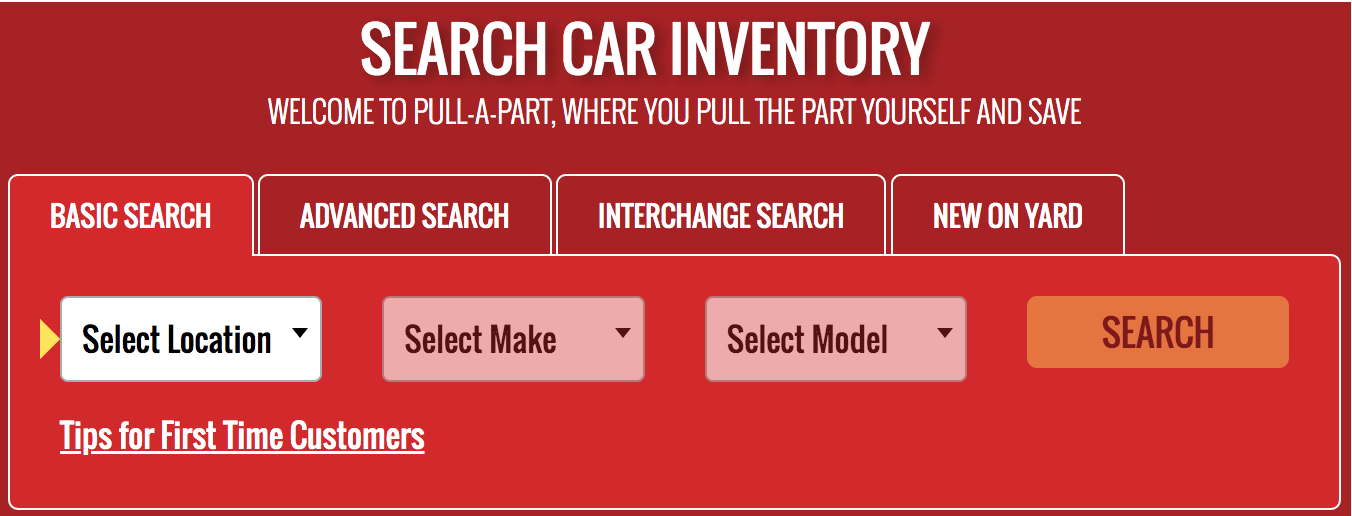
Use Pull-A-Part's vehicle inventory search and select Cleveland West as your location. Inventory updates nightly. For many vehicles, the View button in the results shows engine, transmission, and body style details, which helps you narrow down the right donor. The New On Yard search shows vehicles set out in the last 24 hours, 48 hours, or 7 days. Parts sell first-come, first-served, so newer arrivals often have more parts still intact.
If your exact vehicle isn't on the yard, check the interchangeable parts search to find other vehicles that may share compatible parts. Use interchange results as a starting point, then confirm the fit in person by comparing part numbers, connectors, and mounting points. If you still come up empty, sign up for Notify Me alerts to get an email or text when a matching vehicle arrives. Vehicles generally stay on the yard for about 60 to 90 days, so it pays to act on an alert quickly.
Check Hours, Admission, and Payment Details
Pull-A-Part Cleveland West is at 4433 West 130th Street in Cleveland. Before heading out, check the Cleveland West junkyard location page for current hours and the yard map. Yard admission closes 30 minutes before retail sales close. After that you can still pay for parts or make an exchange, but you can't go onto the yard. Pull-A-Part stores are closed on Thanksgiving, Christmas Eve, and Christmas Day, and hours may change during bad weather.
You must be at least 16 years old to enter the facility. Admission costs $2, or $1 for VIP Club members. Veterans and service members get in free with proper ID. The free VIP Club also stores your recent receipts and store credits online, which helps if you ever need to return a part.
Pull-A-Part accepts cash and major credit cards but not personal or business checks. Your total may include an environmental fee, core charges on certain parts, and a processing fee if you pay by card. Paying with cash gets a discount. Budget a little above the listed part price.
What Tools to Bring to a Self-Service Junkyard
Pack the tools your specific repair needs, plus a few extras for surprises such as rusted bolts or unexpected fastener types. If you aren't sure what a job requires, check a repair manual for your vehicle or ask a mechanic before your visit.
A Practical Starter Tool Kit
- Sockets and ratchets: 1/4-inch and 3/8-inch drive ratchets, metric and SAE sockets in deep and shallow sizes, several extensions, and a universal joint. A 1/2-inch drive breaker bar helps with suspension and axle hardware.
- Wrenches: Combination wrenches in metric and SAE sizes. Ratcheting wrenches make tight spaces easier.
- Specialty bits: Torx, hex (Allen), and external Torx sockets, which are common on many modern vehicles.
- Screwdrivers and pry tools: Flat and Phillips screwdrivers, a small pry bar, and plastic trim-removal tools for interior panels and clips.
- Pliers and cutters: Needle-nose pliers, locking pliers, hose-clamp pliers, and snips for cutting zip ties.
- Loosening aids: Penetrating oil and a hammer or dead-blow mallet for stubborn fasteners.
- Cordless power tools: A battery-powered impact wrench or drill, plus a charged spare battery.
- Organization supplies: Zip-top bags, a marker, and tape to keep fasteners labeled, plus your phone for reference photos.
- Safety and comfort gear: Work gloves, safety glasses, sturdy closed-toe boots, long pants, a flashlight or headlamp, shop towels, hand cleaner, drinking water, and a piece of cardboard or a mat to kneel or lie on.
The yard surface is gravel, not pavement, so plan on uneven footing. Wheelbarrows are available free of charge, and you can bring your own. For engine or transmission removal, Pull-A-Part supplies an A-frame and hoist and can provide a lift to move the unit to the exit. If you need help moving a large item or want to rent a golf cart, ask at the counter.
What You Can't Bring Onto the Yard
Some items are prohibited for safety reasons:
- Torches, grinders, or any other spark-producing tools
- Jacks of any kind
- Lead-acid batteries, such as car or motorcycle batteries
- Gas cans or extra fuel containers
- Firearms, unless you are authorized law enforcement
You can bring hand tools, battery-powered tools, jumper boxes, and a small generator or air compressor you can carry by hand. A gas-powered generator must arrive with a full tank, because extra fuel isn't allowed on the yard. Pull-A-Part's used auto parts FAQ lists the current yard rules. Review it before your trip, since policies can change.
How to Pull Your Own Parts, Step by Step
- Check in and pay admission. If you want to bring your old part for side-by-side comparison, ask staff how to handle it before you carry it onto the yard.
- Find your donor vehicle. Use the yard map and the details from your inventory search to locate the vehicle. Have a backup vehicle in mind in case the part you need is gone or damaged.
- Confirm the vehicle is a true match. Check the engine, trim, and body style against your own vehicle. When you reach the part, compare its part number, connector shape, pin count, and mounting points with your photos.
- Inspect the part before loosening anything. Finding a crack or broken tab now saves you from removing a part you can't use. The inspection tips below explain what to check.
- Plan the removal. Figure out how the part is attached and what has to come off first. Take photos as you go, because they're just as useful when you reinstall the part on your own vehicle.
- Remove the part carefully. Keep the part intact, disconnect connectors and hoses rather than cutting them when you can, and bag and label the fasteners.
- Carry the part out and pay. Take it to the register, pay, and keep your receipt. Don't take the part apart afterward if there's any chance you'll need to return it.
Stay Safe While You Work
Pull-A-Part sets vehicles on stands made from two wheels welded together, but you should still work with care. Don't rock, climb on, or pull hard against a raised vehicle. Position yourself so a heavy part can't fall on you, and support its weight before removing the last bolt. Watch for sharp metal and broken glass, and wear eye protection, since leftover fluids can drip when you disconnect lines. Worn hood and hatch struts may not hold, so prop panels securely before working under them. Don't take a coil spring off a strut assembly without a proper spring compressor; pull the complete assembly instead. If a serious injury happens on the yard, call 911 and then notify a manager.
How to Inspect Used Auto Parts Before You Buy
Because the store doesn't track the condition of individual parts, inspection is your job. Most parts come with a 30-day return or exchange window, but a careful look on the yard can save you a second trip.
General Checks for Any Part
- Look for cracks, heavy corrosion, and broken mounting tabs or brackets.
- Check electrical connectors for bent or corroded pins and cracked housings.
- Watch for signs of overheating, such as melted plastic or discoloration.
- Look at the vehicle's condition around the part. A car with heavy front-end damage may have a damaged radiator, condenser, or headlight mounts, even if the damage isn't obvious.
- Be cautious with electronics from vehicles that show possible flood damage, such as silt, water lines, or widespread interior corrosion.
Electrical and Charging Components
For alternators, starters, blower motors, and window motors, check that pulleys and shafts turn smoothly without grinding, wobbling, or excessive play. Walk away from parts with a burnt smell, melted wiring, or damaged connectors. Confirm that the connector matches your vehicle's harness exactly, because the same-looking part can differ between trims or engine options.
Body Panels, Lights, and Mirrors
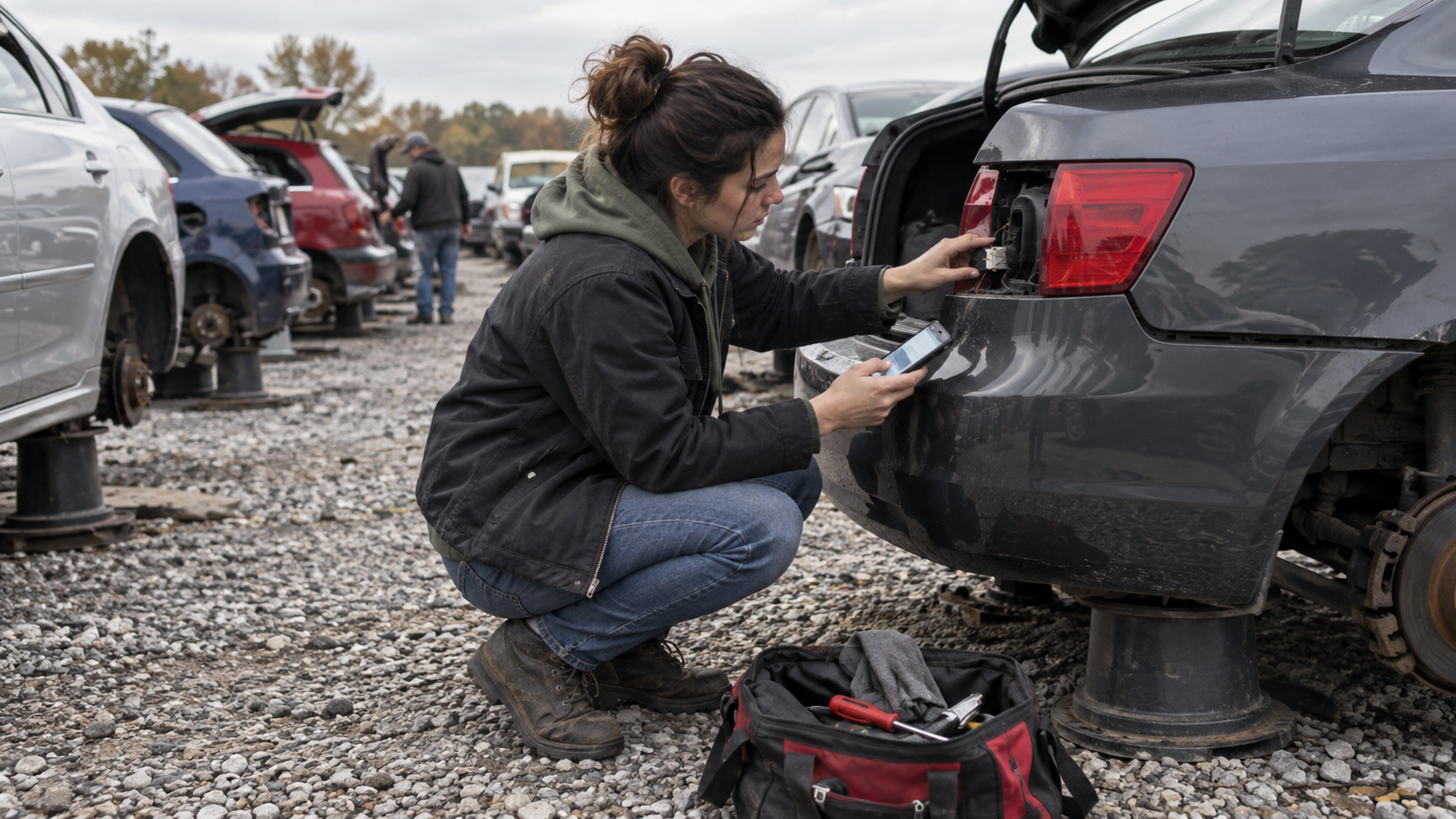
If you don't plan to repaint, match the paint code or color. Sight down the length of a panel to spot shallow dents, and check edges and seams for rust. For headlights and taillights, look for cracked or cloudy lenses, moisture inside the housing, and broken mounting tabs. Also confirm that the lighting type matches, since halogen, HID, and LED assemblies are often not interchangeable. For power mirrors, check the glass, the housing, and the connector.
Suspension, Steering, and Brakes
Oily residue on a strut or shock body can point to a leak. A torn CV axle boot may mean dirt has contaminated the joint. Check ball joints and tie-rod ends for looseness, control arms for bends, and rubber bushings for cracking. On brake calipers, look for torn dust boots and signs of a seized piston.
Wheels and Tires
Confirm that the wheel size, offset, and lug pattern match your vehicle. Tire size alone doesn't guarantee the wheel will fit. On tires, check tread depth, look for sidewall cracks, bulges, and plugs, and read the DOT date code. The last four digits show the week and year the tire was made, and an older tire may be worn out even with plenty of tread left. Tires and wheels have a shorter return window than most parts, so inspect them closely.
Engines and Transmissions
You can't start an engine on the yard, so look for clues. Pull the dipstick and check the oil. A milky appearance can indicate coolant contamination, and heavy sludge or metal particles are warning signs. Check transmission fluid, if accessible, for a burnt smell or very dark color. Inspect the block and case for cracks, and look for impact damage from a collision. If you can safely reach the crankshaft bolt, turning the engine by hand can help confirm it isn't seized. Ask at checkout whether the unit qualifies for an extended warranty.
Checkout, Core Charges, and Returns
Some parts carry a core charge, a refundable deposit that encourages recycling of the old component, much like a bottle deposit. If you have your old part with you when you pay, you won't be charged the core fee. If you don't, bring the old part and your receipt to any Pull-A-Part store within 30 days to get the core charge back in cash. Core charges and related taxes can vary by state.
Returns and exchanges also require your receipt:
- Most parts can be exchanged for a matching part or returned for store credit within 30 days. Cash refunds aren't offered except for core deposits.
- Returned parts must be the original part, still carry Pull-A-Part's marking, and not be disassembled.
- Tires and wheels have a 3-day return window.
- Hybrid batteries, used coolant, washer fluid, fuses, and thrift items are sold as-is.
- Some parts are eligible for a 120-day extended warranty for an additional fee. The cashier will let you know if yours qualifies.
All returns and exchanges are at the store manager's discretion. Test-fit and install the part soon after purchase so you have time to act if something isn't right.
When Pulling Your Own Part Isn't the Best Move
Pulling your own parts makes the most sense when both the removal and the installation are within your skill level. For complex or safety-critical repairs, such as major brake work, steering components, or anything you aren't confident reinstalling correctly, it can be worth buying the used part yourself and having a qualified mechanic install it.
Sometimes the better answer is to stop repairing the vehicle at all. If the repair bill is climbing past what your car is worth, you can sell your junk car to Pull-A-Part in Cleveland, which buys junk, salvage, damaged, and used vehicles in any condition. The vehicles on the self-service yard are sold for parts only, not as whole cars. If you need a replacement ride, you can shop for affordable used cars at Pull-A-Part Cleveland West. Those cars are acquired specifically for resale.
Quick Checklist for Your First Visit
- Record your vehicle's year, make, model, trim, engine, drivetrain, and part number.
- Search Cleveland West inventory and check interchange options.
- Confirm current hours and review the yard rules.
- Pack the right tools, safety gear, water, and bags for fasteners.
- Leave jacks, torches, grinders, car batteries, and gas cans at home.
- Inspect the part before and after removal.
- Bring your old part to the counter if a core charge applies, and keep your receipt.
Make Your First Pull a Successful One
A trip to a self-service junkyard rewards preparation. When you know exactly which part you need, confirm a donor vehicle ahead of time, bring the right tools, and inspect carefully before you pay, pulling your own parts at Cleveland West can save money on repairs you might otherwise put off. Start with a manageable job, such as a mirror, a taillight, or an alternator, and you'll build the confidence to handle bigger repairs on future trips.