How to Sell a Junk Car in North Carolina: Step-by-Step to Cash
Ask AI About Pull-A-Part
TO TURN YOUR JUNK CAR INTO CASH
Get the phone number to a location near you by enterging your zipcode.
Find a Local Junkyard
ALABAMA
ARIZONA
COLORADO
FLORIDA
GEORGIA
INDIANA
KENTUCKY
LOUISIANA
MISSISSIPPI
NEW MEXICO
NORTH CAROLINA
OHIO
PENNSYLVANIA
SOUTH CAROLINA
TENNESSEE
TEXAS
Pull-A-Part | October 2, 2026
How to Sell a Junk Car in North Carolina: Step-by-Step to Cash
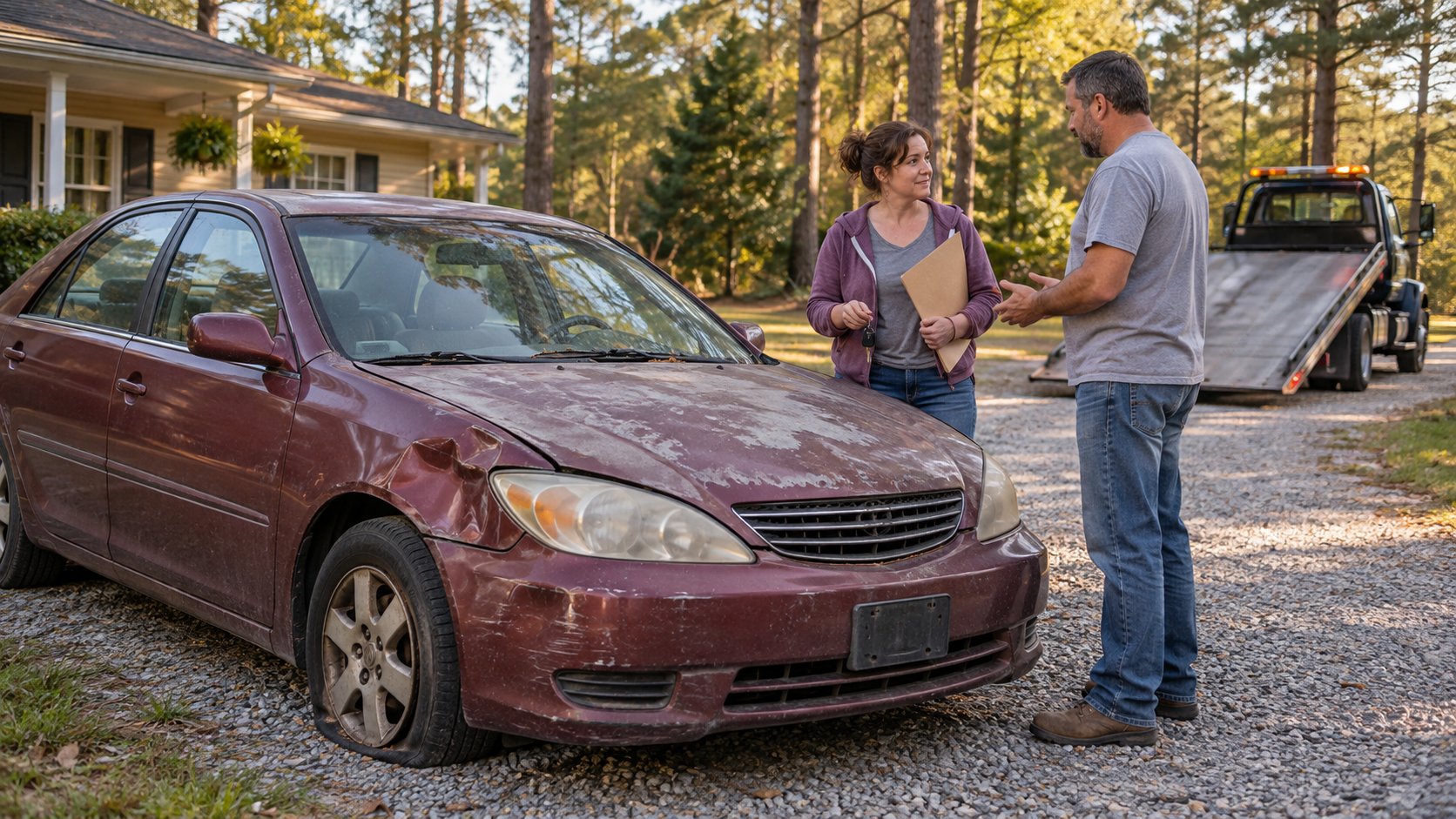
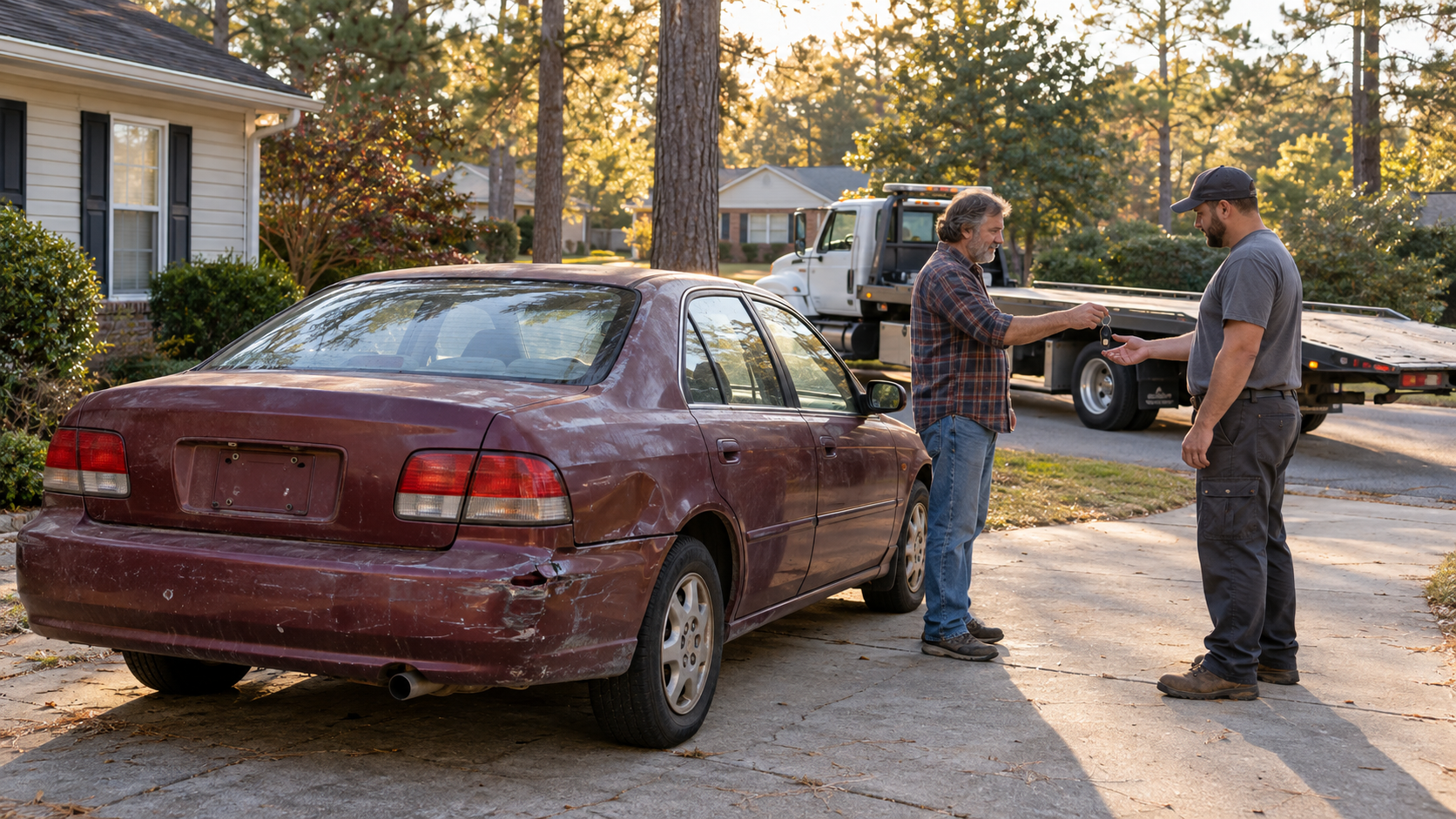
If you have an old, wrecked, or non-running vehicle taking up space, you can usually sell a junk car in North Carolina in a few days: gather the vehicle details, get a quote, schedule a pickup or drop-off, sign over the title correctly, and get paid. The work isn't over when the tow truck leaves, though. North Carolina's title, license plate, and insurance rules mean a few steps after the sale protect you from fines and from liability for a car you no longer own.
This guide covers the full process from quote to cash. It also explains what to do if your title is missing and how to release your responsibility for the vehicle once it's gone.
What You Need to Sell a Junk Car in North Carolina
Before you call for a quote, pull together the following. Having it ready speeds up the offer and helps you avoid surprises on pickup day.
- The North Carolina certificate of title in your name. If the title is lost, plan to request a duplicate or confirm whether your vehicle qualifies for a no-title sale (both covered below).
- A valid photo ID, such as a driver license or state ID card.
- Proof the vehicle is free of liens. If you ever financed the car, make sure the loan is paid off and the lien has been released.
- Basic vehicle details: year, make, model, VIN, approximate mileage, and where the vehicle is parked.
- An honest description of its condition, including whether it runs, has major damage, or is missing parts.
- Access to a notary, because North Carolina titles must be notarized when ownership is transferred.
Check Your Title and Lien Status First
Title problems are the most common reason a junk car sale stalls. Sort them out before you accept an offer.
If You Have the Title
Look at the front of the title to confirm your name appears as the owner and check whether a lienholder is listed. If two owners are listed, both may need to sign. Don't sign the back of the title yet. Since North Carolina titles must be notarized, wait until you're in front of a notary so your signature can be properly witnessed.
If Your Title Is Lost
The registered owner can order a duplicate title from the N.C. Division of Motor Vehicles using the Application for Duplicate Title (Form MVR-4), which must be notarized. NCDMV notes that duplicate title requests must age 15 days before they're processed, so start early if you need one. A lien release is required if a lien appears on the vehicle's title. You can find the required documents and fees on the NCDMV replacement and duplicate title page.
Can You Sell a Junk Car Without a Title in North Carolina?
Sometimes. Under North Carolina law, a salvage yard or secondary metals recycler buying a vehicle solely for scrap or parts may purchase it without a certificate of title if the vehicle is at least 12 model years old and the buyer follows specific recordkeeping rules. As part of that process, the seller must sign a written statement certifying that they have the legal right to sell the vehicle, that it is at least 12 model years old, and that it isn't subject to any lien. The buyer must also record the VIN, copy the seller's photo ID, and check with NCDMV that the vehicle hasn't been reported stolen. You can read the details in North Carolina General Statute 20-62.1.
Keep a few things in mind. The law allows these purchases, but it doesn't require any buyer to accept a vehicle without a title, so policies vary. The certification is a sworn statement, and falsifying it is a felony under the same statute. If your vehicle is newer than 12 model years or you aren't the owner of record, you'll generally need a title, either the original or a duplicate.
If There's Still a Loan or Lien on the Car
Pull-A-Part does not buy vehicles with an outstanding loan or lien, and most legitimate buyers won't either. Pay off the balance and get the lien released before you try to sell. If the loan was paid off years ago but the lienholder still appears on the title, contact the lender for a lien release.
Step-by-Step: How to Sell Your Junk Car for Cash
- Describe the vehicle accurately. Buyers base offers on the year, make, model, and condition, plus whether major components are still there. Pull-A-Part's quote form, for example, asks whether the vehicle still has its engine, transmission, and catalytic converter, whether all wheels are included, and whether the doors, hood, and trunk are intact. Accurate answers lead to an offer that holds up when the car is inspected at pickup.
- Get a quote. You can request an instant offer online or call a local buyer. Pull-A-Part buys junk cars around its two North Carolina yards: you can sell your junk car in the Charlotte area, including Concord, Gastonia, Kannapolis, Matthews, and Mooresville, or get cash for your car in the Winston-Salem area, including Greensboro, High Point, Lexington, Mocksville, and Summerfield. Quotes are free and carry no obligation.
- Accept the offer and choose pickup or drop-off. Junk-car prices change with market conditions, so an offer may not hold indefinitely. Once you agree on a price, Pull-A-Part offers free towing within its service areas, or you can bring the vehicle to the yard yourself. Ask when the tow is scheduled and what you need to have on hand.
- Clean out the car. Check the glove box, center console, trunk, under the seats, and any storage compartments. Remove garage door openers, toll transponders, registration cards, and personal papers. Once the vehicle is sold, getting forgotten items back may not be possible.
- Remove your license plate. Take the plate off before the vehicle is towed or dropped off. You'll need it for the liability steps below.
- Complete the title assignment. Fill out the back of the title in front of a notary. Ask your buyer ahead of time how they handle notarization so pickup day goes smoothly.
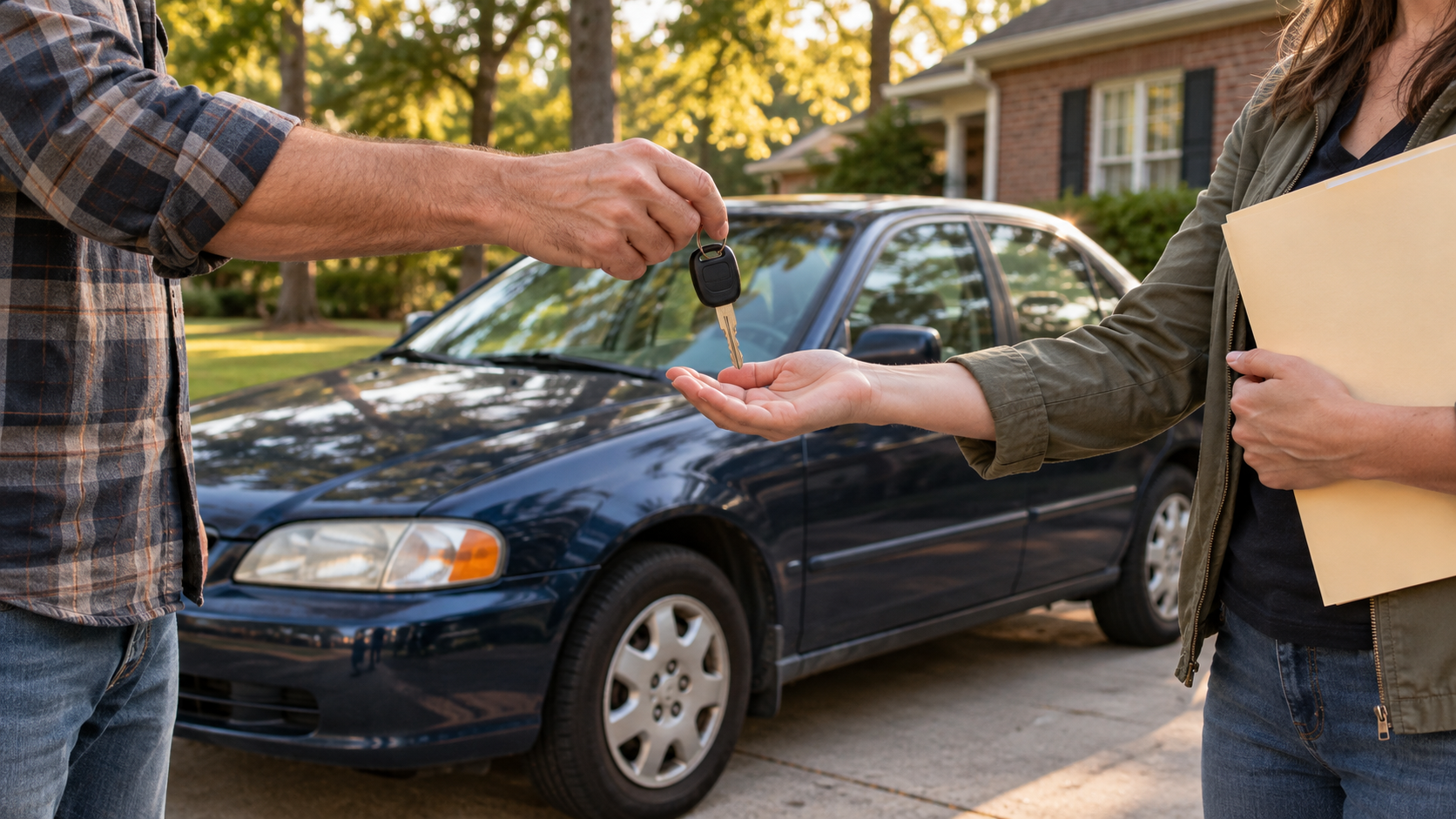
- Get paid and keep proof. Pull-A-Part pays cash when its tow truck picks up the car, or by company check when you drop the vehicle off at the yard. Keep a receipt or bill of sale that shows the date, the buyer, the VIN, and the amount paid.
How to Fill Out a North Carolina Title When You Sell
An incomplete or incorrectly signed title is one of the easiest ways to delay a sale. According to NCDMV, both the seller and the recipient complete the information on the back of the original title, and North Carolina titles must be notarized. The assignment section includes:
- The buyer's name and address
- The date of sale or delivery
- The seller's signature and hand-printed name
- The odometer reading, if required for the vehicle
- The damage disclosure statement
Write clearly, use the designated spaces, and avoid crossing out or correcting information, since alterations can create problems with the transfer. For full instructions, see the NCDMV title transfer guidelines. Before you hand the title over, take a photo or make a copy of the completed back for your records.
Releasing Liability After You Sell a Junk Car in North Carolina
Getting paid is not the last step. In North Carolina, your license plate and your liability insurance are tied together, and handling them in the wrong order can lead to a fine.
Turn In Your Plate Before Canceling Insurance
State law requires continuous liability insurance on every registered vehicle. NCDMV advises owners to cancel insurance only after turning in their North Carolina license plate, because canceling coverage first will result in a fine for failing to maintain continuous insurance. The safe order is simple:
- Remove the plate from the junk car before it leaves your possession.
- Either transfer the plate to another vehicle you own or turn it in to NCDMV.
- Cancel the insurance on the sold vehicle only after the plate has been transferred or surrendered.
You can return a plate at any NCDMV license plate agency or by mail to the address NCDMV provides. Receipts are available on request, and it's worth asking for one. If the plate was lost or left on a vehicle you no longer have, NCDMV requires a License Plate Turn-In Verification (Form MVR-18A) to cancel it. Mailing addresses and drop-off options are listed on the NCDMV insurance and license plate page.
Keep Your Records
Hold on to your paperwork in case a question comes up later about tolls, tickets, or ownership. A good file includes:
- A copy or photo of the completed, notarized title
- Your sales receipt or bill of sale with the date, VIN, and price
- Your plate turn-in receipt or MVR-18A
- Confirmation that your insurance was canceled, along with the effective date
Close Out Other Accounts
If the vehicle had a toll transponder, remove it and update or close the toll account. Do the same for anything else linked to the vehicle, such as roadside assistance or a connected-car subscription.
What Affects How Much Cash You'll Get
No two junk cars are worth exactly the same amount, and a fair buyer should explain what drives the offer. The main factors include:
- Year, make, and model: some vehicles have parts that are in higher demand than others.
- Completeness: a vehicle with its engine, transmission, catalytic converter, wheels, and body panels is typically worth more than one that has been stripped.
- Condition: major collision damage, fire damage, or flood damage can affect the offer.
- Current market conditions: scrap metal and used-parts demand shift over time, which is why quotes can change.
- Location: whether the car is inside a buyer's free-towing area can matter.
Before you accept an offer, be wary of any buyer who quotes one price on the phone and then sharply lowers it on pickup day without a clear reason, or who asks you to skip the title paperwork.
Should You Sell It or Fix It?
Not every older car is a junk car. If the vehicle runs well apart from one failed component, repairing it with a used part may cost far less than replacing the whole car. A self-service junkyard in Charlotte or a used auto parts yard in Winston-Salem lets you pull the part yourself at a lower price than a new replacement. Inventory changes constantly, so check what's on the lot and confirm fitment by year, make, model, trim, and engine before you go.
Selling usually makes more sense when repair costs exceed what the car is worth, when it has frame or flood damage, or when it has been sitting so long that several systems need attention. If you're replacing a junk car and need something to drive, you can also shop for affordable used cars in Winston-Salem. Have any used car inspected and test-driven so you know what you're buying.
Common Mistakes to Avoid
- Signing the title before you see a notary. A North Carolina title needs a notarized signature, and a signature that isn't witnessed can complicate the transfer.
- Canceling your insurance first. Turn in or transfer the plate before canceling coverage to avoid a lapse fine.
- Leaving the plate on the car. Remove it before pickup so you control what happens to it.
- Misstating the condition. If parts are missing or the car is badly damaged, say so up front so your offer doesn't change at pickup.
- Trying to sell with an open lien. Clear the loan and get a lien release first.
- Forgetting personal items and transponders. Do a final sweep of the car before it's towed.
Frequently Asked Questions
Do I need to be present when the tow truck arrives?
In most cases, yes. Someone typically needs to hand over the signed title and keys, show ID, and receive payment. Confirm the details with your buyer when you schedule the pickup.
Can I sell a junk car that doesn't run?
Yes. Pull-A-Part buys vehicles whether they run or not, and free towing is available within its service areas once you agree on a price.
Can I sell a car that's titled in someone else's name?
Generally, only the owner of record, or someone with legal authority to act for the owner, can sell the vehicle. If the owner has died or the title is in another person's name, contact NCDMV about the correct transfer process before you try to sell.
Turning Your Junk Car Into Cash the Right Way
Selling a junk car in North Carolina comes down to a few key moves: confirm your title and lien status, describe the car accurately to get a reliable quote, complete a notarized title assignment, and handle your license plate before you cancel insurance. Do those in order and you'll walk away with cash and without lingering responsibility for a vehicle you no longer own. When you're ready, request a free quote from Pull-A-Part and ask the buyer any paperwork questions specific to your situation before pickup day.