Selling a Junk Car in North Carolina With or Without a Title
Ask AI About Pull-A-Part
TO TURN YOUR JUNK CAR INTO CASH
Get the phone number to a location near you by enterging your zipcode.
Find a Local Junkyard
ALABAMA
ARIZONA
COLORADO
FLORIDA
GEORGIA
INDIANA
KENTUCKY
LOUISIANA
MISSISSIPPI
NEW MEXICO
NORTH CAROLINA
OHIO
PENNSYLVANIA
SOUTH CAROLINA
TENNESSEE
TEXAS
Pull-A-Part | October 5, 2026
Selling a Junk Car in North Carolina With or Without a Title
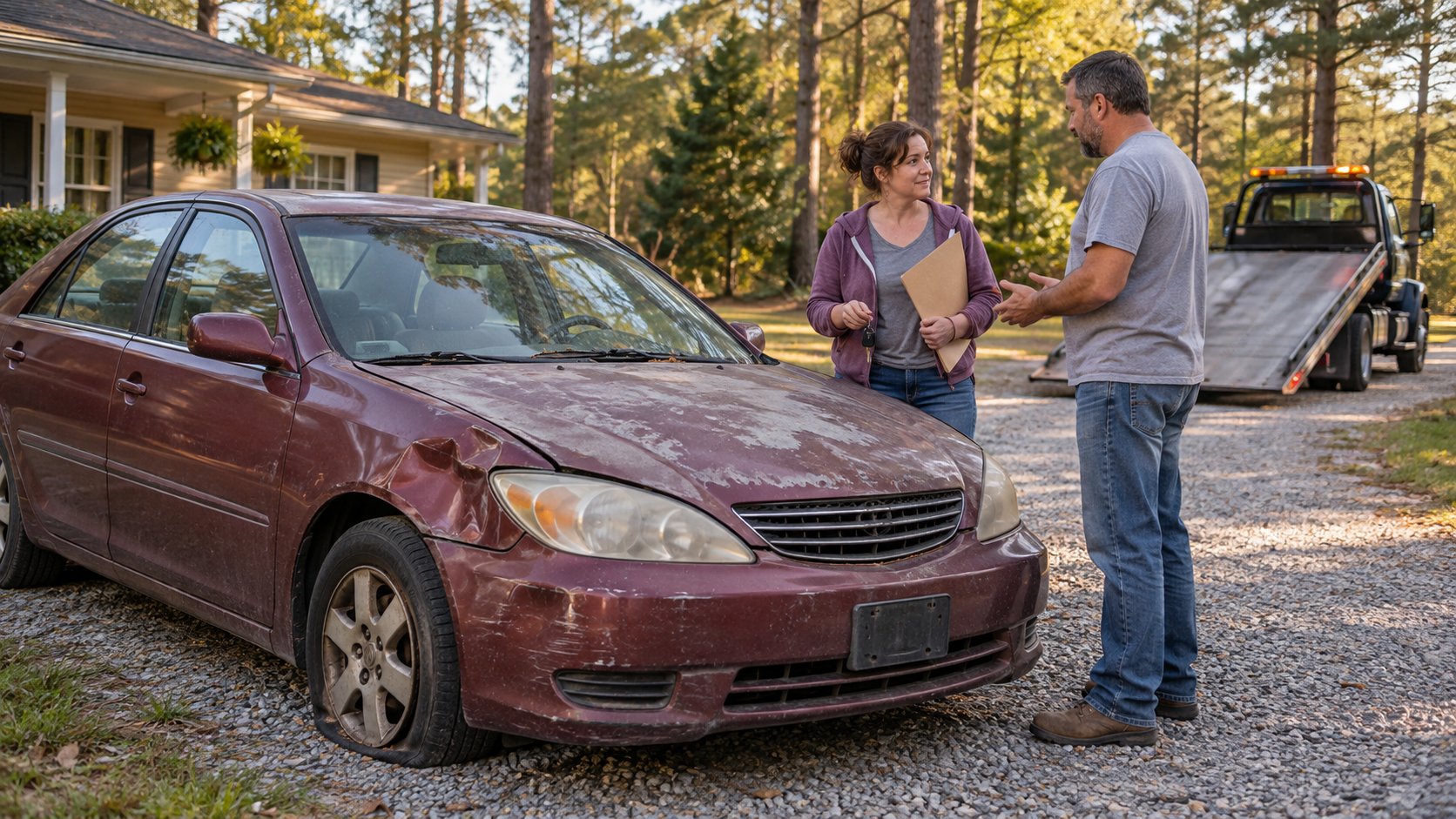
If an old, broken-down, or wrecked car is taking up space in your driveway, the title is usually the first thing standing between you and a sale. Here is the short answer for selling a junk car in North Carolina: having the title in your name makes the sale easiest. If you lost it, the registered owner can order a duplicate from the N.C. Division of Motor Vehicles (NCDMV). If you don't have a title and the vehicle is at least 12 model years old, state law lets a salvage yard or secondary metals recycler buy it for scrap or parts without one. That only works if you have the legal right to sell it, it has no lien, and you can show valid photo ID.
This guide covers both routes: getting a duplicate title and selling legitimately without one. It also covers how to handle common title problems, what to have ready before you ask for a quote, and how to deal with your plates and insurance after the car is gone.
Which Path Fits Your Situation?
Start by matching your situation to the right route:
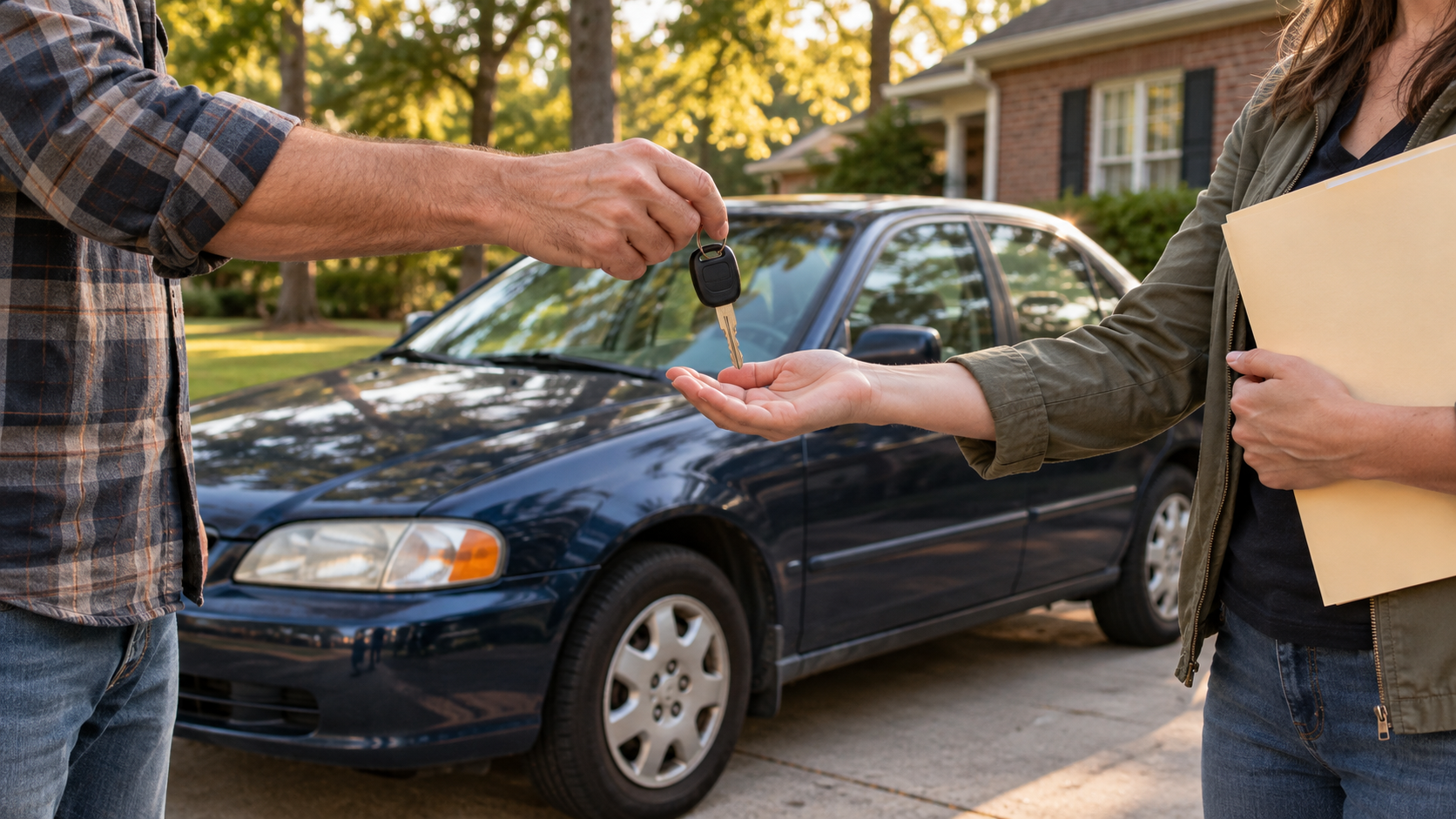
- You have the title in your name: This is the simplest sale. Keep the title and your photo ID ready, and follow the buyer's instructions for signing it over.
- The title is lost or you never received it: The registered owner can apply for a duplicate title from NCDMV. Plan for a waiting period of at least 15 days.
- There's no title, but the car is 12 model years old or older: You may be able to sell it to a salvage yard or secondary metals recycler without a title, as long as it is for scrap or parts only, you own it, and there is no lien.
- There's no title and the car is newer than 12 model years: Expect to get a duplicate title before you sell.
- A lien is still on record: You will need the lien released before most junk-car buyers can purchase the vehicle.
- The car isn't titled in your name: If you bought it and never transferred the title, inherited it, or found it abandoned on your property, sort out ownership first.
Why the Title Matters When You Sell a Junk Car
A certificate of title is the state's record of who owns a vehicle and whether a lender holds a lien on it. Even a car that will never drive again is still titled property. A buyer needs to know the person selling it has the right to do so, that it isn't stolen, and that no lender can claim it later.
With a title, you can sell to almost anyone, including private buyers, dealers, and junkyards. Without one, your options shrink to salvage yards and metal recyclers, and only when the vehicle and the sale meet specific legal conditions. That is why getting a duplicate title is often worth the short wait, especially for newer vehicles.
Option 1: Get a Duplicate Title From NCDMV
If your title was lost, or never arrived after you registered the vehicle, the registered owner can request a duplicate. NCDMV explains the current requirements on its replacement and duplicate title page, so check it before you apply.
What You'll Need for a Duplicate Title
- Application for Duplicate Title (Form MVR-4): The form must be notarized and filled out exactly as the original title record appears.
- Lien release: This is required if any liens appear on the vehicle's title.
- Identification: NCDMV requires ID for any service handled in person.
- The required fee: Check NCDMV for the current amount before you submit.
How Long It Takes
Every duplicate title application must sit for 15 days before NCDMV processes it. If you need the title quickly after that waiting period, NCDMV offers instant titles at certain license plate agencies. You order the title there and pick it up on the 16th day, for an additional fee. Instant titles aren't available for every title type, and salvage titles are among the exceptions.
If you never received your original title, NCDMV may waive the title fee when the original is issued within 60 days of your duplicate request.
Tips to Avoid Delays
- Match the record exactly. Names and vehicle details on the MVR-4 should match the original title. Mismatches are a common reason applications get held up.
- Clear old liens first. If a lien is still on record, the duplicate title goes to the lienholder instead of you unless you submit a lien release with the application.
- Don't use the old title if it turns up. Once a duplicate is issued, the original title is void.
- Check where the car was last titled. If the vehicle was last titled in another state, the duplicate generally has to come from that state's motor-vehicle agency, not NCDMV.
Option 2: Selling a Junk Car Without a Title in North Carolina
North Carolina allows one specific no-title route for older vehicles. Under N.C. General Statute 20-62.1, a salvage yard or secondary metals recycler may buy a vehicle without a certificate of title if the vehicle is 12 model years old or older and is being bought only to scrap or dismantle for parts. The threshold used to be 10 model years. The change took effect on October 1, 2025, so older articles and advice may still list the outdated number.
What North Carolina Requires for a No-Title Junk Car Sale
The law places most of the recordkeeping on the buyer, but the seller has real responsibilities too. Expect the following:
- The vehicle must be 12 model years old or older. The buyer will check the year against the vehicle identification number (VIN).
- You must sign a written statement. You or your agent certify that you have the lawful right to sell the vehicle, that it is at least 12 model years old, and that it has no lien or security interest.
- You must show valid photo ID. This can be a driver's license or ID card, or another photo ID issued by a state or federal agency. If you don't have qualifying ID, the buyer cannot complete the sale.
- The buyer checks whether the car is stolen. The yard must confirm with NCDMV that the vehicle hasn't been reported stolen. If it has, the sale stops and the yard notifies NCDMV.
- The buyer records and reports the sale. The yard keeps details such as the VIN, the date, the price paid, and your information. It also reports the purchase to the National Motor Vehicle Title Information System (NMVTIS).
- The vehicle is scrapped or dismantled for parts. A car bought this way is not resold as a running vehicle.
Take the signed statement seriously. Under the statute, knowingly falsifying it is a Class I felony with a minimum $1,000 fine. Use this route only when the car is genuinely yours to sell.
What the No-Title Option Doesn't Cover
This exception is narrow. It doesn't apply to a private buyer who wants to fix up and drive the car, to vehicles newer than 12 model years, or to vehicles with an unpaid lien. Individual buyers also set their own policies. Some salvage yards still prefer or require a title even when the law would allow a sale without one, so ask before you schedule a pickup.
Common Title Problems and How to Handle Them
The Car Still Has a Lien
If you still owe money on the vehicle, the lender has a legal claim to it, and that usually has to be cleared before the car can be sold. Pull-A-Part does not buy vehicles with outstanding loans or liens. If you've paid the loan off but the lien still shows up, contact your lender for a lien release. The MVR-4 includes an option to apply for a duplicate title and remove the lien at the same time.
You Bought the Car but Never Transferred the Title
If the previous owner signed the title over to you and you never titled the car in your name, the vehicle may still be registered to that person. Contact NCDMV about what you need to finish the transfer before you sell. If the previous owner never gave you a title at all, they may need to apply for a duplicate. Don't sign a statement claiming you have the right to sell until ownership is sorted out.
The Car Belonged to Someone Who Passed Away
Selling a deceased family member's vehicle usually requires showing you have legal authority to act for the estate. Never sign a title or statement in the deceased owner's name. Contact NCDMV or the Clerk of Superior Court in the county handling the estate to learn which documents apply to your situation.
A Vehicle Was Left on Your Property
An abandoned vehicle on your land doesn't give you ownership of it or the right to sell it, so the no-title exception doesn't apply. Contact local law enforcement or NCDMV about the proper process for removing it.
What to Have Ready Before You Request a Quote
Gathering a few details ahead of time makes it faster to get an accurate offer:
- The vehicle's year, make, and model
- The VIN, usually found on the driver's side of the dashboard near the windshield or on the driver's door jamb
- Whether you have the title, are waiting on a duplicate, or are using the no-title route
- Your valid photo ID
- A lien release, if a lien was ever recorded on the vehicle
- Whether the engine, transmission, and catalytic converter are still on the vehicle
- Whether all the wheels are there
- Whether the major body parts, including the doors, hood, and trunk lid, are intact
- Where the vehicle is located, if you need it picked up
Missing components affect what a car is worth to a buyer, so be upfront about them. An accurate description helps prevent a surprise when the tow truck arrives.
Selling Your Junk Car to Pull-A-Part in North Carolina
Pull-A-Part buys junk cars through its two North Carolina locations. If your vehicle is in the Charlotte area, including Concord, Gastonia, Kannapolis, Matthews, and Mooresville, you can sell your junk car in Charlotte. Drivers in the Triad, including Winston-Salem, Greensboro, High Point, and Lexington, can get cash for a junk car in Winston-Salem.
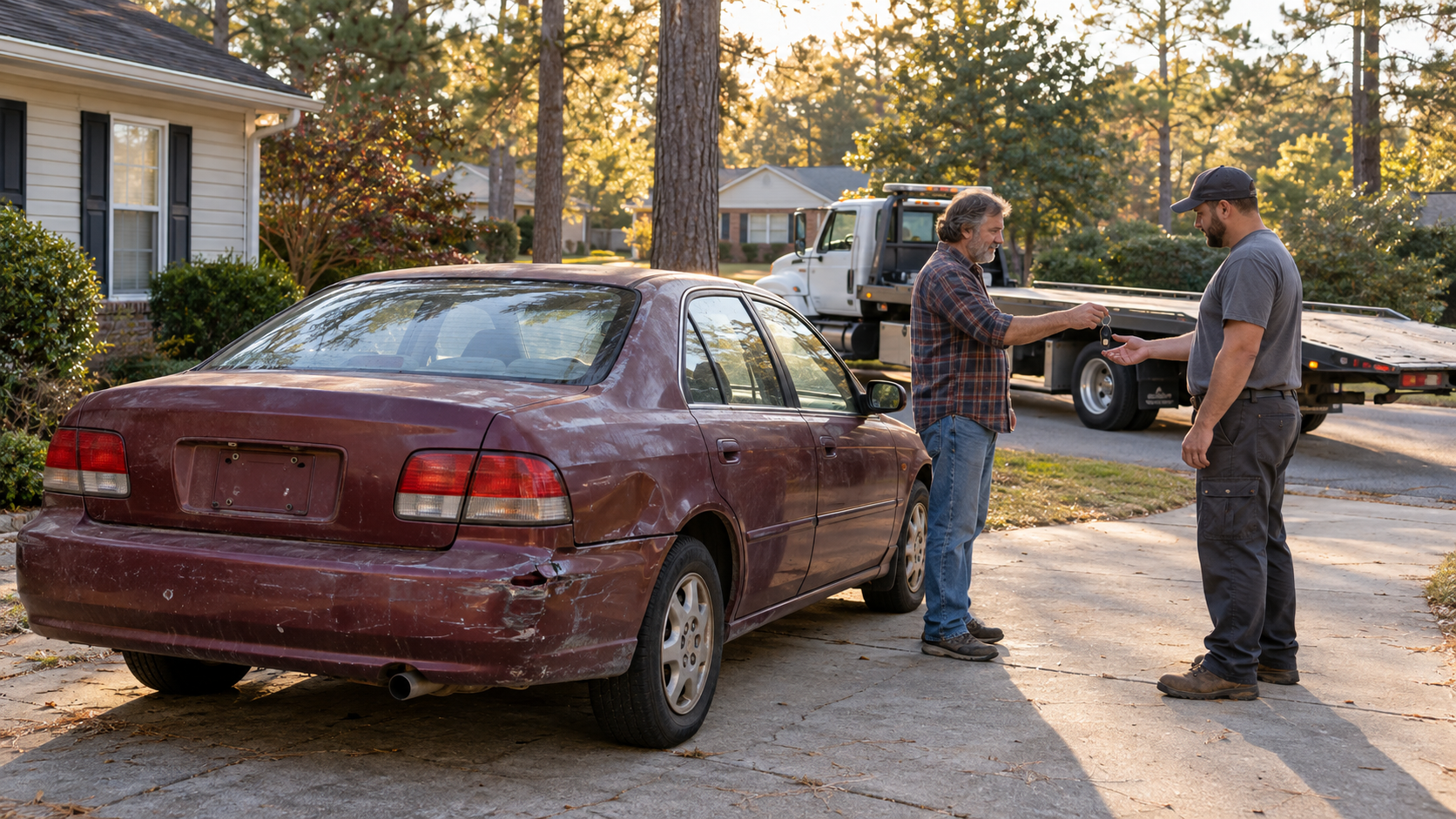
You get a quote online or by phone based on the car's year, make, model, and condition. Offers can change with market conditions. If you accept, Pull-A-Part arranges a free tow to pick up the car. When you ask for your quote, say whether you have the title so the team can confirm what paperwork you'll need for your vehicle.
After the Sale: Plates, Insurance, and Records
Handing over the keys isn't quite the last step. A few loose ends can cause problems if you skip them:
- Remove your license plate. North Carolina plates stay with the owner, not the vehicle.
- Turn in the plate before canceling insurance. North Carolina requires continuous liability insurance on every registered vehicle. If you cancel your policy before returning the plate, you can be fined. NCDMV explains how to turn in a license plate at a license plate agency or by mail. That page also covers Form MVR-18A, which is used to cancel a lost or stolen plate.
- Clean out the vehicle. Check the glove box, trunk, and under the seats for documents, garage door openers, toll transponders, and personal items.
- Keep your records. Save any receipt or bill of sale, and take a photo of the signed title or no-title statement in case questions come up later.
Final Thoughts
A missing title doesn't have to leave you stuck with a junk car. If the vehicle is newer than 12 model years, or you want the most buyer options, order a duplicate title through NCDMV and plan around the 15-day wait. If the car is 12 model years old or older, has no lien, and is legally yours, North Carolina law lets you sell it to a salvage yard or recycler without a title, provided you're honest on the required statement and bring valid photo ID. Once you know which path fits, get your documents together, describe the car accurately, and you'll be ready to turn that unwanted vehicle into cash.