The Most Common Vehicles in North Carolina Junkyards: A DIY Parts Guide
Ask AI About Pull-A-Part
TO TURN YOUR JUNK CAR INTO CASH
Get the phone number to a location near you by enterging your zipcode.
Find a Local Junkyard
ALABAMA
ARIZONA
COLORADO
FLORIDA
GEORGIA
INDIANA
KENTUCKY
LOUISIANA
MISSISSIPPI
NEW MEXICO
NORTH CAROLINA
OHIO
PENNSYLVANIA
SOUTH CAROLINA
TENNESSEE
TEXAS
Pull-A-Part | September 23, 2026
The Most Common Vehicles in North Carolina Junkyards: A DIY Parts Guide
If you're heading to a junkyard in Charlotte or Winston-Salem to fix your own car, your odds are best when you drive something lots of other people drove too. The most common vehicles in North Carolina junkyards tend to be the same high-volume models that filled driveways across the country 10 to 20 years ago. That means full-size pickups like the Ford F-150 and Chevrolet Silverado, sedans like the Toyota Camry, Honda Accord, and Nissan Altima, popular SUVs and crossovers, and family minivans.
A common vehicle usually means more donor cars on the yard, more chances to find the exact part in good condition, and more parts that interchange with related models. This guide explains which vehicles tend to be plentiful, which parts are usually worth pulling from them, which parts are better bought new, and how to plan a productive trip to a self-service yard in North Carolina.
Why Certain Vehicles Show Up in Junkyards So Often
A salvage yard's rows reflect what people bought years earlier. Vehicles that sold in huge numbers eventually reach the point where a major repair costs more than the car is worth, and many of them end up at a junkyard. S&P Global Mobility's 2025 analysis put the average age of passenger cars on U.S. roads at about 14.5 years, and the average for all light vehicles at about 12.8 years. In practice, many of the cars and trucks arriving at self-service yards are models from the mid-2000s through the mid-2010s.
Three things tend to make a vehicle plentiful at a pick-and-pull yard:
- High sales volume. The more of a model that was sold, the more of them eventually reach the end of their useful life.
- Long production runs. Models that stayed in the same generation for several years create a large pool of donor vehicles with matching parts.
- Shared platforms. Many vehicles share components with closely related models from the same manufacturer, so one donor car can serve several different nameplates.
Keep in mind that inventory at any individual yard changes constantly as vehicles arrive and leave. Use the groups below as a guide to what you're likely to see, not a promise of what's on the yard today.
The Most Common Vehicles in North Carolina Junkyards and the Parts Worth Pulling
Full-Size Pickup Trucks
The Ford F-Series has been the best-selling truck line in the U.S. for decades, and the Chevrolet Silverado, GMC Sierra, and Dodge Ram (later sold as the Ram 1500) have also sold in very large numbers. That makes full-size pickups some of the most reliable finds at a self-service yard. GM full-size trucks also share many components with GM full-size SUVs from the same generation, such as the Chevrolet Tahoe and Suburban and the GMC Yukon, which widens your pool of potential donors.
Truck parts that are often worth pulling include:
- Tailgates, tailgate handles, and tail light assemblies
- Side mirrors, door handles, and power window regulators
- Seats, center consoles, and interior trim panels
- Wheels, especially when you need to match an original set
- Alternators and starters
- Four-wheel-drive selector switches and other dash controls
Midsize and Compact Sedans
Sedans such as the Toyota Camry, Honda Accord, Nissan Altima, Toyota Corolla, and Honda Civic were among the best-selling passenger cars in the country for many years, and domestic sedans like the Chevrolet Impala and Malibu and the Ford Taurus and Fusion were also common. Because these cars were built in such large numbers, they're often easy to find in the trim and color you need.
Platform sharing helps here, too. The Toyota Matrix and Pontiac Vibe were built on Corolla underpinnings, and some Lexus ES models shared their foundation with the Camry. Shared platforms don't guarantee that every part will swap, so always check compatibility before you pull.
Sedan parts that are commonly worth pulling include headlight and tail light assemblies, side mirrors, bumper covers and body panels in a matching color, power window motors and regulators, ignition coils, alternators, starters, wheels, and interior pieces like door panels, switches, and climate control panels.
SUVs and Crossovers
The Ford Explorer was one of the best-selling SUVs for years, and crossovers like the Honda CR-V, Toyota RAV4, and Ford Escape have sold in large numbers more recently. Larger SUVs like the Jeep Grand Cherokee and Chevrolet Tahoe are also familiar sights in many yards. Earlier generations of the Ford Escape shared many parts with the Mazda Tribute and Mercury Mariner, which can make the right part easier to track down.
From SUVs, consider pulling rear wiper motors, roof rack rails, cargo covers, third-row seats, liftgate handles and trim, mirrors, lighting, and interior switches and controls.
Minivans
Family minivans like the Dodge Grand Caravan, Chrysler Town & Country, Honda Odyssey, and Toyota Sienna were bought by the millions. The Grand Caravan and Town & Country were closely related for many years, so parts often cross over between them when the year and equipment match.
Minivan parts worth considering include sliding door handles and trim, seats and seat tracks, interior panels, mirrors, tail lights, and rear climate control components. Power sliding door motors and cables can be worth pulling too, but inspect them carefully, since these assemblies can be worn on high-mileage vans.
Parts Usually Worth Pulling at a Self-Service Junkyard
Regardless of which vehicle you drive, some categories of used auto parts tend to offer the best combination of savings and reliability:
- Body panels and exterior trim. Doors, fenders, hoods, trunk lids, and bumper covers from a same-color donor can save you the cost of paint as well as the part.
- Lighting. Headlight and tail light assemblies are often expensive new and simple to swap. A clear, uncracked used assembly can be a smart buy.
- Mirrors and door hardware. Side mirrors, handles, and lock actuators are commonly damaged parts that are easy to replace.
- Interior parts. Seats, consoles, trim panels, knobs, switches, and climate controls rarely wear out the way mechanical parts do.
- Electrical components. Alternators, starters, window motors, and blower motors can be good candidates, especially if you check for corrosion and damaged connectors.
- Wheels. A matching factory wheel is often far cheaper used than new.
- Engines and transmissions. For experienced DIYers, a used engine or transmission can make an older vehicle worth keeping. Verify engine codes, transmission type, and drivetrain before committing to a job this size.
Parts to Think Twice About Buying Used
Some parts are either safety-critical, prone to wear, or inexpensive enough new that buying them used doesn't make much sense.
- Brake pads, rotors, and hoses. These wear with use, and your brakes aren't the place to gamble on unknown history.
- Belts, hoses, filters, and spark plugs. These are routine maintenance items that are usually inexpensive new.
- Timing belts and related parts. If you're doing a timing job, new parts are generally the safer choice because the labor is significant.
- Tires. Rubber ages even when tread looks good. If you consider a used tire, check the tread depth, sidewalls, and date code carefully.
- Electronic control modules. Some computers and key-related modules must be programmed to your vehicle's VIN before they'll work. Confirm what's required before you pull one.
- Airbags and other restraint components. These are safety-critical, and their removal and reuse may be restricted. Check the yard's policies and consider having a professional handle anything related to airbags.
North Carolina Inspection Rules and Used Parts
If your vehicle is registered in North Carolina, the condition of certain parts affects more than just how the car drives. According to the NCDMV's safety inspection guidelines, a vehicle must pass an annual safety inspection before its registration can be renewed. The inspection covers headlights, accessory lights, directional signals, the foot brake and parking brake, steering, tires, the horn, the rearview mirror, windshield wipers, the exhaust system, and emission control components, along with tinted windows where applicable. Vehicles more than 30 years old are exempt from the annual safety inspection.
That makes lighting assemblies, mirrors, and wiper components practical parts to source used when they're in good condition. It's also a reason to buy new brake parts and to avoid removing or tampering with emission control components.
Emissions testing in North Carolina is in transition. The N.C. Department of Environmental Quality's inspection and maintenance program page explains that state laws passed in 2023 and 2026 are set to remove the counties that currently require emissions testing from the program, including Mecklenburg County, with the effective date tied to federal approval. Annual safety inspections will still be required in every county. Because the timing may change, confirm the current requirements for your county before your next inspection.
How to Plan a DIY Parts Trip in Charlotte or Winston-Salem
A little preparation can turn a long afternoon of searching into a quick, successful trip. Pull-A-Part has two North Carolina yards: the Pull-A-Part location in Charlotte on North Tryon Street and the self-service junkyard in Winston-Salem on North Patterson Avenue. Each location page lists current hours, admission details, and store policies, and visitors must be at least 16 years old to enter.
- Gather your vehicle details. Write down the year, make, model, trim, engine size, and drivetrain, and keep your VIN handy. If possible, note the part number from your original part.
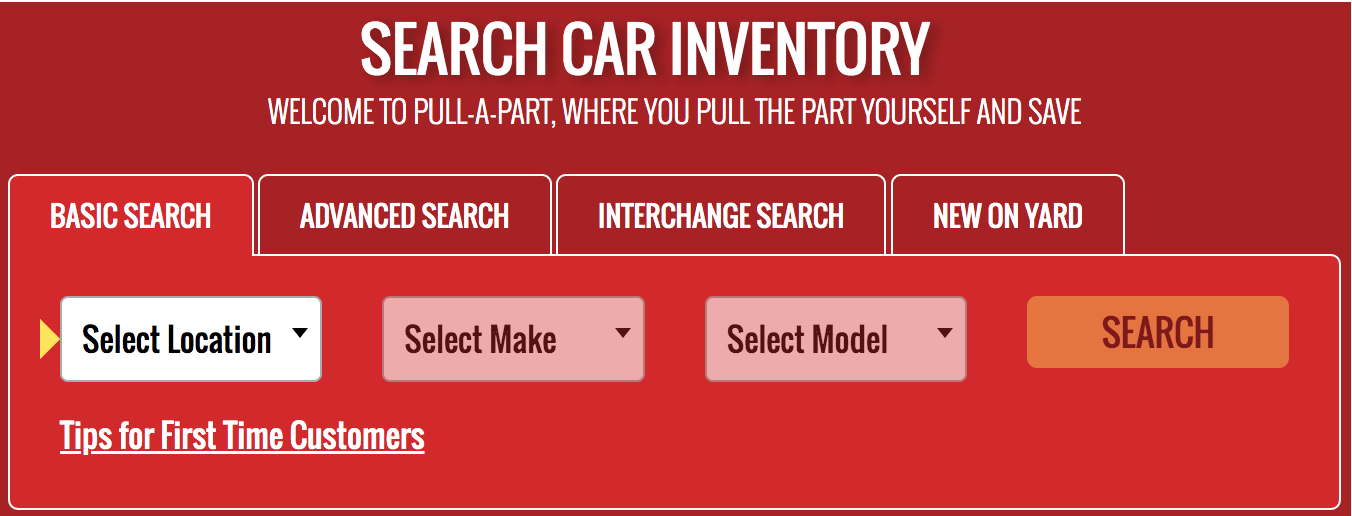
- Search the yard before you go. Use Pull-A-Part's online vehicle inventory search to see which matching vehicles are currently at the Charlotte or Winston-Salem yard. The Parts Interchange option in the same search tool can help you find other vehicles that may share the part you need.
- Watch for fresh arrivals. Vehicles are added regularly, so checking the vehicles new on the yard can help you get to a good donor before popular parts are pulled.
- Set up an alert if your vehicle isn't in stock. If nothing matches today, you can get notified when a matching vehicle arrives.
- Check pricing ahead of time. Pull-A-Part prices parts by type rather than by the vehicle's make, model, or year, so you can review used auto parts pricing before your trip and budget accordingly.
- Pack the right tools. You'll pull the part yourself, so bring your own tools. A basic kit usually includes metric and standard sockets, wrenches, screwdrivers, a breaker bar, pliers, a pry bar, trim removal tools, penetrating oil, a flashlight, work gloves, safety glasses, sturdy closed-toe shoes, and bags for bolts and clips.
- Inspect before you pull. Check for cracks, corrosion, broken tabs, and damaged connectors, and compare part numbers when you can. Take photos as you remove a part so reinstalling it at home is easier.
If you're new to self-service yards, Pull-A-Part's overview of used auto parts is a useful starting point for understanding how the process works.
Quick Answers About North Carolina Junkyard Parts
Will a part from the same model always fit my vehicle?
Not always. Parts can change between model years, trim levels, engine options, and drivetrains, even within the same generation. Match as many details as possible, including the part number, and use interchange information to confirm compatibility.
Are newer vehicles found in junkyards?
Sometimes, but the majority of vehicles at self-service yards tend to be older, since most cars aren't scrapped until they've reached the end of their useful life. Owners of very new or uncommon vehicles may have fewer donor options.
Is it worth pulling parts for a car with major problems?
It depends on the repair and the vehicle's overall condition. Used parts can make a big repair affordable, but if several expensive systems are failing at once, it may be time to compare the cost of repairs against what the car is worth.
When Your Own Car Is Ready for the Yard
Sometimes the repair list grows longer than the car is worth. If you're at that point, you can sell your junk car in Charlotte or get cash for your car in Winston-Salem rather than putting more money into it. If you need replacement transportation, the Winston-Salem location also lets you shop for affordable used cars. As with any budget-friendly used vehicle, look it over carefully and consider having it checked by a mechanic you trust before you buy.
Start With the Vehicles the Yard Sees Most
If you drive a popular truck, sedan, SUV, or minivan from the past two decades, North Carolina junkyards can be one of the most affordable ways to keep it on the road. Focus on parts that hold up well used, like lighting, body panels, interior pieces, and many electrical components, and buy new for brakes and other wear items. Check inventory before you go, confirm compatibility, bring the right tools, and keep your state inspection in mind. With a little planning, a trip to a Charlotte or Winston-Salem yard can save you a meaningful amount on your next repair.